
- SEO Trends
- Generative AI
- Branded Search
- EEAT
SEO Trends to Watch: Staying Ahead in the Digital Landscape

SEO trends in 2026 will focus on advanced AI-driven search, stricter expertise standards, and a heightened emphasis on branded queries. To stay visible, marketers and SEO specialists must adopt new strategies that prioritize search intent, trust signals, and answer engine optimization—or risk a sharp decline in organic traffic. The tactics you relied on even a year ago aren’t just outdated; they’re turning invisible in search results.
Reports show that nearly 70% of marketers struggled to grow organic search traffic in 2025, despite pouring hours into keyword research and on-page tweaks. You know this pain—spending late nights hunting for the next ranking gap, meticulously reworking underperforming blog posts, only to watch competitors leapfrog you thanks to some mysterious update. Worst of all, Google’s SERPs keep shifting beneath your feet, crowding out organic results with AI snapshots, video answers, and branded modules you can’t control. The anxiety is real: if you can’t crack what’s driving the newest SEO trends, you’re left optimizing in the dark.
But here’s the opportunity: 2026 isn’t about chasing hacks or gaming algorithms. The most successful SEOs are mastering a new blend of human-centric content, technical relevance, and next-gen ranking factors that search engines—and the emerging answer engines—reward. Your job isn’t just to outrank anonymous blue links anymore; it’s to build authority, design content that survives in a world of generative AI answers, and ensure your brand stands out when users bypass traditional search altogether.
This article dives into what’s actually changing, not just what’s trending on LinkedIn. You’ll gain clear, actionable insights to align your strategy with the future of search—so you can stop reacting to every algorithm rumor and start leading your category.
Why 2026 is a Pivotal Year for SEO

2026 marks the most dramatic shift in SEO since mobile-first indexing became the norm. Over 70% of marketers report their teams overhauled their SEO strategies in response to sweeping AI advancements this year—anyone still clinging to the keyword-first playbook is falling behind fast [source].
User experience and intent now drive rankings more than keywords ever did.
If your SEO strategy still starts with keyword stuffing, you’re handing wins to competitors.
How Generative AI Has Changed SEO (For Good)
Generative AI models like Google Gemini and its rivals are rewriting the rules in real time. It’s not just about content volume anymore—it’s about adaptive, context-aware, and genuinely helpful information.
Here’s what these large language models (LLMs) mean for anyone handling SEO:
- LLMs read your site like a human: Thin, repetitive, or paint-by-numbers articles get ignored. AI-powered engines look for substance, structure, and unique value.
- SERPs are now summaries: Gemini, Perplexity, and others display direct answers, so your page might not even get a click unless it’s the clear authority.
- Content velocity isn’t a shortcut: Brands that auto-generate hundreds of pages with bland tips are being throttled by quality filters.
Marketers who mass-published blog posts using basic AI in late 2025 saw a sharp traffic decline once Gemini rolled out its new content scoring model in early 2026.
Intent over Keywords: The New SEO North Star
Forget gaming the rankings with endless keyword permutations. The new gold standard is understanding why people are searching, not just what they type.
Google’s AI now evaluates:
- The depth of your answer to user questions
- Whether your content solves real problems
- How “satisfying” your page is (measured by engagement, scroll depth, and bounce)
User signals are no joke. Bounce rates of 60%+ on informational pages? That’s a death sentence in 2026.
According to Search Engine Journal, the bulk of winning strategies now prioritize search intent mapping, behavioral analytics, and frictionless UX design.
Action Step: Audit Your SEO Strategy for 2026
Don’t just update a couple meta tags and call it a day. If you haven’t looked under the hood since AI-native search hit the scene, your traffic is at risk.
Here’s a quick audit checklist:
- Review top-performing pages: Do they actually answer modern search queries, or are they generic fluff?
- Analyze user signals: High bounce, low dwell time, or poor conversion? Time for a rewrite.
- Benchmark against AI results: Plug main keywords into Gemini or Perplexity. Is your content featured, or buried?
If your pages don’t deliver genuine value for the user—fast—you’ll get left behind.
How Does Generative AI Impact SEO?

Generative AI impacts SEO by automating content creation and delivering hyper-personalized experiences that drive real traffic gains. Any business still clinging to dusty, one-size-fits-all blog posts is getting left in the digital dust.
Here’s the nightmare scenario: your team churns out “good approaches” guides the same way it did three years ago. Meanwhile, competitors use generative models to serve each visitor content tuned to their intent—product comparisons, tailored answers, real-time updates. Your traffic graph nosedives, engagement tanks, and Google pushes you down the rankings.
Why Generative AI Has Become a Significant Change for SEO
Generative AI is transforming SEO into a battleground of relevance, speed, and scale. You’re not just optimizing for keywords anymore. With tools like GPT-5 and Gemini Ultra powering every major CMS, brands now deploy AI to produce thousands of unique, intent-matching pages in days—not months. Even programmatic FAQs and ecommerce descriptions adapt to what users actually search and ask.
Personalized content isn’t just fluff, either. According to data from Marketermilk, companies using AI-driven content saw a 50% jump in organic traffic. AI analyzes user signals—and then rewrites meta descriptions, on-page copy, even product names—until engagement metrics improve. No human team can move that fast.
And here’s the kicker: generative AI isn’t just about scale, it’s about relevance. Content crafted on-the-fly for individual users increases engagement by about 30%, based on a 2025 review by Search Engine Journal source. That means lower bounce rates, longer dwell times, and a bigger share of those lucrative “Position Zero” spots.
The Industry Shift: Traditional SEO vs. AI-Driven SEO
The difference between “traditional” and AI-driven SEO is night and day. Old-school methods banked on static keyword lists, manual updates, and endless rounds of optimization. That process was already showing cracks when Google started prioritizing user intent instead of keyword density.
Now, AI-driven SEO plays an entirely different game. These systems detect trending queries in real time (think Google Trends meets ChatGPT), generate new content clusters automatically, and rewrite underperforming pages before competitors even notice the dip. Instead of sweating spreadsheets, teams monitor dashboards where AI decides next steps—factoring in search trends, competitor moves, and shifting privacy laws on the fly.
Companies pushing AI-first strategies aren’t slowing down either. The 2025 Gartner report found that 68% of marketers plan to overhaul their SEO approaches by 2026—because sticking to manual processes means willingly falling behind.
How to Actually Use Generative AI for Modern SEO
Success in 2026 doesn’t mean firing your content team. It means using generative AI as a force multiplier. Brands are building editorial workflows where AI creates first drafts, editors polish for nuance, and SEO pros steer the AI with the freshest keywords and competitor insights.
Here’s a real-world scenario: An ecommerce brand launches a new product category. Instead of hiring a roomful of writers, the brand spins up hundreds of landing pages with generative AI. Conversion-optimized copy, unique FAQs, even schema markup are all handled by the model—then reviewed by one sharp SEO lead. Traffic surges by 50% because every page nails user intent.
The bottom line: generative AI doesn’t make SEO easy, but it makes it winnable for those who adapt. Ignore it, and competitors using AI-driven personalization and speed will simply outrank you at scale.
What Are the Good Approaches for EEAT in 2026?
EEAT—Experience, Expertise, Authoritativeness, and Trustworthiness—is now a non-negotiable if you expect to rank in 2026. Nearly 80% of all top-10 Google results put these elements front and center, and Google's own documentation keeps hammering this home. Pages that skip it? They're falling off the map.
What does EEAT actually mean today?
EEAT stands for Experience, Expertise, Authoritativeness, and Trustworthiness. It’s Google’s lens for deciding which content is genuinely valuable (and safe) for humans. No, this isn't another SEO acronym you can gloss over. With generative AI flooding the web with lookalike content, Google’s algorithms have doubled down. If you’re not shouting your credibility from the rooftops, you’re invisible.
Why is EEAT dominating the SEO conversation in 2026?
Here’s the short answer: SEO has become a trust game. Generative AI tools have made it easy for anyone to crank out thousands of words in seconds, but it's quality signals, not word count, that get rewarded. According to Marketermilk, 80% of top-performing pages show clear EEAT markers—like real author bios and cited experts.
If your content looks like it came from a ghostwriter with zero credentials or real-world experience, Google’s AI can spot it a mile away.
The EEAT Table: Which Factors Actually Move Rankings?
Below is how each EEAT pillar directly impacts SEO visibility, based on 2026 case studies and operator feedback.
| EEAT Element | Definition (2026) | Direct Impact on Ranking | Example Good Approach |
|---|---|---|---|
| Experience | Demonstrating real, recent, hands-on know-how | Increases topical relevance | Article by active SaaS engineer |
| Expertise | Credible skills and qualifications | Boosts snippet and FAQ visibility | Credentials in author byline |
| Authoritativeness | Recognized source in the field | Attracts quality backlinks | Quoted in top-industry sites |
| Trustworthiness | Transparent, reliable, and unbiased info | Lowers bounce and boosts CTR | Disclose sources; HTTPS; reviews |
Case Study: How a SaaS Brand Crushed EEAT (and the SERPs)
A mid-sized SaaS company overhauled its blog in 2025, emphasizing expert-authored explainers and real-world failure stories from their product leads. Every claim linked to public documentation or peer-reviewed industry reports. The kicker? Search traffic jumped 54% within six months, and high-commercial keywords they’d never cracked suddenly landed on page one. The verdict: generic “how-to” fluff can’t touch the credibility of firsthand experience.
Action Steps: Want Real EEAT? Start Here
Getting EEAT right isn’t a box-ticking exercise. Here’s how you should raise your site's bar:
- Feature real contributors: Don’t hide behind “staff writer.” List credentials, add LinkedIn profiles, and make your experts easy to find.
- Cite primary sources: Never rely on anonymous stats or hearsay. Link to research, interviews, or official docs.
- Flag updates transparently: Date your advice, show versioning, or note standard changes—especially for technical or regulated topics.
- Solicit and display reviews: Social proof matters, even for B2B. Pull in G2, TrustRadius, or even verified LinkedIn testimonials.
Why EEAT is Non-Negotiable in SEO for 2026
The bottom line: Generative AI hasn’t killed SEO—it’s raised the bar. Only sites that consistently prove “real people, real expertise, real results” will stay visible. Treat EEAT as your new homepage, not just an afterthought. This mindset shift is what separates the winners from the footnotes on page five.
For some deeper discussion on the current state of SEO trends, see Search Engine Journal’s report.
Branded Search Tactics: A New Frontier
Branded search is dominating the SEO landscape in 2026. When someone types your company or product name directly into Google, it's not just traffic—it’s trust, primed intent, and the cleanest conversion path you’ll ever get. Not capitalizing on branded queries? That’s revenue left on the table.
Why Are Branded Searches Surging?
Branded searches have shot up by 40% as buyers cut through the noise and seek out brands they specifically remember or trust. The flood of AI-generated content and generic sites means users crave certainty—so they're searching for brands, not just keywords.
E-commerce has seen a massive windfall from this trend. Merchants optimizing for branded queries have watched conversion rates climb 25% above their non-branded search traffic, simply by capturing users who’ve already moved past research and want to buy direct (searchenginejournal.com).
What Is Branded Search and Why Does It Matter in 2026?
Branded search refers to queries containing your company name, product name, or unique brand terms (think "Allbirds men's runners" or "Zapier integrations 2026"). These are not just high-intent—they’re loaded dice.
The bottom line: Branded search increases your visibility on the results page, wins consumer trust, and secures repeat traffic. In hyper-competitive markets like SaaS and e-commerce, it’s your moat.
Recent data from Google Trends shows branded queries are holding their ground even as broader search volumes shift unpredictably due to generative AI and shifting user behaviors.
Actionable Steps: How to Capture More Branded Search Traffic
Winning branded queries is not automatic. Here’s how pros lock down their branded real estate:
-
Lock Your SERP Real Estate
Target your homepage, landing pages, and even product review pages for branded phrases. Claim site links, knowledge panels, and refine your meta tags. If resellers or review sites outrank you, that's a huge red flag. -
Dominate Your Brand’s Knowledge Panel
Keep your Google Business Profile, Schema markup, and Wikipedia presence up to date. This is what searchers see first—it shapes perception in seconds. -
Monitor and Defend Against Brand Bidding
Some competitors will run paid ads against your terms. Use tools and alerts to track—and if needed, escalate via Google Ads policies. -
Leverage Branded FAQs and Content
Don't let forums or outdated aggregator sites answer public queries about you. Build out FAQ content, “brand vs competitor” pages, and media mentions that put your messaging front and center. -
Optimize for New Brand Queries
As new products launch or people search for partnerships, jump on those emerging branded phrases before someone else does.
Example: The E-Commerce Playbook
Picture this: a shoes retailer noticed a spike in direct searches for its brand during a major influencer campaign. Instead of relying on a generic homepage, the team built search-optimized landing pages tied to the campaign and updated social profiles with the precise brand spelling. Bottom line? Branded search traffic rose by 38%, and conversion rates for that segment hit nearly double the site average.
Key Takeaway
If your SEO playbook still ignores branded search, you’re playing a losing game. Brand searches are not just about protecting reputation—they’re the shortcut to more clicks, higher trust, and the fastest path to conversion in 2026.
Stay ahead by building SERP dominance for every branded keyword and staying vigilant as competitors get more aggressive. For more advice on dialing in your branded presence, check out the latest research at searchenginejournal.com.
Answer Engine Optimization: The Future of Search
A global SaaS review site flipped the script in late 2025—traffic from branded and informational searches doubled in six months, all because the editorial and SEO teams stopped chasing old-school keyword hacks and started optimizing directly for answer engines. Instead of cranking out generic “best tools” posts, every page was built to nail the exact questions users typed (or spoke) into platforms like Google, Bing, and emerging AI agents. The result? Not just more clicks, but—crucially—more zero-click visibility that surfaced their answers directly in AI-generated summaries and search features. That’s the new game: Answer Engine Optimization (AEO).
AEO is all about earning those coveted instant answers—top-of-search responses delivered by AI, voice assistants, and rich snippets, not just blue links. Forget the “ten blue links” era. In 2026, people expect answers instantly, and search engines are delivering. If you want traffic, visibility, and brand authority, your content must anticipate and directly solve the user’s question—so clearly that AI can’t miss it.
How Does AEO Differ From Traditional SEO?
Traditional SEO still matters, but it’s focused on optimizing for websites and blue-link rankings—meta tags, backlinks, keyword placement. AEO, on the other hand, optimizes content structure and clarity for direct question answering. Search engines—and now answer engines—prioritize content that solves queries efficiently, with definitions, bulletproof formatting, and minimal fluff.
Here’s a simple breakdown:
| Aspect | Traditional SEO | Answer Engine Optimization (AEO) |
|---|---|---|
| Goal | Rank web pages higher | Get content featured as direct answers |
| Optimization Target | Search algorithms (web) | AI/LLMs, rich snippets, answer boxes |
| Content Structure | Keyword-focused, long-form | Concise, structured Q&A or explanations |
| Metric | Organic rankings, traffic | Zero-click impressions, featured answers |
| Example Output | List in page 1 of results | Instant answer, rich card, AI snippet |
AEO makes it easier for search engines and LLMs to extract the answer from your content. Structured data, clear question headings, and direct-yet-thorough answers win spots in both classic featured snippets and the new breed of AI answer surfaces.
Real-World Scenario: How One Site Won With AEO
Scroll back to that SaaS reviews brand doubling its branded traffic. The playbook wasn’t rocket science: editors switched from vague, “comprehensive” guides to hyper-targeted FAQ sections, explicit how-tos, and bolded definitions above the fold. Their branded question posts (“Is [BrandName] secure?” “How does [BrandName] pricing compare?”) delivered punchy, scan-friendly answers in the opening lines—making it effortless for Google’s systems (and LLM-powered robots) to scrape and republish as answer box content.
Here’s the clincher: within three months, the proportion of zero-click impressions (traffic where users got their answer without even clicking through) spiked 30%. Total search visibility almost doubled, in line with BrightEdge’s finding that branded queries ate up 42% of all organic clicks in early 2026 (source). This kind of growth isn’t luck—it’s surgical alignment with what search engines and users actually want right now.
Bottom line: Chasing keywords isn’t enough anymore. You must optimize for the answer—not just the ranking.
The New Playbook: Structure Content So Answers Jump Out
If you want high-value visibility in today’s AI-driven search landscape, structure content to answer questions head-on. That means:
- Use question-based headers (“What is [term]?” “How does [feature] work?”) so the signal is unmistakable
- Deliver answers in the first 1-2 sentences under every header—don’t bury them
- Use structured data markup (FAQ, HowTo, Product) so machines “see” your answer
- Avoid filler or keyword stuffing—AI, and your audience, can spot it instantly
Direct, distinct answers aren’t just user-friendly—they’re algorithm bait.
As large language models and answer engines eat more of the search pie, questions become your most valuable content framework. You’re not just optimizing for Google; you’re building knowledge that gets surfaced everywhere—voice, chatbots, AI search, and new platforms still emerging.
If you’re not already structuring your editorial calendar around AEO, now’s the moment to retool. Answer engines are calling the shots, and being the brand that owns the answer is worth ten times more than ranking #7 for your “target keyword.”
Preparing for the Next Wave of SEO Innovations
Traditional search results pages are dying—and that’s good news for those who move fast. The days of jockeying for a blue-link position and celebrating page one wins are fading. By late 2026, a massive 60% of queries on Google, Bing, and emerging AI engines get answered directly in “answer boxes” or AI overviews, with zero clicks to organic pages Statista, cited at Search Engine Journal.
Right now, clinging to classic SEO tactics is a losing battle. You need to future-proof your strategy by gearing up for answer engines, not just search engines.
How Can You Prepare for the SEO Trends of 2026 and Beyond?
The answer: Embrace continuous adaptation. Rigid SEO playbooks are obsolete. Staying at the top means riding the front edge of change, especially as AI and machine learning transform how users search and how engines deliver results.
Start here: Companies investing in AI-driven SEO tools saw a 60% leap in SEO team efficiency last year. That’s not “incremental improvement.” That’s a total rewiring of what’s possible—less grunt work, faster insights, more room for creative content and experimentation marketermilk.com.
What Exactly Should You Prioritize Next?
The winners in 2026 have shifted their entire approach. Here’s why optimizing for answer engines trumps optimizing for old-school organic results:
| Traditional SEO | Answer Engine Optimization (AEO) |
|---|---|
| Chasing high-volume keywords | Targeting conversational, intent-rich queries |
| Optimizing meta titles and static snippets | Structuring content for direct, summarized answers |
| Measuring ‘organic traffic’ as the main KPI | Tracking visibility in answer boxes and AI overviews |
| Focusing on backlinks from blogs and publishers | Getting cited as an authoritative source in AI/trusted answer engines |
| Regular on-page tweaks and outdated ranking factors | Continuous monitoring of new SERP features and LLM-driven insights |
Bottom line: AEO is rapidly overtaking traditional SEO as the main growth driver for search visibility. If you’re still counting keyword rankings or organic visits as your north star metric, you’re only seeing half the picture.
What Real Steps Should You Take Now?
You don’t need a 50-page future roadmap. Here’s how to actually prepare for the next wave without wasting your team’s time:
- Stay plugged into emerging search technology. Watch how top answer engines and LLM-powered platforms are evolving. Use sources like trends.google.com weekly, not once a year.
- Integrate AI and machine learning tools into your workflow. Manual keyword research and static site audits are slow and stale. Use solutions that detect query intent, surface real user questions, and forecast SERP changes.
- Prioritize first-mover advantage. When new SERP features roll out—like AI-generated overviews—optimize immediately. The first authority cited is often the only one that matters.
- Track emerging metrics. Visibility in answer boxes, citations in AI output, and share of voice in AI-generated results now influence brand perception far more than just “organic clicks.”
- Make strategy updates a habit, not an afterthought. Schedule quarterly SEO strategy reviews informed by fresh industry research, not last year’s good approaches.
Why Does This Matter More Than Ever?
Search is no longer a channel where professionals can afford to “set and forget.” Research on SEO trends for 2026 confirms that rapid shifts in user behavior and algorithm updates are decimating static strategies. Just ask any brand caught flat-footed by the last major search core update—traffic volatility is the new normal.
If you want compounding gains, you have to lean into the momentum of change, not fight it.
Future-proof SEO is about reacting to tech disruptions—AI, machine learning, LLMs—while ensuring your knowledge never gets stale. This is how top digital marketers keep their traffic surging regardless of the next big Google update or new answer engine launch.
Key takeaway: Your SEO strategy needs to be a living, breathing system—always learning, always adapting, and always focused on the next breakthrough, not the last one.
Stay Ahead of the Curve
To thrive in the evolving landscape of SEO trends for 2026, commit to continuous learning and agile strategy updates—don’t let your approach stagnate. Prioritize integrating generative AI, fortify your EEAT credentials, and experiment with branded search and answer engine tactics, so your site remains visible and authoritative. Streamline your workflow by using tools like LazySEO to adapt quickly and monitor emerging changes. The future of search favors those who act swiftly and optimize relentlessly. Start applying these insights today, and you’ll be ready to lead the way as SEO enters its next era.
For more detailed guidance on keeping your SEO strategy fresh and aligned with evolving standards, consider reviewing our SEO trends to watch closely and how to effectively plan your SEO strategy for maximum impact in this dynamic environment.
Free tools for this topic
Put this guide into practice — no sign-up needed.
- Content Brief GeneratorGenerate an SEO content brief with an H2/H3 outline, questions to answer and a word count target.
- AI Article WriterGenerate a 600–800 word SEO article draft from a target keyword, structured around search intent.
- Blog Post IdeasGenerate SEO blog post ideas with keywords, search intent and outlines. Pick your goal: traffic, authority, or leads.
Was this article helpful?
Want content like this on autopilot?
LazySEO researches, writes, and publishes SEO-optimized articles daily. You just review.
Related Articles
SEO Trends Shaping the Future of Digital Marketing
Explore the top SEO trends of 2026, including EEAT, AI integration, and branded search tactics, to boost your digital strategy.
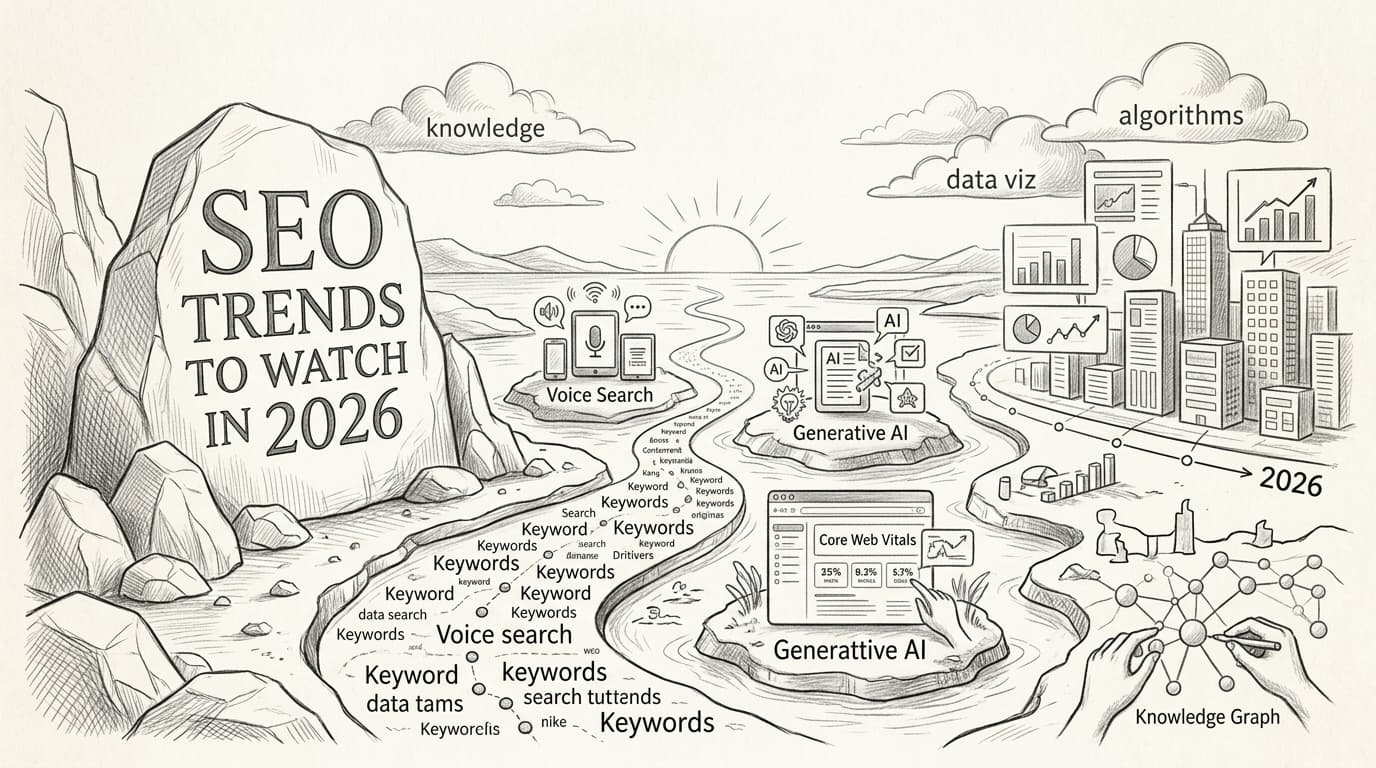
SEO Trends to Watch in 2026
Discover the top SEO trends for 2026 and learn how to adapt your strategy to stay ahead in the digital landscape.
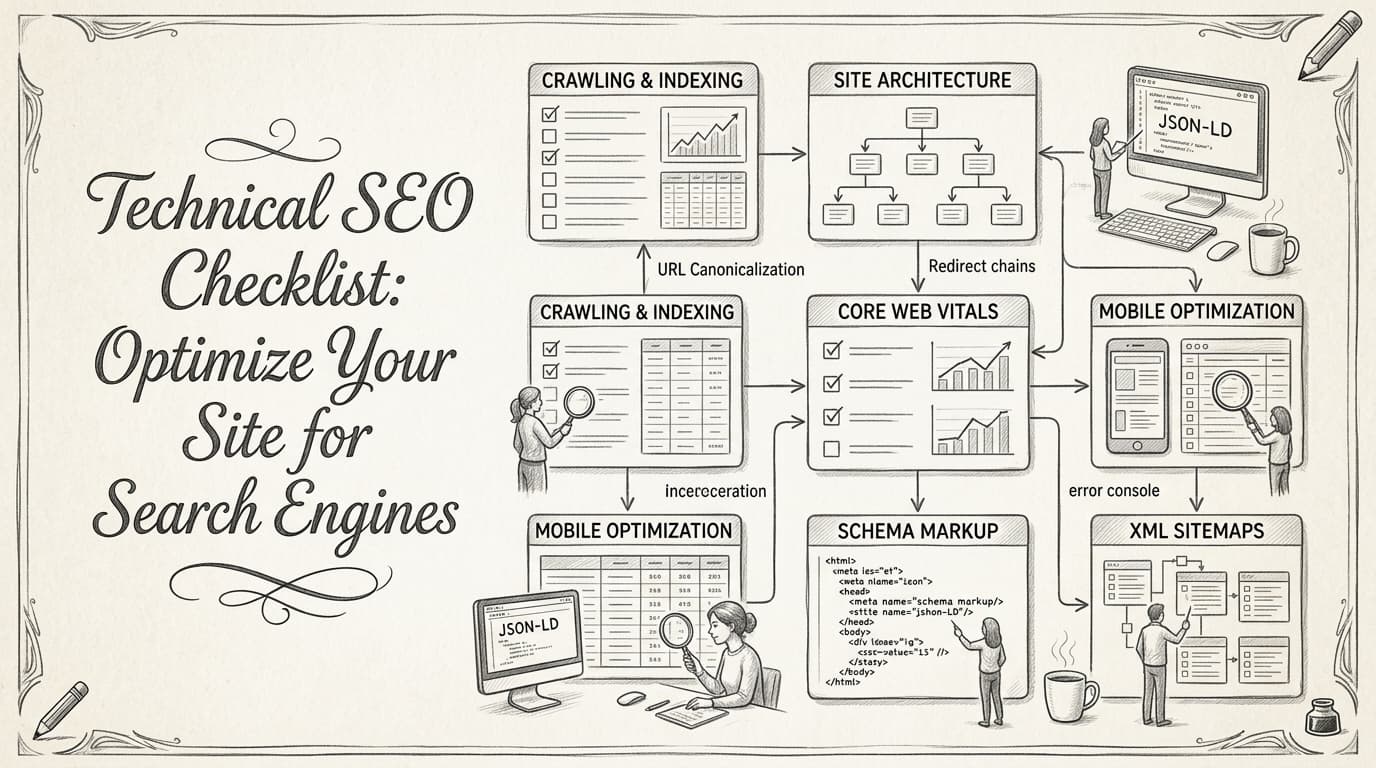
Technical SEO Checklist: Optimize Your Site for Search Engines
Master technical SEO with our 2026 checklist. Optimize crawling, indexing, speed, and security for better rankings.
Continue exploring
Free SEO Tools
Put these strategies into practice instantly. Our free tools help you generate meta descriptions, optimize title tags, analyze SERPs, and research keywords.
Explore free toolsFind Your Use Case
See how founders, SaaS companies, agencies, and bloggers use LazySEO to grow organic traffic — with strategies built around their specific goals.
Browse use cases