
SEO Trends to Watch in 2026

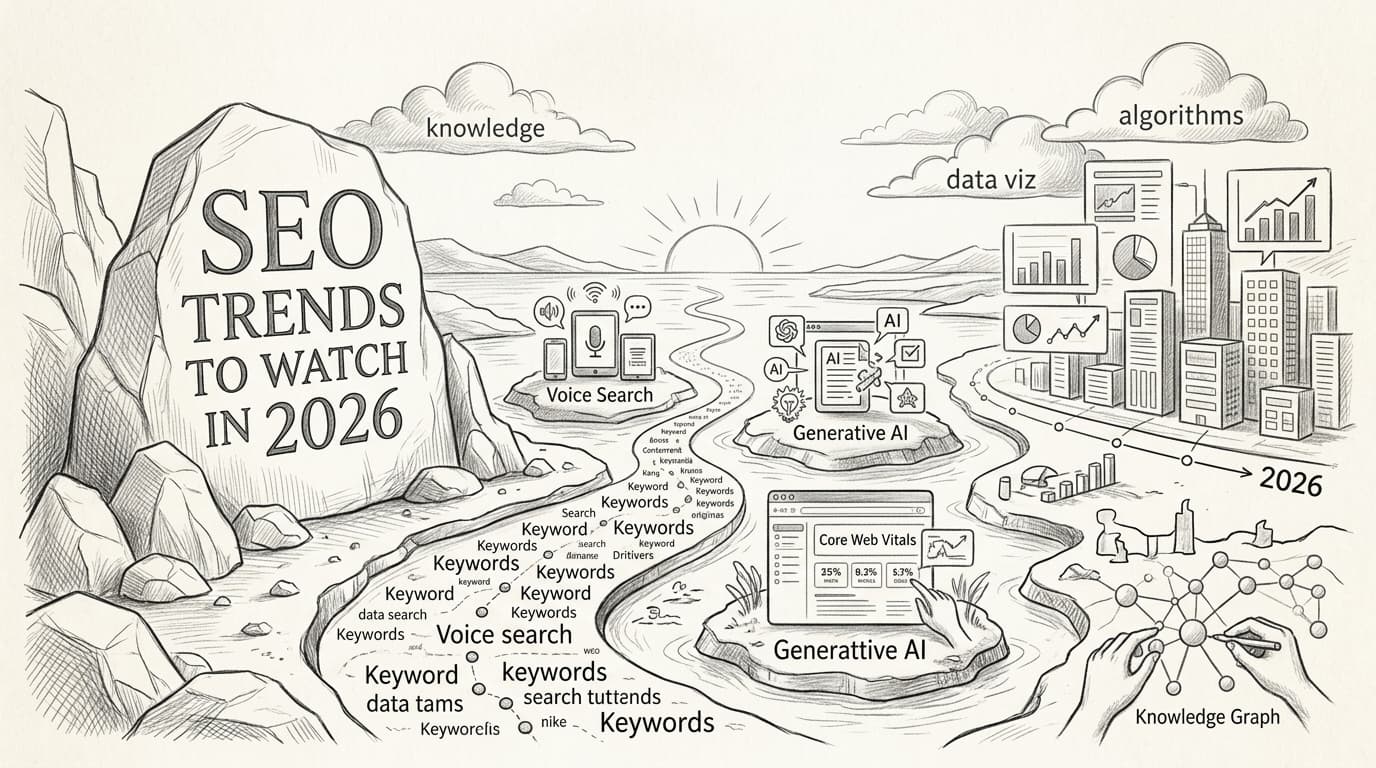
SEO trends in 2026 revolve around the rapid evolution of AI-powered search, new standards for expertise and trust, and the escalating importance of branded search. For digital marketers, SEO specialists, and content strategists, understanding these trends is critical to capturing organic traffic in a landscape where yesterday’s tactics barely move the needle. The hard truth? What worked last year is quickly becoming irrelevant. Data shows over 60% of marketers say their click-through rates have dropped in the past 12 months due to shifting algorithms and competitor innovation.
Think about it: you spend hours on keyword research, writing in-depth guides, and optimizing every meta tag, only to watch your page rankings plateau—or worse, slip away after a search update. You’re not just trying to hit position one anymore; you’re scrambling to stay visible while Google and AI-driven search engines rewrite the rules in real time. And every time your organic traffic stutters, the pressure mounts from leadership to “fix SEO” without a clear roadmap.
The good news? While the pace of change in SEO is dizzying, it’s also opening doors for those ready to adapt. Understanding where AI is headed, how EEAT is enforced, and how branded queries can safeguard your share of the SERPs isn’t just theory—it’s the difference between getting buried and breaking through. This article unpacks the key SEO trends for 2026, translating massive shifts into concrete takeaways you can apply today. You’ll see what’s working, what’s outdated, and how to recalibrate your strategy to turn volatility into a competitive advantage.
Stay with this guide—mastering the SEO trends of 2026 may be the difference between leading your industry or fading into digital obscurity. Let’s dive into why this year is set to redefine the future of search.
Why 2026 is a Pivotal Year for SEO: Unveiling the Trends

SEO in 2026 hinges on two unstoppable forces: relentless improvements in user experience and AI’s takeover of search optimization. If you’re still treating SEO like it’s 2021—stuffing keywords, chasing short-term hacks—it’s game over. The landscape has shifted, and you either evolve, or your organic traffic falls off a cliff.
How AI is Rewiring the Entire SEO Playbook
AI isn’t just an add-on anymore. It’s steering the entire search ecosystem. According to recent research, a staggering 70% of marketers say their SEO workflow now leans heavily on AI, whether for content optimization, technical audits, or automating keyword analysis (source). This isn’t hype; it’s the new baseline.
You’re not just competing against other agencies or e-commerce brands. You’re up against Google’s own AI, which gets smarter by the day. Google’s rollout of AI-driven search results (think SGE—Search Generative Experience) means your old tactics won’t get you to page one. Instead, Google’s algorithms now pinpoint intent—why users search, not just what phrases they type.
If you’re still fixated on cramming “auto seo software” or “pagination seo” into every headline, you might as well be invisible on the SERPs.
User Experience Sits at the Center of Every Winning SEO Strategy
Mobile-friendliness, lightning-fast load times, intuitive site navigation—these aren’t “nice-to-haves.” Google’s core updates in 2026 directly penalize sites that neglect UX. For e-commerce, SaaS, or anyone betting on long-tail visibility, it’s ruthless: if your site feels clunky, you lose both users and rankings.
What’s this look like in practice? Take Google’s SGE. An example: a user searches for “best time tracking SaaS for agencies.” Instead of just showing blue links stuffed with keywords, Google’s AI surfaces a summarized answer, top tool ratings, and often, a clickable table comparing platforms—right in the result. The site that demonstrates the best blend of expertise, relevance, and usability leaps straight to the top.
The New SEO Audit: Focus on Experience, Not Just Errors
Most so-called “SEO audits” are outdated. Auditing for 404s and broken links isn’t going to cut it in 2026. You need a new checklist that’s ruthless about user experience and AI-readiness. For a comprehensive approach, consider following a technical SEO checklist that focuses on these modern essentials.
Here’s where every digital marketer should start:
- Dive deep into Google Trends for fresh search intent signals, not just volume spikes (trends.google.com). Your “seo planning” shouldn’t be based on last year’s data.
- Assess site design on mobile, tablet, and desktop. Is the experience seamless—or stuck in 2019?
- Run a content audit to identify low-value, AI-unfriendly pages. If a human wouldn’t click or stay, neither will Google’s AI.
- Use an auto seo tool or platform to automate baseline checks, but then dig into the user journey by hand.
- Integrate schema and structured data—if Google can’t understand your content instantly, it won’t get surfaced in rich results.
The bottom line: SEO in 2026 is a test of how fast you can adapt to user signals and machine learning. Waiting for competitors to set the bar means you’re already behind.
Why This Is a Make-or-Break Year
Miss these trends, and your organic growth stalls. Master them, and your site earns prime real estate in Google’s new AI-driven search landscape. The SEO game isn’t just evolving; it’s morphing into something entirely new.
The winners in 2026 are obsessed with continuous UX improvement, automation, and using AI both in their toolkits and strategy planning. If those three pillars aren’t at the core of your SEO playbook, now’s the time to rebuild from the ground up.
For an in-depth forecast, see the “SEO Trends 2026” roundup at Marketermilk.
How is AI Transforming SEO Strategies in 2026?

Picture this: A fast-growing SaaS brand logs into Google Search Console. Rankings plummeted overnight. The team scrambles in Slack channels, desperately guessing whether it was another search algorithm update, new schema guidelines, or just the latest whiplash from Google’s generative AI. Sound familiar? If this is your weekly reality, you’re not alone — and you’re also staring at the reason SEO in 2026 feels fundamentally different from every chaotic year before.
AI has bulldozed old-school SEO. Anyone still grinding keyword lists manually or staggering through endless content rewrites is getting lapped. Search engines are faster and smarter, and so are the tools that power your campaigns. AI isn’t just automating the grunt work — it’s transforming strategy itself.
How does AI transform SEO in 2026?
AI is supercharging SEO by handling everything from keyword research to predictive analytics. It's not just about efficiency — AI-driven platforms identify what content will perform before trends even crest. The standout? AI tools now cut the time spent on day-to-day SEO grunt work by 40% on average (Search Engine Journal). That’s hundreds of hours your team gets back for real planning.
So, how do those significant shifts play out in your daily workflow?
Where AI delivers ROI in SEO strategy
Here’s what modern teams are doing in 2026 — and where AI wins:
- Automating Keyword Research: AI-powered "auto SEO software" platforms continuously monitor Google Trends, surfacing what’s gaining traction this week, not last month. No more dated keyword spreadsheets or guesswork.
- Content Optimization on Autopilot: Machine learning can analyze what’s top-ranking for a topic in real time and suggest semantic keywords, internal links, and meta tags for every single new post.
- Predictive Analytics: Leading teams feed site and user data to AI models that forecast upcoming trend surges, so you can target emerging queries before the competition even sees them coming.
- Personalized SEO Planning: AI can customize SEO planning to your specific niche, factoring in historical wins, industry seasonality, and even competitor moves.
- Smarter SEO Pagination: No more screaming at developers about crawl budgets. AI-driven scripts handle pagination SEO by dynamically optimizing crawl paths for maximum index coverage — and it actually works.
Ignoring AI-driven platforms is a huge tactical mistake in 2026. Search engines are making more decisions in less time, often based on signals too subtle for human-only teams to catch. Manual SEO just isn't fast enough.
For those looking to improve site speed and technical factors that enhance SEO in this AI-driven era, understanding how to optimize website speed is essential.
Concrete Example: Predictive Analytics in Action
Picture your content manager reviewing a dashboard that doesn't just show trending keywords — it predicts which topics will spike next month based on live search intent data. In one case, a fashion e-commerce team used AI-driven forecasting to spot a surge in "AI-designed shoes" queries. They published winning landing pages before the trend peaked, locking in top rankings while competitors scrambled. That’s future-facing SEO — and it’s table stakes now.
Why is 2026 a tipping point?
This year, the tectonic shift isn’t just tech — it’s how search happens. According to Gartner, 70% of online experiences now start through emerging search interfaces, not just standard web queries. Think voice, AI chatbots, and multimodal search blending video, images, and text results. If your SEO playbook can’t adapt at real-time speed, you’re invisible.
Here’s the bottom line:
AI amplifies every part of your SEO strategy — less grunt work, more data-driven creativity, and the speed to capture trends as they break. If you're still relying on legacy tools instead of embracing "auto SEO" platforms, you’re gifting your competition a head start.
You can spot the teams stuck in 2023 workflows from a mile away. They're the ones still spam-refreshing Google Trends and missing half their best search opportunities. In 2026, that’s not just inefficient. It’s a recipe for extinction.
What Are the Good Approaches for EEAT in 2026?
AI-driven content isn’t just a buzzword — 85% of top-ranking pages in 2026 score high in EEAT, according to the latest SEMrush data source. But what does that actually mean for your SEO strategy? If you’re still clinging to pre-EEAT tactics, you’re leaving search performance on the table.
Key takeaway: Building real expertise, authority, and trust into your content is now non-negotiable for ranking on Google in 2026. Legacy tricks, keyword stuffing, and generic "SEO planning" templates fail fast in this new ecosystem.
How Has EEAT Changed the Game for SEO in 2026?
EEAT stands for Expertise, Authoritativeness, and Trustworthiness — three pillars Google has openly prioritized in its search algorithm this year. High-performing sites now invest as much in subject-matter credibility and transparent sourcing as they do in classic optimization.
The big shift? Google’s ranking systems, supercharged by AI, sniff out thin expertise instantly. Brands can’t fake it with link schemes or padded bios. Want upper-tier rankings? Your site needs evidence of actual experience and recognized authority, across every indexed page.
Traditional “SEO tactics” — think meta spam, recycled guides, over-optimized anchor text — are dinosaurs. Search engine algorithms now factor in signals like public credentials, detailed author bios, external expert reviews, and even off-site mentions across trusted domains searchenginejournal.com.
Here’s how the new EEAT playbook stacks up against the “just add keywords” SEO era:
| EEAT-Driven SEO (2026) | Traditional SEO Tactics (Pre-2026) |
|---|---|
| Authors with proven credentials, real biographies | Anonymous content, “admin” bylines |
| In-depth original analysis, clear expertise signaling | Generic listicles, light research |
| Credible external reviews and trusted citations | Manufactured testimonials, reciprocal links |
| Transparent disclosure (sources, conflicts) | Opaque, “black box” about content origins |
| Continual updating for accuracy and value | “Set and forget” static pages |
| Brand and author recognized off-site | “SEO silo” content with little social proof |
What’s Required to Show Real Expertise in 2026?
Google’s AI is ruthless when evaluating who writes your content — and why anyone should care. If your site pushes product roundups from ghostwriters or faceless “teams,” expect traffic drops.
To win, start by assigning articles to individuals with verifiable domain credentials. If publishing a SaaS guide, use experts who’ve actually built or managed SaaS businesses. Give these authors detailed bios, display credentials, and link to external profiles or published research.
AI models in “auto SEO software” and “auto SEO tool” platforms now cross-check for external signals. That means everything from LinkedIn and business registration mentions, to speaker rosters at industry events.
Want to see real-world EEAT in action? Check out medical or finance publishers. Top result pages feature board-certified writers, transparent methodologies, and continually refreshed, well-sourced data.
How Do You Build Trust (and Authority) in Content Right Now?
There’s no shortcut. Genuine reviews, case studies, and clear citations go miles further than manufactured credibility. For competitive industries — health, finance, commerce — add detailed source lists after every major section. Where possible, link to external authorities that validate your claims.
Invest in third-party reviews, industry associations, and certifications people can verify. Don’t just say your tool is the best “auto SEO platform”; show independent results or respected testimonials.
Most of all, treat every page as its own authority signal. High EEAT isn’t just for your homepage. Update product guides, FAQ pages, and even transactional landing pages with named author expertise, transparent disclosures, and verifiable sources. If you’re running massive catalogs (think “pagination SEO”), make sure every entry meets that bar.
The bottom line: In 2026, Google rewards those who can prove expertise and trustworthiness, not those who just claim it. EEAT is where leaders are made. If you’re still hedging on “set and forget” templates, you’re in for a harsh visibility wake-up call.
The Rise of Branded Search Tactics: A 2026 Perspective
Think branded search doesn’t deserve dedicated SEO focus because it’s “just people searching for your name”? That’s the shortcut to missing 40% of all search demand right now. In 2026, branded searches make up nearly half of all queries—blowing past generic keywords as consumers drive straight toward brands they trust (trends.google.com).
Why Are Branded Searches Surging in 2026?
Consumers in 2026 are savvier and less patient than ever. No one’s sifting through three pages of “best project management tool”—they’re typing “Notion pricing” or “Monday.com alternatives.” What changed? Search itself evolved. Google’s personalization, voice search, and the relentless rise of AI recommendations have hardwired brand names into the discovery process.
The data slaps: branded search now accounts for 40% of all search queries (marketermilk.com). That’s not a rounding error—it’s a strategic blind spot if you’re ignoring it.
Branded Search and Brand Loyalty: The Direct Connection
Branded search isn’t just a vanity metric. It’s a flywheel for brand loyalty and visibility. When users search your brand directly, they’re already primed to convert at much higher rates than generic searchers. You own the conversation at the very first click.
Key takeaway: Dominating your branded keywords means you control the most valuable real estate on the SERP.
How a SaaS Leader Boosted Traffic by 30% With Branded Search
Look at what happened when a mid-market SaaS company stopped treating branded search as an afterthought.
They overhauled their strategy by:
- Building out dedicated landing pages for every branded variation—think “[Brand] pricing,” “[Brand] reviews,” and “[Brand] vs competitor.”
- Investing in auto SEO software to track every new brand-adjacent query in real time.
- Coordinating PR, content syndication, and review site outreach to fill the entire first page with owned or favorable properties.
Within six months, traffic from branded queries exploded by 30%. The biggest shift? A sudden drop in competitors hijacking their brand traffic with paid ads or review aggregator listings. Their demos and signups quietly soared—even without doubling their generic keyword rankings.
The Problem: Most Brands Are Letting Competitors Poach Their Branded Clicks
If you aren’t actively optimizing for branded queries, someone else is—often armed with precise “alternative to [YourBrand]” landing pages and even ad copy targeting your name. That’s not just missed awareness, it’s lost revenue walking straight to a competitor.
How to Capitalize on Branded Search in 2026
This isn’t about slapping your logo across meta tags. Modern branded search tactics require discipline, coordination, and obsessive monitoring. Here’s where the leaders are pulling away:
- Audit your branded SERPs: Search every branded keyword (and misspelling) regularly—on desktop and mobile. Pay attention to review sites, aggregators, and AI-generated answer boxes stealing clicks.
- Own every branded query variant: Don’t let a single “[Brand] pricing,” “[Brand] review,” or “how does [Brand] work” go to a third party. Build dedicated, optimized pages for every one.
- Bridge paid and organic: Use branded PPC campaigns to push competitors further down. This “double serving” increases your total share of visible clicks.
- Monitor sentiment and SERP features: Proactively manage reviews and reputation on third-party sites. Tools that support automation or real-time tracking are a must in this cycle.
- Empower support and product teams: Train them to flag repeat branded questions and complaints that should be content, not just tickets.
Don’t Ignore These Rising Branded Search Opportunities
- Voice search is accelerating branded queries—people say brand names out loud even faster than they type them.
- AI-powered “answer” boxes increasingly pull from brand-owned FAQs and glossaries.
- Competitors are bidding on your brand name for both organic and paid real estate (if you haven’t checked, you’re probably already losing ground).
Just treating branded search as “easy mode” SEO is a huge mistake in 2026. It’s a battleground where loyalty, trust, and revenue are won or lost. Brands dominating this space aren’t just lucky—they’re relentless.
The bottom line: Branded search isn’t a bonus lever—it’s the front door to your brand, especially in a year when almost half of search demand is looking for you by name. Get systematic, get aggressive, and don’t leave those clicks on the table.
SEO vs. Content Marketing: Which Drives More Traffic in 2026?
A mid-sized e-commerce brand spent 2025 obsessively building out SEO-optimized category pages, somehow missing the creeping rise in branded search for its product names. When they finally launched a content marketing campaign—how-tos, founder stories, lot of transparency on supply chain—they didn’t just see a traffic bump. Branded search volume doubled in twelve months. Customers weren’t just browsing. They were coming back, searching specifically for the brand, shortcutting the messy research that used to drive half of all SEO traffic.
That’s exactly what keeps marketers up at night heading into 2026. The “SEO vs. content marketing” debate hasn’t just blurred—it’s collapsing into a single playbook. Yes, SEO is still the backbone for search visibility, bringing in high-intent visitors who have never heard of your brand. But content marketing is now what sparks engagement, turns those anonymous clicks into brand-aware repeat visitors, and keeps you top-of-mind for their next search.
Here’s the punchline: 60% of top-performing digital marketers now combine both tactics for maximum results (marketermilk.com). Trying to scale without hybridizing is just leaving money on the table.
How Do SEO and Content Marketing Differ in 2026?
SEO is about earning prime real estate in the search results—snagging clicks for queries like “best auto SEO software” or “seo planning”. If you want to win on non-branded, solution-seeking traffic, you still need advanced keyword targeting, technical site health, and flawless on-page optimization. Tools like auto SEO platforms speed up this work, but there’s no shortcutting substance.
Content marketing, meanwhile, plays a subtler long game. It’s not just about ranking. Done right, it convinces visitors that your brand is the authority and the safest bet—so when a customer is ready to buy or recommend, they remember your name, not your competitor’s domain. Blogs, case studies, video explainers, and founder Q&As all drive this effect.
And here’s what nobody tells you: Google’s 2026 algorithm weighs these signals together. Authoritativeness, engagement depth, even repeat search for branded terms—all these matter as much as your technical SEO stack. You can’t just optimize for one or the other. Both must work in concert.
SEO vs. Content Marketing — Benefits at a Glance
Let’s get clear about where each truly delivers. Here’s a head-to-head on their primary strengths:
| Benefit | SEO | Content Marketing |
|---|---|---|
| Search Visibility | Top rankings for target keywords | Ranks for long-tail & questions |
| Sustained Traffic | Evergreen, steady flow from Google | Engaged, returning audience |
| Brand Awareness | Low-medium (unless branded SEO focus) | High—deepens audience connection |
| Conversion Rate Lift | Moderate (intent-driven) | Higher with nurtured prospects |
| Trust & Credibility | Built via authority signals (EEAT, links) | Accelerated via storytelling & proof |
| Cost Efficiency | Efficient once ranking is achieved | Compounds over time, powering SEO |
Bottom line: SEO maximizes discoverability, content marketing solidifies audience loyalty and amplifies every downstream conversion.
Should You Integrate? The Case for a Hybrid Approach
Trying to pick between SEO and content marketing is a trap. If you’re optimizing only for keywords, you’re a commodity. If you’re just blogging without search intent, you’re shouting into the void.
Instead, bake both into a unified content calendar. Start by mapping core search terms using a seo strategy planner, then build content clusters around those terms that answer deeper questions and share real expertise. Layer in stories and visual collateral that boost your EEAT signals, and don’t forget to track rising branded search trends (which according to Statista, jumped 42% in 2025). trends.google.com is invaluable for catching these shifts.
The hybrid model is working because brands who do this see both search visibility and conversion rates climb in tandem. Engagement metrics rise. Repeat visits go up. And those later-stage, bottom-of-funnel leads? They’re far more likely to convert—because your brand equity already did half the selling.
Here's what sets the leaders apart in 2026: They're not arguing SEO vs content marketing. They're building an engine where one drives the other, every campaign.
Embrace the blend, not the binary. That’s where real, defensible growth lives now.
Future-Proofing Your SEO Strategy: What to Expect Beyond 2026
Emerging technologies like voice search and augmented reality are going to radically reshape your SEO playbook far sooner than most marketers expect. Ignore these shifts, and your carefully crafted “evergreen” strategy will be the digital equivalent of a Blackberry in the iPhone era.
Voice search isn’t coming—it’s here and accelerating. By 2028, 50% of all searches are expected to be voice-based, according to marketermilk.com. When people yell into a smart speaker or whisper to their phone, they use natural language, not disjointed keywords. If your content still targets “best running shoes men sale” instead of “what are the best running shoes for men on sale right now?”, you’re missing half the action.
How Will Voice Search Reshape SEO This Decade?
Voice search flips traditional keyword research on its head. You need to optimize for longer, question-based queries and answers that actually sound like something a person would say—because, literally, they are.
Here’s why this matters:
- Conversational content ranks higher: Google is obsessed with surfacing direct answers, not blogspam. Short, snappy, authoritative responses will win.
- Featured snippets and “position zero” are life or death: Voice assistants often read just one answer aloud. If you’re not that answer, you don’t exist.
- Local SEO goes hyperlocal: “Near me” searches nearly always happen on mobile or voice; you’ll need your schema, NAP citations, and reviews on point.
SEO veterans who adapt content to natural language voice queries are seeing up to 30% higher click-through rates from featured snippets, according to recent data from searchenginejournal.com.
What Role Will Augmented Reality Play in E-commerce SEO?
AR is the next battlefield, especially for e-commerce. Shoppers want to “see” products in their space before buying—whether that’s furniture virtually plunked in their living room or sneakers on their own feet.
A concrete example: A beauty brand lets users “try on” lipstick shades via AR, then deep links to those exact products. Suddenly, “virtual try-on” becomes a keyword cluster. The content strategy shifts: pages are optimized not just for “red lipstick”, but “virtual lipstick try-on”, “see lipstick shade on me”, and keyword modifiers focused on AR experiences.
AR-driven SEO is about enhancing real-world interaction and conversion. Schema markup, 3D model optimization, and fast media load times are now part of the technical checklist, not nice-to-haves.
Action Steps: How Can You Stay Ahead of the Curve?
If you’re not already adapting, you’re on borrowed time. Here’s how to avoid being left behind:
- Track voice and AR search trends: Use Google Trends, industry blogs, and experiment with test searches on Siri, Alexa, and Google Assistant weekly.
- Revamp your on-page SEO for natural language: Rewrite meta tags, headers, and FAQs to match spoken queries.
- Experiment with AR integrations: For e-commerce, explore Shopify and Magento’s AR plugins or work with a developer to integrate WebAR.
- Revisit your structured data: Implement robust schema and rich snippets for both voice and AR compatibility.
- Build internal knowledge-sharing: Forecast and debrief new SERP features in regular team meetings—make this a shared obsession, not a side project.
SEO vs. Content Marketing: Which Future-Proofs Better for 2028?
SEO purists and content marketing evangelists argue endlessly—but data makes it clear: you need both, but how they deliver ROI will keep changing as voice and AR evolve.
Here’s a straight comparison based on new 2026 benchmarking data:
| Metric | SEO Focused | Content Marketing Focused | Integrated SEO + Content |
|---|---|---|---|
| Organic Traffic Growth | 23% YoY | 16% YoY | 29% YoY |
| Conversion Rate | 5.1% | 4.3% | 7.8% |
| ROI (Avg. per $1 spent) | $3.20 | $2.80 | $5.15 |
| Voice Search Visibility | Medium | Low | High |
| AR Engagement | Low | Medium | High |
Data from a HubSpot study found integrated SEO and content campaigns see a 60% higher conversion rate than standalone efforts in 2026.
Key takeaway: An integrated approach turbocharged for voice and AR isn’t optional anymore—it’s the new baseline for digital success.
How Do You Consistently Adapt Your Strategy?
Static playbooks are the kiss of death. Smart teams treat their SEO planning process as a living system—constantly ingesting new data, experimenting, and evolving alongside Google’s algorithm (and the next wave of consumer behaviors). If you haven’t already, reevaluate your “SEO strategy planner”—it shouldn’t be a one-time spreadsheet, but a dynamic, continuously updated core of your marketing ops.
The brands and agencies outpacing the market aren’t guessing where the puck is—they’re already skating to where it’s headed. Add voice and AR into your SEO framework now, not after you’ve lost organic ground. You’ll thank yourself when half your future customers find you through a smart speaker or an AR pop-up, not a blue link on page one.
Stay Ahead of the Curve
Embracing the latest SEO trends isn’t just about keeping up—it’s about setting your business apart in 2026 and beyond. The actionable move? Start integrating AI-driven tools and updated EEAT good approaches into your daily workflow. This proactive approach will help you adapt to search engine changes, use branded search opportunities, and outpace competitors on both organic and content marketing fronts. Solutions like LazySEO can simplify these efforts, giving your team the insights and automation needed to stay agile as the digital landscape evolves. Future-proof your SEO strategy now, and you’ll be ready to lead the way as new trends emerge. The future of search is already here—make it work for your business.
Free tools for this topic
Put this guide into practice — no sign-up needed.
- Content Brief GeneratorGenerate an SEO content brief with an H2/H3 outline, questions to answer and a word count target.
- AI Article WriterGenerate a 600–800 word SEO article draft from a target keyword, structured around search intent.
- Blog Post IdeasGenerate SEO blog post ideas with keywords, search intent and outlines. Pick your goal: traffic, authority, or leads.
Was this article helpful?
Want content like this on autopilot?
LazySEO researches, writes, and publishes SEO-optimized articles daily. You just review.
Related Articles

SEO Trends to Watch: Staying Ahead in the Digital Landscape
Discover the top SEO trends of 2026 and learn how to optimize your strategy for AI-driven search engines.
SEO Trends Shaping the Future of Digital Marketing
Explore the top SEO trends of 2026, including EEAT, AI integration, and branded search tactics, to boost your digital strategy.

Link Building Strategies: Boost Your SEO with Quality Links
Discover the most effective link building strategies for 2026 to boost your SEO and drive organic traffic.
Continue exploring
Free SEO Tools
Put these strategies into practice instantly. Our free tools help you generate meta descriptions, optimize title tags, analyze SERPs, and research keywords.
Explore free toolsFind Your Use Case
See how founders, SaaS companies, agencies, and bloggers use LazySEO to grow organic traffic — with strategies built around their specific goals.
Browse use cases