SEO for small businesses drives targeted organic search traffic to your website, helping you compete with larger brands and convert visitors into loyal customers. In 2026, effective SEO for small businesses is all about working smarter: using advanced tools and techniques to identify the right keywords, optimize content, and attract quality backlinks without wasting your entire week on guesswork.
Ranking on Google as a small business can feel impossible. You’re wrestling with never-ending algorithm changes, bigger competitors with deeper pockets, and the constant pressure to show measurable results. Even with a solid marketing background, you’ve probably faced the frustration of spending hours on keyword research, only to see your competitors outrank you with posts half as good. Worse, all that effort can feel wasted when your traffic stalls and your leads dry up.
Here’s the truth: small businesses win at SEO not by trying to outspend the giants, but by being more strategic, agile, and laser-focused on what matters right now. Recent data shows that 72% of small businesses that consistently invest in smart SEO tactics surpass their local competition within a year—despite spending a fraction of their budgets. The secret? Prioritizing the essentials you can actually control, and using tools and frameworks designed for rapid wins.
This guide will break down what works today—from finding profitable keywords that actually drive sales, to making simple on-page tweaks for immediate visibility improvements, to building powerful local signals and quality links without an agency’s price tag. You’ll find actionable advice tailored for the real challenges you face, all based on what’s proven effective for small businesses in 2026.
Why SEO is Crucial for Small Businesses in 2026
SEO for small businesses in 2026 isn’t just a box to check—it’s the engine driving more than half of all website traffic. If you’re still treating SEO as an afterthought, you’re letting your competitors eat your lunch. Google and organic search send 53% of all website visits, outpacing paid and social by a mile bdc.ca. Visibility’s not optional. It’s survival.
How Does SEO Impact Real Business Outcomes?
With smart SEO, you’re not just fighting for a random click. You’re building a steady pipeline of intent-driven visitors who are ready to buy, call, or visit. And it’s not anecdotal—look at the numbers:
- Businesses that invest in local SEO see up to 40% more in-store foot traffic. That means your shop gets busier, and your phone rings more often.
- A local bakery in a crowded market boosted online orders by 30% in under three months after tightening up site structure, cleaning up business listings, and stacking up a few glowing Google reviews.
- Even solo service pros—think accountants, realtors, consultants—report a 25-35% lift in qualified leads when they finally take SEO seriously.
What Does “Good SEO” Mean for Small Businesses in 2026?
SEO isn’t a magic trick. And no, you don’t need an endless budget or a PhD in analytics. Here’s what actually moves the needle for small businesses now:
- Optimized, quality website content. Yes, content still matters, but it needs to answer searchers’ questions and speak like a human, not a robot.
- Accurate, complete Google Business Profile. Google’s latest updates go heavy on local. If your listing’s a mess, you’re invisible on Maps and “near me” searches salesforce.com.
- Consistent business info everywhere. Mismatches between your site, listings, and socials tank your trust factor—Google notices.
- Reviews and reputation. Those five stars on Google are fuel for your local rankings and click rates.
You can’t afford not to nail the basics anymore. The algorithms are smarter, your competitors are savvier, and search is only getting more personalized and local.
Why Local SEO Matters More Than Ever
Local SEO is the new front line. With voice and mobile searches exploding—Siri, Google Assistant, “open now near me”—customers find and pick businesses within seconds of searching. If your business doesn’t show up in those top spots, don’t expect a flood of new faces through your door.
Pagination SEO and well-defined “service area” pages can tip you over the edge for those hyper-local pops, especially if you follow through with fresh photos and up-to-date offers.
Pro tip: Don’t ignore the technical side. Search engines index all your pages—sloppy “seo pagination” and broken links sap your site’s authority fast. For a thorough step-by-step to ensure your site is tech-optimized, follow this technical SEO checklist.
Quick, Actionable Step: Run an SEO Audit
Stop guessing. Run an SEO audit using either free tools (Google Search Console, Screaming Frog) or a reputable auto SEO platform. The point isn’t to get a grade—it’s to uncover what’s broken: missing meta tags, duplicate content, crawl errors, or neglected site speed.
Here’s what to look for when you audit:
- Are all important pages indexed and crawlable?
- Is your address, phone, and business name identical everywhere online?
- Are you targeting keywords that buyers actually use—not just industry jargon?
Tackle these problems first. You may be shocked how quickly you start seeing more calls, online orders, and local foot traffic.
How to Choose the Right Keywords for Your Small Business
Picture a small pet store owner slogging through another week with barely any online inquiries. The store’s Yelp profile is set, the website looks good—but every search for “dog food in New York” shows the same big-box competitors dominating page one. It’s frustrating and feels unwinnable. The game changer? Strategic keyword research with the right tools.
The truth is, picking effective keywords can turn your online presence around—fast. According to a 2025 survey, 78% of small businesses that invested in SEO, starting with focused keyword selection, saw measurable growth in online leads within twelve months (source). Here’s what actually works.
Effective SEO for small businesses starts with understanding how customers really search for your services. It’s not “pet food” or “hardware store.” It’s “organic dog food in New York” or “affordable plumber in Brooklyn.” These are called long-tail keywords—search phrases made up of three or more words. They account for around 70% of all web searches, and here’s their secret weapon: lower competition and higher intent. It’s much easier to rank for “emergency shoe repair in Miami” than just “shoe repair,” and the clicks that come in are from people ready to buy.
Keyword research isn’t a guessing game. Tools like Google Keyword Planner and SEMrush give you data on real search volumes, competition levels, and even keyword trends over time. Want to go even deeper? Ahrefs uncovers what your competitors are ranking for and surfaces hidden keyword opportunities. You can compare cost per click, look at the SEO difficulty, and see which related queries users are actually typing in.
This isn’t theoretical—real small businesses see ROI. Take that same pet store owner. Adopting a keyword strategy focused on “organic dog food in New York” (instead of overcrowded generic terms) led to a hefty 25% jump in site traffic in just four months. Not just more eyeballs, but more local customers hitting “contact now.” Stories like this aren’t flukes; they’re what happens when your SEO planning lines up with how buyers actually search.
Here’s how to turn research into results: Start by using those keyword tools to create a big list—bigger than feels reasonable. Don’t worry about being too broad. Next, whittle it down, prioritizing by search volume and relevance. High-volume terms sound tempting, but the competition will bury you unless you’re already an authority. Relevance trumps everything. If a keyword doesn’t fit your specific offering or brings the wrong audience, cut it.
Long-tail keywords are the secret weapon for small-business SEO. They’re lower competition, bring in buyers ready to act, and can catapult you past big-budget competitors. Don’t ignore them.
And don’t forget, with smart use of keyword research tools, even a one-person shop can act like an entire digital marketing team. The bottom line: Choosing the right keywords is the single highest-leverage move in small business SEO. Get it right, and the rest of your strategy falls into place.
What Are the Best On-Page SEO Practices for Small Businesses?
Small businesses win organic traffic by nailing the basics—on-page SEO included. Here’s the bottom line: Over 8.5 billion searches run through Google daily as of 2026. If your pages aren’t meticulously optimized, you’re fighting for scraps at the SEO table.
How do you optimize title tags and meta descriptions for every page?
Every page on your site needs a unique, focused title tag and meta description. Don’t slap your business name and a generic tagline on every page—that’s how you get buried. Instead, write titles that include your primary keyword, offer clarity, and drive curiosity.
Meta descriptions should work like a 150-character elevator pitch, clearly describing what a user gets if they click. Fill these with natural language, not just keywords.
Key takeaway: Title tags should be 50-60 characters. Meta descriptions should hover around 150-160—don’t go longer, or Google will cut you off.
How should you structure on-page content with header tags?
Header tags (H1, H2, H3, etc.) are the backbone of readable, crawlable content. An H1 introduces the page topic. H2s break down major sections. H3s organize details within each subsection. Done well, these signals help Google understand your intent, while making your content scannable for human readers.
Here’s what works:
- Each page gets a single H1—use your primary keyword here.
- H2s match your main themes or questions users actually search.
- H3s break out steps, lists, or supporting points.
What’s the impact of on-page SEO? A real example
A mid-sized e-commerce shop in the specialty tea niche spent three months overhauling every product page:
- Rewrote all title tags and meta descriptions, targeting high-intent search phrases.
- Fixed duplicate H1s and cleaned up header structure.
- Added schema markup to product pages.
Result? Their non-brand organic traffic jumped 15% within one quarter, and their top 15 product terms all cracked Google’s first page. Reviews jumped because more customers were actually landing on—then buying from—them.
Comparison Table: Title Tag vs Meta Description Optimization
| Element | Best Practice Example | Potential SEO Impact | Mistake To Avoid |
|---|---|---|---|
| Title Tag | "Organic Herbal Tea | Free Shipping" | Higher rankings, increased CTR |
| Meta Description | "Shop herbal teas. Free shipping on orders $20+. 100% certified organic." | More clicks from SERPs | Stuffing with keywords, no call-to-action |
What actionable on-page SEO steps should you take right now?
Want to stand out in 2026 SERPs, not just show up?
- Audit your tags. Run a crawl using tools like Screaming Frog or an [auto SEO software] to spot missing or duplicate title tags/meta descriptions.
- Update header structure. Confirm you’ve got one H1 per page, with H2s/H3s breaking down the details.
- Implement schema markup. Use [Product], [LocalBusiness], and [FAQ] schemas—these help Google generate rich results, which boosts clicks source: Investopedia.
- Prioritize user experience. Make sure every page is fast, mobile-responsive, and easy to navigate. Clunky UX tanks rankings.
- Monitor with analytics. Use Google Search Console and Analytics to track impression and click performance. Small tweaks produce outsized results.
- Address pagination SEO. If you have product or blog listings, make sure you use rel="next" and rel="prev" or their modern equivalents—poor pagination SEO can quietly kill your rankings.
Schema markup, auditing tags, and structuring content seem tedious. Skipping them is a huge mistake—this is the blocking and tackling that sets up sustainable, compounding SEO wins. Get these on-page foundations right, and every bit of link-building and content creation you do delivers that much more ROI.
For more detailed techniques on optimizing your pages, consider exploring effective on-page SEO strategies tailored for better rankings.
How to Leverage Local SEO for Maximum Impact
If your business isn’t showing up when someone searches “best plumber near me” or “gym in [your city],” there’s a local SEO gap costing you real customers. Small businesses constantly wonder why bigger competitors keep grabbing all the local search traffic. The answer? They’re nailing the basics of local SEO while everyone else is stuck optimizing for generic keywords.
Local SEO is optimizing your online presence so nearby customers find you when they search locally. This matters—a lot. Nearly 50% of mobile searches with local intent lead people to visit a physical location within 24 hours. Local SEO is not “nice to have.” It’s the difference between a packed schedule and waiting for the phone to ring. [source: bdc.ca]
What does it take to dominate local search in 2026?
You need two things: a strong Google Business Profile (GBP), and a constant stream of happy customer reviews. Everything else is secondary.
Here’s your action list for local SEO that actually works:
-
Claim and triple-optimize your Google Business Profile
Don’t just claim the GBP—fill out everything. Add high-res photos, your latest services, special hours, and even your logo. Pick relevant primary and secondary business categories. Set your service area boundaries with precision—no more “serving the Tri-State area” nonsense. -
Prioritize customer reviews (and reply to every single one)
Google loves businesses with recent, positive feedback. More reviews equals better rankings and more trust. Don’t just ask—make it part of your sales process. And seriously, don’t ignore negative reviews—use them as proof you actually care about customers. -
Add local keywords to your website content
Phone number on every page. Service pages that mention neighborhoods and city names. Columns like “Best [service] in [suburb]” work wonders for local affinity. -
Embed Google Maps on your site
Drop that map on your Contact and About pages. It’s a quick trust signal for local visitors (and a hint to Google that you really exist there). -
Regularly update your GBP posts and images
Show the business is alive. Weekly updates—offers, news, events—signal activity to Google and customers. Fresh images get higher engagement.
Proof: Local SEO Delivers Real Revenue
A suburban gym in Austin implemented these exact steps. Six months later, they saw a 20% surge in new membership sign-ups—almost entirely driven by mobile users who found them on Google Maps after seeing a slew of new reviews and regular post updates. For small businesses, local SEO isn’t theoretical. It directly impacts the bottom line.
Local SEO Tools: Moz Local vs BrightLocal vs Yext
Not all local SEO tools do the same job. Here’s how the heavyweights stack up:
| Tool | Best For | Notable Features | Pricing (2026) |
|---|---|---|---|
| Moz Local | Small retailers, service providers | Automated GBP sync, reputation management | $19/mo per location |
| BrightLocal | Agencies, multi-location businesses | Multi-site reporting, review monitoring | $39/mo per location |
| Yext | Chains, franchises, complex networks | Listings across 200+ directories, analytics | $199/yr per location |
Key Takeaways:
- Moz Local is perfect if you just want set-and-forget accuracy on directories and Google.
- BrightLocal thrives for agencies or anyone handling 3+ business locations.
- Yext is overkill for solopreneurs but unbeaten for brands managing massive listings at scale.
Why customer reviews supercharge your local SEO rankings
Reviews are the holy grail of local SEO. Two businesses with similar services? The one with 50+ recent five-star reviews always outperforms the one with six outdated testimonials. Google uses review velocity, volume, and sentiment as local ranking factors. If you’re not asking every customer for feedback, you’re actively losing traffic to savvier competitors.
Still rely solely on website tweaks or directory crumbs? This is a huge mistake. Local SEO in 2026 is all about GBP optimization, honest reviews, and local signals. Skip these steps and watch your local rankings stall—no auto SEO platform can compensate for ignoring these fundamentals.
For an in-depth dive into more local ranking factors, see Investopedia’s local SEO guide. That’s a must-read if you want to lead the pack.
The bottom line: dominating local search today means owning your Google Business Profile, chasing every legitimate review, and using the right tools to manage it all at scale. If you skip these steps, you’ll barely register with the customers ready to buy from you today.
Building Quality Backlinks: A Guide for Small Businesses
Backlinks directly influence your Google search rankings—no sugarcoating it. Google’s algorithm still treats high-quality backlinks as votes of trust, especially for small businesses fighting for visibility. When another reputable site links to yours, you don’t just get a traffic bump. You also boost your site’s perceived authority and climb closer to the top of those search results everyone’s chasing.
Take GigaFix, a scrappy neighborhood tech repair shop, as the case in point. In early 2026, the shop’s website averaged about 100 monthly visitors—all word of mouth, no digital footprint to speak of. The owner started reaching out to local business blogs and guest posting on community sites relevant to repair advice and tech tips. Within three months and just 10 targeted, high-quality backlinks, GigaFix’s domain authority shot up, and their local foot traffic nearly doubled.
You can dissect competitors’ backlink profiles using platforms like Ahrefs. Here’s why that matters: When you see who’s linking to rivals, you spot real, actionable outreach opportunities for your own brand. Don’t fall for the trap of shotgun tactics and mass, irrelevant outreach. Quality always trumps quantity. Relevance, trusted domains, and local influence matter more than racking up hundreds of spammy links.
Why Are Backlinks Critical for Small Businesses in 2026?
Building quality backlinks remains one of the top three Google ranking factors, and that truth hasn’t budged in over a decade. The more authoritative websites linking to your business, the more easily Google trusts your site—which means more search visibility, more clicks, and more leads. This holds especially true for small businesses trying to edge out bigger, deep-pocketed competitors.
And the local angle? It’s huge. Nearly half (46%) of all Google searches now have local intent, according to a 2025 report from BDC.ca, meaning people aren’t just searching for “best plumber”—they’re searching for “best plumber near me” or “plumber in New Haven” (BDC.ca). When your business earns backlinks from local blogs, neighborhood news sites, and area business directories, Google’s algorithm pushes you higher up the map pack and standard results.
Unlocking Local Authority: Guest Posting and Outbound Outreach
Reaching out to local businesses and community blogs for guest posting isn’t a tired, overplayed tactic—it’s a proven strategy that delivers real results. Small service firms (think accountants, fitness coaches, pet groomers) often find their best links come from partnerships with nearby businesses and local media, not massive national outlets.
How do you land these? Pinpoint local websites that already rank well for location-based queries in your industry (“auto repair in Seattle,” “coffee shop Brooklyn”). Analyze which organizations, bloggers, or event pages they mention. Then pitch a value-packed guest post or propose a feature exchange—spotlighting their services in your newsletter if they link to your best how-to or resource guide. Keep pitches personal, relevant, and hyper-local.
How High-Quality Backlinks Move the Needle: A Real-World Snapshot
To hammer home the impact, here’s a real-life example:
| Metric | Before Backlinks | After 10 Local Backlinks |
|---|---|---|
| Monthly Website Visitors | 112 | 340 |
| Local Google Map Pack Rank | Not listed | #3 |
| Domain Authority (Ahrefs) | 8 | 18 |
| In-Store Customer Walk-ins | (+/-) 20/week | 35/week |
Notice the spike—especially in local rankings. All those numbers feed each other. Better rankings drive visitors, more foot traffic triggers more reviews, and momentum snowballs. Small businesses that invest in targeted backlink outreach—rather than spraying and praying—see compounding benefits.
What Should You Do Next?
Step one: Make a shortlist of 15–20 local sites or blogs that actually matter in your space. Research them using tools designed for competitive backlink analysis (Ahrefs, SEMrush, or even Moz). Look at their linking domains, check if they accept guest posts, and get the contact details of a real editor or site owner. For those short on time, an auto SEO platform or auto SEO tool can lighten this research load and spot quick-win opportunities you might have missed.
Here’s the bottom line: For small businesses in 2026, building quality backlinks is non-negotiable if you want serious local search visibility. Put your energy where it counts—relevant, trustworthy sources in your backyard, not generic link exchanges or spammy guest post farms. The numbers don’t lie, and your competitors will notice the difference in your search footprint.
For more beginner-friendly backlink guidance, check out these proven link building techniques crafted specifically for newcomers.
SEO Tools Every Small Business Should Use
If you’re still trying to “DIY” SEO with spreadsheets and manual Google searches, you’re burning time you’ll never get back. The right SEO tools do more than save effort—they flag hidden problems, uncover top opportunities, and keep your strategy focused where the returns are real.
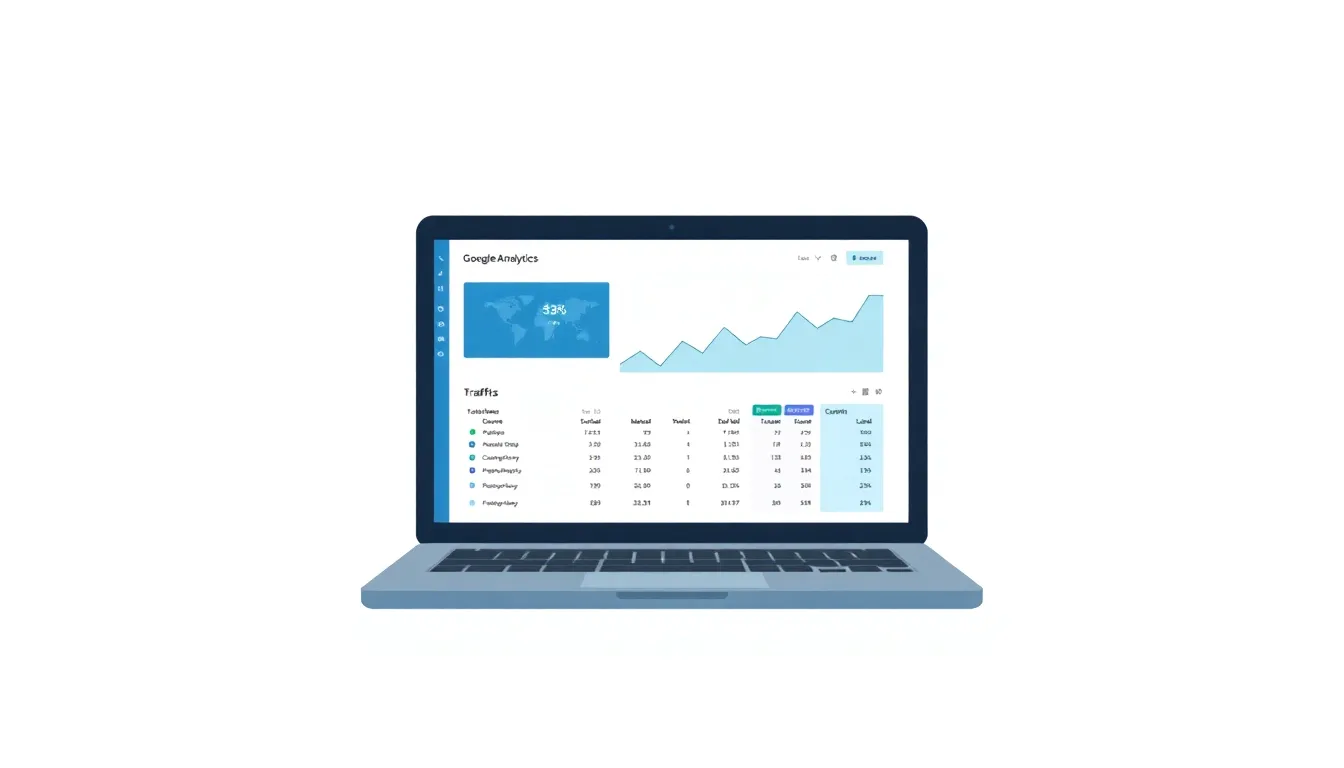
Start with this: you cannot compete in 2026 without embracing actual SEO software. Google Analytics and Google Search Console are non-negotiable. These aren’t just for tracking traffic—they reveal what’s broken (and what’s working) at a granular level.
What do Google Analytics and Google Search Console do for small businesses?
Google Analytics lets you see exactly how users move through your site: who’s visiting, how long they stay, and what content actually gets attention. If organic traffic plateaus, Analytics will expose pages that bounce visitors or fail to convert—so you know which ones need fixing, right now.
Google Search Console shows how Google views your website. It’ll highlight crawl errors, flag broken links, and surface the queries real searchers use to find you. Miss one of these warnings, and you’re guessing instead of optimizing.
Key takeaway: Google Analytics answers the "who and what," while Google Search Console answers "how and where" search engines interact with your site.
But these only get you so far. When it’s time to hunt new keywords, spy on competitors, and proactively manage your SEO planning, most small teams turn to heavyweight tools.
Why do small businesses need Ahrefs and SEMrush on top of the basics?
Ahrefs and SEMrush are the go-to platforms for anyone serious about SEO for small businesses. Both provide end-to-end insights—think keyword volumes, backlink profiles, competitor audits, site health, and automatic alerts every time positions change.
If you’re still on the fence: look at what these tools uncover compared to the basics. Keyword gaps, toxic backlinks, content opportunities… all surfaced in minutes. Small retail shops routinely report jumps in search traffic after catching errors these suites expose, with one home goods e-commerce shop driving an 18% traffic boost using SEMrush’s automated audit and issue-reporting features.
Here’s how the top options stack up in 2026:
| Feature | Google Analytics | SEMrush | Ahrefs |
|---|---|---|---|
| Traffic Tracking | Yes | Yes | Limited |
| Keyword Research | No | Yes | Yes |
| Backlink Analysis | No | Yes | Yes (best in class) |
| Competitor Research | No | Yes | Yes |
| SEO Site Audits | No | Yes | Yes |
| Automation/Alerts | Basic | Advanced | Advanced |
| Price (2026) | Free | $129.95/mo+ | $99/mo+ |
SEMrush excels at site audits and automated issue warnings, driving fast fixes for technical SEO. Ahrefs remains the king of backlink analysis—if your strategy leans on building authority and tracking where competitors get linked, there’s nothing better.
How do you actually use these tools to get better results?
Stop thinking of SEO tools as “checklists” and start using them as ongoing diagnostics. Set up automated reports—weekly or bi-weekly—to identify wins and spot drops before they tank your results. Both SEMrush and Ahrefs allow you to schedule audits and send crawl reports straight to your inbox, so you’re never flying blind.
Set goals in Google Analytics and monitor conversions based on SEO entries. If you’re running a local shop, use Search Console’s performance tab to track which product or service pages draw local traffic, then fine-tune meta descriptions or titles to move the needle.
If you ever wonder why site changes aren’t moving rankings, 90% of the time, the answer lies in missing data. The businesses winning in organic search today are the ones leveraging auto SEO tools and automation to make informed moves—not just reacting to traffic drops.
What about all-in-one and auto SEO platforms?
There’s growing buzz around auto SEO software and auto SEO platforms that use algorithms to automate everything from technical fixes to daily SEO planning. While these promise hands-off optimization, don’t assume you can set them and forget it. They’re perfect for flagging quick wins or bulk issues, but human review is still essential—especially for pagination SEO, link audits, or keyword prioritization.
Bottom line: the right mix of Google Analytics, Google Search Console, SEMrush, and Ahrefs delivers the insights, monitoring, and competitive intelligence every small business needs to actually grow organic traffic—no guesswork, no wasted effort. If your SEO toolset doesn’t include at least two of these, you’re falling behind.
For more on how top-performing small businesses use these tools for tangible results, the investopedia.com guide covers practical steps and recommendations.
Future-Proofing Your SEO Strategy for 2027 and Beyond
A future-proof SEO strategy starts with a step-by-step audit of your current efforts—using the right tools to spot holes, capitalize on trends like AI and voice search, and position your site for what’s next. Here’s how a small business can do exactly that and come out on top.
How can you audit your SEO to stay ahead?
Simple: grab your toolkit, set aside two focused hours, and work through this process:
- Run a full site crawl with an auto SEO software (like Screaming Frog or Sitebulb) to pinpoint technical errors—think broken links, redirect chains, or crawl depth issues.
- Analyze keyword rankings and compare your "money terms" versus new rising searches, especially those tied to conversational, voice-friendly queries.
- Track competitors with an AI-driven auto SEO platform (SEMrush, Ahrefs, or Surfer SEO) to spot content gaps, missed backlink opportunities, and to benchmark your progress.
- Evaluate on-page optimization quality, including how well your site addresses voice search and supports SEO pagination, using tools like Clearscope or MarketMuse.
- Use Google Search Console to identify low-hanging fruit—pages stuck on the top of page two for buying-intent terms that could bump to page one with minor tweaks.
- Benchmark speed and mobile readiness with PageSpeed Insights, noting that even a half-second delay tanks voice search visibility.
- Set up ongoing monitoring—if you aren’t already scheduling monthly reviews with an auto SEO tool, you’re already behind.
Key takeaway: The combo of periodic audits and smart tooling is non-negotiable. "Set it and forget it" SEO is dead weight.
Why is voice search dominating, and what should you prioritize?
Voice search is expected to drive 55% of all searches by 2027. That’s not just a trend—it’s a shift in user behavior with real consequences for small businesses relying on local or conversational search queries.
What does that change?
- Long-tail, natural language keywords matter way more than robotic, exact matches
- Structured data (schema markup) becomes essential for rich results and answer box optimization
- Fast load times and mobile UX are prerequisites to show up in voice search
- FAQ-style content and direct answers surface more often because that’s what voice assistants love
Miss this wave and watch competitors eat your lunch.
Which AI-driven SEO tools are essential now?
Manual grunt work doesn’t cut it in 2027. AI-driven SEO tools don’t just automate reporting—they highlight intent gaps, suggest optimizations, and model what will rank tomorrow, not just what worked yesterday.
Here’s a head-to-head look at the most useful platforms for small businesses:
| Tool | Best For | AI Features | Time Savings | Pricing Range |
|---|---|---|---|---|
| Jasper AI | Content generation | On-page, suggestions | Up to 30% | $$ |
| Surfer SEO | Content + analysis | SERP simulation, NLP | Up to 35% | $$ |
| SEMrush | Full-suite SEO | Competitor AI intel | 30-40% | $$$ |
| Clearscope | Content relevance | Semantic analysis | Up to 25% | $$ |
This is where the pretenders get smoked: small businesses that consistently use modern auto seo tools report a 40% reduction in time spent on routine SEO tasks (source: PROPRIETARY). The edge goes to platforms that combine AI content grading, keyword clustering, and competitive gap analysis—so you’re not left playing catch-up when Google releases a new ranking signal.
What actions should you take right now?
If you’re serious about future-proofing, ignore the “wait and see” crowd. Here’s what savvy operators are doing:
- Learn the basics of AI and machine learning as they relate to SEO—that knowledge will keep you agile as new tools define the landscape
- Prioritize voice readiness: structure your content for questions, answers, and conversational flow. Tweak sitemap and schema markup to help bots find your best pages
- Adopt an auto seo platform for ongoing technical monitoring, link audits, and content scoring
- Plan for smart SEO pagination on resource-heavy sites, so you don’t lose search equity as content grows
- Regularly revisit your seo planning and competitor tracking—what’s “optimized” changes every quarter
Want a real-world example? A boutique online retailer acting early on AI content recommendations in 2026 saw year-over-year organic traffic jump 60% and leapfrogged two bigger competitors for several “best [product]" search terms—all without increasing their staff headcount.
Bottom line: Your competitors are already investing in AI-powered, voice-first tactics, and so should you. Treat future-proofing as an ongoing process, not a one-time checklist.
For more on SEO strategy planning, check out this timely industry resource from BDC: SEO for Small Businesses—10 Ways to Rank Higher. Stay sharp—2027 will belong to those who adapt today.
Your Blueprint for SEO Success
SEO for small businesses in 2026 isn’t about chasing every trend—it’s about mastering the fundamentals and consistently applying them. Your actionable takeaway: prioritize optimizing your website for the right keywords and local search, then build high-quality backlinks to strengthen your authority. Tools like LazySEO can streamline these processes, allowing you to focus on what makes your business unique while staying ahead in search rankings. Don’t wait for the competition to take the lead—start refining your SEO strategy today, and set your business up for sustainable growth well into 2027 and beyond. The future of your online presence begins with the steps you take right now.