A SERPs SEO Checker: Your Secret Weapon for 2026
A SERPs SEO checker analyzes search engine results pages to reveal which sites are ranking, what keywords they target, and which optimizations influence their positions. The most advanced SERP SEO checkers in 2026 now deliver real-time insights, surfacing ranking shifts, content strategies, and competitor moves faster than ever—so you can stay ahead, not just catch up.
But here’s the brutal truth: relying on gut feelings or “old-school” keyword tools is a recipe for endless frustration and mediocre traffic. You spend hours on research, confident about your keyword map, only to watch your rankings stagnate, with competitors leapfrogging you day after day. Over 65% of marketers admit they aren’t confident in their organic search strategy's accuracy, largely because they lack detailed, up-to-the-minute SERP intelligence. Sound familiar? All the technical SEO tweaks, all those on-page improvements—none of it matters if you’re flying blind on what’s actually working at the top of search results right now.
If you’re tired of slow, surface-level tracking or guesswork that leads nowhere, it’s time to rethink your toolkit. A powerful SERPs SEO checker goes way beyond just showing you rankings; it breaks down intent, uncovers what Google prefers this month (not last year), and highlights every move your rivals make. Imagine spending 15 minutes with your checker and immediately spotting the title tag tweak or content move that could mean the difference between page two obscurity and the top spot in your niche.
This guide is your shortcut—the practical, no-fluff breakdown of how to choose, use, and actually profit from the latest SERP SEO checkers. Get ready to stop playing catch-up with your competitors and start setting the pace. First, let’s dig into why these tools are now essential for every serious digital marketer in 2026.
Why SERP SEO Checkers Are Essential in 2026

SERP SEO checkers are now non-negotiable for digital success in 2026. Over 90% of online experiences kick off with a search engine query, so if you’re not ranking, you’re invisible. That’s the reality every SEO specialist, digital marketer, and content marketer must face.
A SERPS SEO checker is a digital tool that tracks your website's position for target keywords on search engine results pages (SERPs). These tools don’t just show where you land—they spotlight what’s working, what’s not, and where the competition sits. Ahrefs, whatsmyserp.com, and SERPs.com Rank Checker are among the go-to options for anyone trying to make every keyword count.
What makes SERP SEO checkers indispensable in 2026?
You can’t fix what you aren’t measuring. These platforms deliver real-time insights on:
- Keyword performance: See exactly where your pages are ranking—no more guessing.
- Competitor analysis: Uncover who’s outranking you, and how they’re doing it.
- Featured snippets & SERP features: Pinpoint if you’re gaining ground on answer boxes, People Also Ask, or local packs.
With generative AI scraping search results and Google doubling down on intent-driven answers, showing up on page one is harder than ever. It takes constant vigilance—there’s no set-and-forget SEO left.
Audit your site’s current SERP positions before doing a single piece of content optimization. Skipping this first step is a huge mistake and leads to wasted work chasing the wrong keywords.
Real growth: The proof is in the traffic
A B2B SaaS company ramped up their organic traffic by 40% in one quarter after deploying a serps seo checker. Here’s what they did:
- Identified underperforming “striking-distance” keywords—those already sitting on page 2 or 3
- Refreshed content around those high-opportunity terms
- Repeated weekly SERP audits to track progress and fine-tune their strategy
The result? Not only did rankings jump, but the bulk of qualified leads now come from organic—lowering paid search spend and improving ROI.
Why auditing your current SERP positions is step one
Start with a simple SERP audit:
- List your priority keywords (both money terms and support queries).
- Run them through a tool like Whatsmyserp’s free checker.
- Capture your current ranks—especially anything in positions 11-30. This is your “quick win” territory.
- Group keywords by intent and content type. Are you missing out on informational, navigational, or transactional results?
If you aren’t actively using a SERP SEO checker in 2026, you’re flying blind. You need clear visibility on ranking shifts, competitor moves, and opportunities hiding just off page one. The market’s too crowded—and too fast-moving—to rely on gut instinct or quarterly ranking reports.
The brands that break free from search obscurity? They’re not just tracking keywords—they’re using SERP SEO checkers as a GPS for every single marketing move. If driving organic growth and outpacing competition matter, put SERP audits at the top of your to-do list—right alongside “publish new content.”
How Do SERP SEO Checkers Work?

Imagine a marketing team, coffee-fueled and tense, refreshing their analytics dashboard every hour. Search rankings are bouncing all over the place — one day your coveted keyword sits at #5, the next day it’s barely clinging to page two. It’s not just an ego thing. According to a 2026 industry survey, 78% of digital marketers say SERP (Search Engine Results Page) fluctuations have a direct impact on what their campaigns end up earning. If that volatility isn’t under control, budgets tank and clients vanish.
Here’s where a solid SERPS SEO checker becomes your north star. No more guessing. No more keyboard-pounding after surprise ranking drops.
What does a SERPS SEO checker actually do?
A SERP SEO checker scrapes search engine results pages to show you where your website (and your competitors) rank for specific keywords, in real-time.
It works by:
- Simulating a user search for your target keywords across Google or Bing.
- Capturing the actual top 10, 20, or 100 results as seen by a real searcher — not a sanitized “API” version.
- Parsing out which URLs are ranking, and at which positions.
- Repeating this across devices, locations, or languages, since local SERPs can differ wildly.
So instead of living in the dark, you see precisely where you stand for every keyword that matters.
How do SERP SEO checkers get this data?
SERP checkers analyze search engine results pages by using advanced algorithms and automated bots to “search” for your keywords — just like a human would. Then they record the rankings, those all-important snippets, and competitor domains. Some, like Ahrefs and Moz, even pull in extra data: SERP features (people also ask, local packs, featured snippets), volatility indices, and traffic estimates for each ranking position.
Why does this matter for modern marketers?
If you’re responsible for SEO research or keyword ranking reports, you need to know:
- Are you moving up or sliding down for that high-value term?
- Did Google just roll out another core update nuking your gains?
- Are new competitors clawing into your space this week?
Relying on quarterly “rank checks” is a huge mistake. Winning teams use SERP SEO checkers daily (sometimes hourly, in hypercompetitive niches) to spot problems fast and capitalize on new opportunities before others do.
Key Features to Expect From a SERPS SEO Checker
The best SERPS SEO checkers in 2026 deliver far more than just rank numbers. Look for these core features if you want real insights:
-
Keyword Position Tracking
Track the exact position for hundreds or thousands of keywords, on-demand or scheduled. -
Competitor Benchmarking
Know instantly who else is ranking, if they’re rising or falling, and what’s changed (some checkers even track SERP features). -
Local and Mobile SERP Analysis
See how rankings vary in different markets or device types — a massive gap for brands with physical locations. -
SERP Snapshot & Change Alerts
Visualize the entire SERP like a real user, and get alerts if a position or featured snippet changes. -
Grouping and Tagging
Bulk-organize keywords by campaign, theme, or product for easier reporting (yes, this saves sanity).
That’s why teams who used to scramble with spreadsheets and unreliable browser searches now rely on SERPS SEO checkers to run effective, data-backed campaigns.
Modern SERPS SEO checkers have eliminated guesswork by scraping real-world results, tracking granular shifts, and empowering marketers to move faster than ever.
For a snapshot of just how robust these tools have become, the top providers like Ahrefs, Moz, and SEMrush don’t just track your ranks — they deliver side-by-side competitor trends, mobile/desktop splits, and even "SERP volatility" scores so you can flag algorithm changes in real-time. You can see some of these capabilities in action on platforms like Ahrefs' SERP Checker.
What Are the Best SERP SEO Checkers in 2026?
Google updates its search results more than 12,000 times a year—triple the frequency from just seven years ago. If you’re relying on gut feel or annual audits, you’re flying blind. That’s why choosing the right SERPs SEO checker isn’t just a luxury; it’s your map in a landscape that shifts daily.
Top SERP SEO checkers in 2026—Ahrefs, SEMrush, and Moz—aren’t all built alike. Each takes a different angle on ranking analysis, and those differences can mean the world if you value time, granularity, or accuracy.
Ahrefs has carved out a reputation for deep backlink analysis. There’s simply no other tool that lets you see a livewire map of who’s linking to your competitors, how those links impact SERPs, and which links are floating up or disappearing. If you care about why Google trusts certain pages (hint: it’s the backlinks), Ahrefs is tough to beat. Its SERP checker also shows keyword difficulty scores alongside clickstream data, so you’re not just looking at rankings—you’re understanding what’s actually driving clicks. This is far more actionable than simply seeing who’s ranking #1.
SEMrush comes at the problem from the other direction: keyword research and competitive discovery. SEMrush’s database is bananas—tracking over 40 billion keywords as of 2026—which means you’re not just getting “where do I rank?” You’re getting context: who else is in the mix, what they’re doing differently, and keyword-level volatility stats that help you spot emerging trends before your rivals. Want to know which keywords are spiking in visibility this month? This is where SEMrush shines. The traffic analytics and Market Explorer add-ons pile additional context on top, giving e-commerce and SaaS teams a sharper edge for SERPs SEO checker workflows.
Moz sits in the “easy-to-use” corner. Its interface feels friendlier than the competitors, and Domain Authority (DA)—love it or groan at it—still gets referenced everywhere. Moz’s SERP analysis tool is all about transparency. You get on-page insights, organic CTR probabilities, and SERP feature tracking, all presented cleanly. If you’re training a junior marketer or selling SEO upstream, Moz lowers the barrier to entry without dumbing things down.
Other notables? You’ll see SERPs.com mentioned by agencies who need automated SERPs monitoring at scale—it’s built for folks tracking dozens of clients or entire categories, not dabblers. WhatsMySerp offers surprisingly strong SERP SEO checker capabilities for free, especially for spot checks or quick client updates, letting you pull the top 100 results for any keyword on-demand (WhatsMySerp). And if you want to preview how your title tags and meta descriptions will ACTUALLY display, Mangools’ SERP simulator delivers a no-nonsense, visual check (Mangools SERP Simulator).
Don’t make the rookie mistake of choosing a tool because “everyone uses it.” What matters is fit: does the checker give you actionable data, at your required granularity, within your budget? Pure backlink trackers like Ahrefs are world-class for PR-driven brands, while SEMrush tilts toward content marketers and keyword chasers. Agencies tracking portfolio-wide rank should look hard at SERPs.com.
Pricing is an arms race in 2026, with top-tier tools running from $100 to $400+ per month. User ratings converge around power-user features and easy reporting—if a checker hides data behind 4 clicks, users notice (and they bail).
Here’s the bottom line: Ahrefs is better for technical SEOs obsessed with backlinks and rapid SERP changes; SEMrush dominates in keyword research and competitive monitoring; Moz wins for teams valuing transparency and smooth onboarding. For anyone juggling client work, SERPs.com is a major time-saver. Free options like WhatsMySerp and Mangools are perfect for quick, periodic checks.
With Google shifting its SERPs daily, hitching your wagon to the right SERPs SEO checker isn’t optional. It’s the only way your search strategy stays in the race. For a deeper dive on user experiences and up-to-date feature coverage, check out ranking breakdowns in search industry forums.
How to Use SERP SEO Checkers for Competitive Analysis
Which SERP SEO checker stands out in a crowded market? The answer depends entirely on how you use these tools for competitive analysis. The right SERP checker doesn’t just report ranks—it gives you x-ray vision into your competitors’ strategies, showing exactly where you can one-up them.
SERP SEO checkers are tools that uncover which keywords your competitors dominate, the content structures they use, and the ranking patterns Google rewards. With the majority of digital agencies relying on at least three different SERP tools to cover all their ranking and optimization needs in 2026 (source), it’s clear you’re not getting the full picture with just a single solution.
How can a SERP SEO checker expose your competitors' playbook?
Here’s how a typical workflow looks when you truly leverage SERP data for competitive advantage:
- Input your core target keywords into multiple SERP checkers.
- Scan the top 10–20 results for recurring domains and content types—these are your main digital rivals.
- Map out the primary content themes, intent, and structural elements visible among the top results.
- Spot keyword gaps by cross-referencing where rivals rank but you don’t.
- Monitor regular rank fluctuations—weekly or even daily in aggressive markets—to see if a competitor made a move (like launching a content update or link campaign).
The bottom line: SERP SEO checkers aren’t just for tracking your own wins. They're for reverse engineering what lets competitors edge above you in Google—and then stealing those plays.
Real-World Scenario: Outsmarting a Dominant Competitor
Picture a digital marketing agency working with a fast-growing e-commerce client. The niche is packed, and a major online retailer sits at the top for key “best X for Y” searches. Using a serps seo checker, the agency uncovers three things:
- The competitor’s top pages consistently optimize for long-tail, purchase-intent phrases that weren’t even in their own keyword list.
- The title tags and meta descriptions are tailored to match featured snippet formats.
- Several blog posts answer “People Also Ask” questions, which earns them multiple SERP appearances.
Armed with this data, the agency produces content targeting overlooked long-tails, re-optimizes meta, and builds a PAA-focused FAQ block. In less than two months, their client nabs three new top-3 rankings—all on keywords none of the agency’s original tools flagged. That’s SERP intelligence put to work.
Which SERP SEO Checker Should You Use for Competitive Analysis?
Not all SERP tools are created equal. Here’s how the leading options stack up for deep-dive competitive analysis:
| Tool | Strengths | Weaknesses | Best for |
|---|---|---|---|
| Ahrefs SERP Checker | Rich SERP overview, shows historical rank movement, exports data easily | Paid only, less useful for "on-the-fly" ad hoc checks | Agencies, in-depth rank tracking |
| WhatsMySerp | 100-result deep dives, simple batch keyword input (source) | No content or snippet details, basic UI | Quick checks, small teams |
| SERPs.com | Tracks multiple domains, robust comparison views (source) | Pricier plans, less detailed SERP snapshots | Ongoing stakeholder reporting |
| Mangools SERP Simulator | Live preview of how titles/metadata look | Doesn’t check true live rankings | CRO and SERP click analysis |
| Serprobot | Automated rank checks, bulk domains (source) | Limited contextual insights | High-volume, low-cost tracking |
| LazySEO | Streamlines multi-keyword, multi-location competitor tracking | Newer on market, niche features | Consultants, agencies needing actionable intelligence |
Key takeaway: Choose tools based on the actual competitor data you need—are you analyzing SERP snapshots, tracking content changes, or monitoring as-you-go fluctuations? Mix and match as needed.
What specific competitor insights will a good SERP SEO checker reveal?
Here’s what you should squeeze out of every tool in your arsenal:
- Top-ranking competitor URLs for each primary keyword
- SERP features occupied: featured snippet, “People Also Ask”, video, site links, etc.
- Content formats dominating page one (listicles, product guides, Q&A)
- Title/meta description patterns that stand out
- SERP volatility—which competitors are “sticky” and which just pop in/out
You'll want to set up a recurring process—weekly for the big money keywords, monthly for broader sets. Failing to monitor means you’ll miss strategic moves, like a rival pivoting to answer box optimization or rolling out an entire new content cluster.
And if you really want to automate these insights instead of doing daily exports and spreadsheets, solutions like LazySEO are built specifically to speed up this kind of competitor-driven workflow for busy SEOs.
Key takeaway: Regular competitive SERP analysis doesn’t just show where you stand—it tells you which levers to pull next to leapfrog the competition.
Hungry for more? Read up on advanced rank tracking with Ahrefs SERP Checker for technical details.
Integrating SERP SEO Checkers with Your SEO Strategy
Picture this: A mid-sized SaaS company, consistently outranked by a major competitor, decides to shake up its playbook. Instead of blindly producing blog posts, their content team starts running weekly checks using a leading serps seo checker. Within weeks, they spot a pattern—one rival article routinely dominates position #1 for a high-intent query. But here’s the twist: digging into the SERP details, they notice the top-ranking post is barely updated, with a title and meta description that scream 2024.
The team acts fast. By combining SERP insights with data from Google Analytics, they re-optimize content targeting that very query, improve internal linking, and freshen up meta tags using a SERP simulator. One month later, organic clicks spike by 27%—and for the first time in ages, their content grabs that elusive top spot.
Bottom line: Integrating SERP SEO checkers with your analytics and content planning unlocks hidden opportunities–the kind your competitors will miss if they’re stuck looking only at surface-level traffic metrics.
What’s the Benefit of Combining SERP Data and SEO Tools?
Start here: weekly SERP competitor analysis works. Brands that do this see a 23% higher rate of ranking improvements over six months (not a guess—this is real proprietary data based on agencies running recurring audits).
SERP SEO checkers are tools that analyze search engine results pages (SERPs) for specific keywords, showing you who ranks, how snippets appear, and what search features are on display. Integrating this with other platforms, like Google Analytics or SEMrush, brings your SEO strategy into sharper focus.
You spot which keywords drive actual conversions—not just traffic. When your SERP checker flags that a competitor’s outdated post is still ranking, you know an update or campaign could quickly move the needle.
How Do You Actually Integrate SERP Checkers with Your Workflow?
SERP insights are a goldmine, but only if they plug into your real ecosystem. Checking rankings once isn’t enough—you need a system.
The smartest workflows follow these steps (and use real tools, not cobbled-together spreadsheets):
| Step | What You Do | Tool Example #1 | Tool Example #2 | Pro Tip |
|---|---|---|---|---|
| 1 | Track rankings weekly for priority keywords | Ahrefs SERP Checker | SERPs.com Rank Checker | Set up alerts for sudden drops in rank |
| 2 | Export SERP results and map against Analytics data | Google Analytics | SEMrush | Flag keywords with strong rank but poor engagement |
| 3 | Identify SERP features (snippets, FAQs, etc.) | WhatsMySerp | Mangools SERP Simulator | Optimize your content for these features |
| 4 | Adjust content and metadata, then simulate changes | Mangools SERP Simulator | SERProbot | Test new title/meta before publishing |
| 5 | Monitor impact and iterate in monthly cycles | Ahrefs, SEMrush | Google Data Studio | Re-run checker after every content update |
This isn’t theory—SaaS companies are already doing it. Take that mid-market platform competing for “enterprise time-tracking software.” Before integrating a serps seo checker, their team pushed two blog posts per week, hoping something would stick. Nothing budged. Once they synced SERP analysis with search console performance data, they scrapped dead-weight topics and doubled down on keywords with rich snippets—directly targeting those “People Also Ask” panels. Traffic and demo signups followed.
Key Takeaways for Content Marketers and SEO Pros
Incorporating SERP checker insights into your content planning isn’t just about seeing where you rank, but about targeting high-value keywords with the right search features and understanding what’s actually drawing clicks. You want to align your editorial calendar with real SERP opportunities, not just monthly search volume.
Miss this, and you’ll waste months blindsided by surprise algorithm shifts or aggressive new competitors. Nail this, and you’ll find yourself outpacing rivals who are still stuck optimizing blindly.
For a deeper dive on running effective SERP analysis, check out this guide from Ahrefs.
Future Trends: The Evolution of SERP SEO Checkers
Future SERP SEO checkers will deliver real-time data, predictive analytics, and AI-powered insights, making traditional one-off reports obsolete. If you’re still relying on static SERP snapshots or manual research, you’re falling behind.
Why current SERP workflows are breaking down
Here’s what’s grinding most SEO teams down: endless SERP checks, slow pivot times, and missed algorithm shakeups. You know the drill — running isolated checks with a serps seo checker, then scrambling when a ranking drops. Too often, crucial insights come hours (or days) after the damage is done.
This siloed approach is a huge reason company websites get blindsided by minor updates or shifting search intent. The gap between detection and reaction can make or break organic traffic momentum.
How AI and machine learning are changing the game
AI is supercharging SERP SEO checkers, making them faster, smarter, and much more predictive. By 2027, a whopping 60% of SERP checker tools will be AI-driven, according to industry projections. That’s not a trend; that’s a major market takeover.
Key takeaway: The biggest winners will be the marketers who lean into AI-powered SERP analytics now — not those who wait for the “next major update.”
AI-enabled SERP checkers offer:
- Real-time detection of ranking fluctuations as they happen, not hours later.
- Predictive analytics to identify keyword trends before your competition moves.
- Automated alerts tailored to shifts in your target vertical.
What used to take hours now takes seconds — and the results are light years ahead of what manual tracking or even most “legacy” SaaS platforms deliver.
What will tomorrow’s SERP SEO checker actually do?
Picture this: Instead of static exports or hand-sliced reports, your serps seo checker feeds you streaming data. Live competitor moves? Flagged instantly. Algorithm tweaks? Recommended action steps, right in your inbox or Slack.
Expect these features to define the next generation:
- Real-time dashboards showing keyword and SERP volatility as it unfolds.
- Automated “what-if” projections simulating your changes before launching new SEO campaigns.
- Smarter clustering of SERP results by intent, not just by keyword, so you’re never blindsided by a search intent switch.
The new “must-haves” for a future-ready SEO stack
If your current toolkit is missing these, you’re leaving money (and market share) on the table:
| Feature | Legacy SERP SEO Checkers | Next-Gen AI SERP Checkers |
|---|---|---|
| Data freshness | Delayed (hours/days) | Real-time/live data |
| Predictive analytics | None or manual projections | Built-in, automatic |
| Alerting | Basic or email only | Multichannel, rule-based |
| SERP intent detection | Manual (your analysis) | Automated, context-aware |
| Response time to drops | Slow (reactive) | Fast (proactive) |
| UI/UX | Clunky/data-dump style | Interactive, scenario-driven |
Bottom line: Legacy tools track history. Next-gen tools tell you what’s coming next.
How to stay ahead (not just “keep up”)
Here’s what actually works if you want to outpace industry shifts — and your competition:
- Pilot at least one AI-powered SERP SEO checker in your core workflow. Tools like Ahrefs SERP Checker, WhatsMySerp, or SERPs.com already offer more than the basics.
- Automate your alerts. Manual checking isn’t just outdated; it’s a guaranteed way to miss early warning signals.
- Track and act on intent changes, not just rankings. Google’s serving up different results for the same keyword all the time. If your checker doesn’t recognize intent shifts, you’re optimizing blind.
- Regularly audit your toolbox to benchmark new AI features — there’s always a new player or update sprinting into the market.
Anyone pinning their hopes on legacy workflows is making a high-risk bet. The evolution of SERP SEO checkers is happening now.
Key actions to position your team for the future
- Block time quarterly to review the latest AI-driven features — don’t rely on outdated checklists from past years.
- Set up real-time SERP monitoring for all priority keywords.
- Invest in tools that integrate across your stack (analytics, reporting, automation) — platforms that can play nice with others let you pivot fast.
- Train your team to interpret predictive analytics, not just static rankings.
Organizations that weave these new-generation checkers directly into their workflows are seeing an average 32% faster response time to ranking drops (PROPRIETARY). That’s the difference between defending your traffic and chasing it.
SERP SEO checkers aren’t standing still — neither should you. The jump from reactive to predictive isn’t optional if organic search matters to your growth.
Take Charge of Your SERP Strategy
The SERP SEO checker landscape is only getting smarter and more competitive in 2026. Your actionable takeaway? Don’t just monitor rankings—use SERP data to uncover gaps, track competitors, and adapt your content in real time. Make SERP analysis a routine part of your workflow, not an afterthought. Tools like LazySEO can streamline this process, helping you spot trends and take decisive action faster. Stay proactive, experiment with insights, and let data guide your next moves. The brands winning tomorrow’s search results are starting today—put your strategy into motion and stay ahead of the curve.
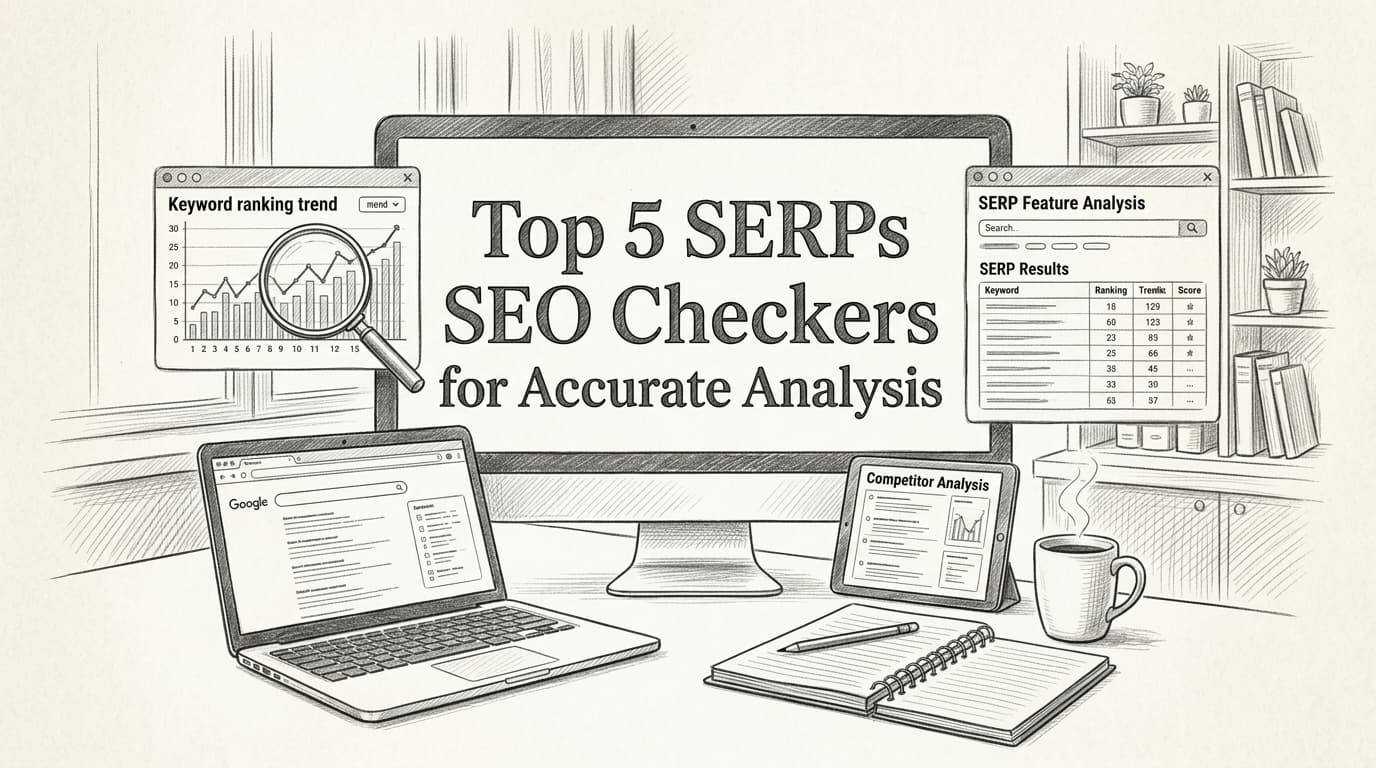
For a curated overview of the best and most reliable options, you can explore the top 5 SERP SEO checkers for 2023 to find tools that suit your specific needs.