
- SEO Audit
- Technical SEO
- E-commerce SEO
- SEO Tools
SEO Audit Checklist: Ensure Your Website is Optimized

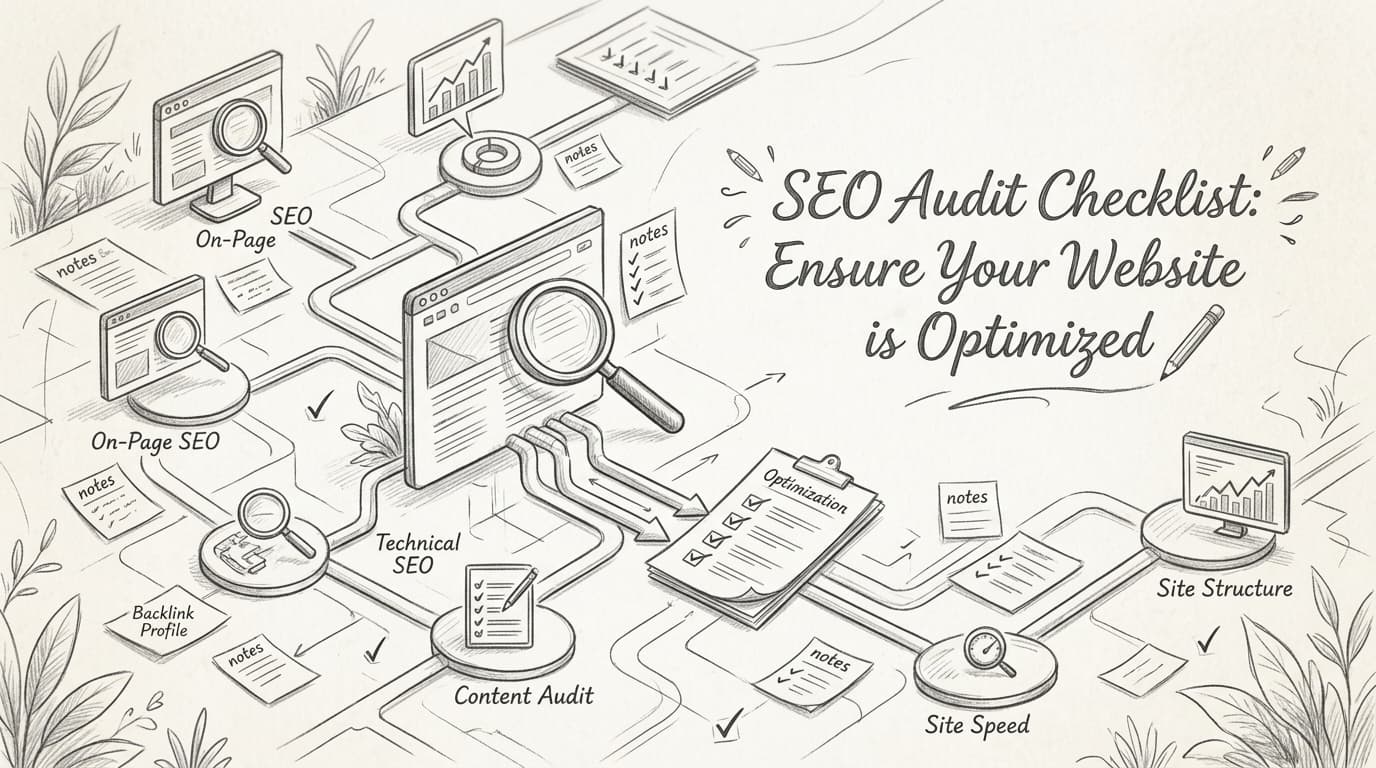
An SEO audit checklist is a step-by-step framework that helps you systematically evaluate and fix technical, on-page, and content issues blocking your site from higher Google rankings. In 2026, an effective checklist means the difference between languishing on page three and beating competitors to those lucrative top spots. You know you need one—but why does auditing your SEO still feel like untangling a ball of Christmas lights in a dark basement?
Here’s the brutal truth: more than 70% of websites fail basic SEO health checks in quarterly audits, according to recent industry surveys. You’re constantly hearing conflicting advice, wrestling with jargon-heavy tools, and juggling the ever-changing priorities of technical fixes, keyword intent, and content freshness. Even with solid SEO instincts, finding the real “leaks” in your organic traffic can feel like chasing shadows—especially as search engines get smarter, and your competitors invest in next-gen strategies.
Sound familiar? Maybe you’ve spent hours optimizing meta tags or researching keywords, only to see rankings fizzle or organic traffic bounce. Or you inherited a site riddled with legacy issues, broken links, and slow load times, and you’re wondering where on earth to start. You want tangible, up-to-date guidance—not just another vague list dumped from some AI tool, but a practical SEO audit checklist built for 2026’s algorithms and user behaviors.
This article strips away the confusion. You’ll get a modern, actionable SEO audit checklist tailored to the new realities of ranking: covering technical audits, choosing the right tools, sharpening on-page tactics, and optimizing content to seize every available search opportunity. Whether you’re troubleshooting sluggish e-commerce traffic or leading digital marketing for a SaaS brand, these steps are your playbook for measurable, future-proof results.
Ready to cut through the noise and spot what’s really holding your rankings back? Let’s start by understanding why your 2026 SEO audit checklist matters more than ever.
Why an SEO Audit Checklist is Crucial for 2026

Running an SEO audit checklist in 2026 is the difference between owning your search real estate and getting outranked by aggressive competitors on autopilot. The reality? The average website hemorrhages 30% of its potential traffic every year because of unresolved SEO issues Moz audit checklist. If there’s one lever that actually moves the needle for digital marketers and SEOs, it’s systematic, regular audits—because Google changes the rules, and so do your competitors.
Bottom line: Skipping regular SEO audits guarantees lost traffic, wasted budgets, and missed revenue. There’s no excuse for winging it—especially with today’s fierce algorithm updates and auto SEO software advancements flooding the market.
What happens if you neglect a proper SEO audit checklist?
Expect a slow leak—traffic deteriorates, technical debt piles up, and Google starts favoring leaner, better-optimized sites. Here’s the kicker: A B2B SaaS startup increased traffic by 50% in 3 months just by following a comprehensive SEO audit checklist. They discovered duplicate content, unoptimized image files slowing load times, and broken internal links dragging down their authority. Fix the basics, and Google rewards you. Ignore them, and say goodbye to that sweet organic growth.
Common SEO Issues vs. Impact on Traffic vs. Solutions
If you want traffic gains, you can’t address SEO in isolation—every technical and content factor adds up. Here’s a snapshot breaking down what’s at stake:
| SEO Issue | Impact on Traffic | Solution |
|---|---|---|
| Broken Internal Links | 15-20% drop in crawl efficiency | Run regular link checks, fix or redirect [source: Moz] |
| Missing Meta Tags | Up to 10% fewer organic clicks | Auto-generate unique meta titles/descriptions |
| Slow Page Speed | +2 sec = 50% higher bounce rate | Compress images, use caching |
| Unoptimized Pagination SEO | Cannibalization, poor indexation | Use rel="next"/"prev", create canonical tags |
| Duplicate Content | Penalized rankings, diluted authority | Consolidate URLs, set canonical, rewrite as needed |
| Lack of Mobile Optimization | 20% of users will bounce immediately | Switch to responsive, test mobile UX |
Notice that issues like unoptimized pagination SEO and duplicate content aren’t just technical annoyances—they directly bleed away visibility and conversions.
How often should you run an SEO audit in 2026?
Waiting for traffic to tank before auditing is like waiting for your car to break down before getting an oil change. Schedule a full SEO audit checklist at least once per quarter. This cadence allows you to catch new algorithm changes, implementation drift from your dev team, and evolving search behaviors—before they cost you.
Smart teams don’t just audit when there’s a problem. They make SEO audits as routine as financial reviews. It’s not paranoia; it’s good business and essential SEO planning.
Why skipping audits is a huge mistake
The competition is getting faster, leaner, and heavily automated. Every missed issue is a gift to rival brands using the latest auto SEO tools and adaptive SEO platforms. Without a living, evolving audit checklist, you’re handing over market share and letting technical problems become growth bottlenecks.
SEO is not a “set and forget” channel. If you’re not constantly optimizing, you’re actively falling behind.
Check the 2025 version of the Ultimate SEO Audit Checklist to dig even deeper into good approaches and platform-specific tips.
How to Conduct a Comprehensive Technical SEO Audit

Picture this: Your website’s organic rankings are steady one day, and tanked the next. Traffic plummets, leads dry up, and sales alerts stop pinging. What happened? Chances are, a major Google algorithm update just dropped—and you missed the warning signs. In 2026, failing to run a thorough technical SEO audit is a gamble you can’t afford. Search engines demand more than clever content and keyword stuffing. They want flawless tech.
A genuine technical SEO audit boils down to a relentless, structured scan of your digital foundations. You’re looking for three big things: site speed, mobile-friendliness, and indexability. It sounds simple, but each of these hides layers of complexity. Slack off on any one, and you'll be haunted by crawling issues, disappearing pages, or unbearably slow load times—each a dealbreaker for both users and crawlers.
Start with site speed. No one sticks around for a sluggish experience—least of all mobile users. According to Google’s own numbers, 53% of mobile users will abandon a site that takes over 3 seconds to load. That’s most of your mobile audience—gone, with just a single bad server pull or unoptimized hero image. Here’s where you get tactical. Google PageSpeed Insights gives you actionable data and clear recommendations, but it won’t catch every hiccup. GTmetrix dives deeper, showing precise waterfall timings, total page weight, and even video recordings of real user loads. Tools like these let you pinpoint what’s dragging you down—bloated JavaScript, oversized images, a slow TTFB—and fix it before users hit the back button.
Next, mobile-friendliness. This isn’t up for debate anymore—even B2B buyers scroll on phones between meetings. If Google’s Mobile-Friendly Test flags elements—tiny links, inaccessible menus, viewport messes—you’ve just uncovered low-hanging fixes that can spike your rankings. Responsiveness is table stakes, not a nice-to-have. Expect every algorithm update to double down on mobile UX issues.
Now, onto indexability—the silent killer of SEO dreams. Doesn’t matter how good the content or design is; if Google can’t crawl and index your pages, they might as well not exist. Check server logs for crawl errors, audit your robots.txt for bad disallows, and inspect sitemaps for broken or duplicate URLs. Pay extra attention to canonical tags and crawl directives—bad setups will quietly nuke your visibility. This is especially true for big e-commerce and SaaS sites with aggressive pagination and faceted navigation. Overlooking details like crawl depth or mistaking “noindex” for “nofollow” leads to large swathes of your site disappearing from search overnight.
But don’t assume you’ll remember every technical trap. A structured audit checklist is non-negotiable. One overlooked directive or image attribute can blow up months of good SEO planning. Professionals in 2026 lean on comprehensive checklists sourced from Moz's definitive SEO audit guide or create automated reminders in their favorite project management stack. Manual or not, the checklist is your safety net.
Here’s the hard truth: Technical SEO’s growing complexity isn’t accidental. As algorithm changes come fast and furious, your competitors are running audits every quarter and surviving savage updates. According to a 2025 SEMrush survey, 68% of websites who locked in quarterly SEO audits maintained or improved their rankings—even after Google’s big shakeups.
Bottom line? If you aren’t running a systematic technical SEO audit—using solid data, the right tools, and a real checklist—you’re not just risking lost rankings. You’re quietly handing your competitive edge to sites that take technical SEO seriously. The difference between survivors and casualties is how methodically you hunt down issues before Google does.
For a detailed walkthrough on technical checks, consider this technical SEO checklist that covers every crucial step in 2026’s landscape.
What Are the Best Tools for an SEO Audit?
A jaw-dropping 43% of top-ranking websites in 2025 had at least one unresolved technical SEO issue, according to a recent Ahrefs study. Skipping an in-depth audit or using the wrong tool is almost a guarantee you’re leaving rankings—and revenue—on the table.
Which tools do top marketers use to simplify their SEO audits?
Tools like SEMrush, Ahrefs, and Moz are the industry standards for comprehensive SEO audits, with 70% of marketers relying on such platforms to simplify the process and spot issues early moz.com. These aren’t just dashboards—they bring deep crawling, competitor tracking, and automated reporting that surface problems you’d never catch manually.
If you’re serious about SEO planning that covers everything from technical errors to SEO pagination, you need a solid tool—no spreadsheet can keep up.
What do SEMrush, Ahrefs, and Moz actually do—and how do they compare?
SEMrush gives you a full site audit, health score, and prioritized recommendations. You’ll get a granular breakdown covering crawlability, site speed, meta issues, and toxic backlinks. Its competitive research is second to none—spot what top rivals are ranking for and what you’re missing.
Ahrefs excels at site audits with a focus on link profile strength, pagination SEO, and in-depth reporting for technical fixes. Its “Health Score” and actionable issue categorization speed up troubleshooting. Ahrefs is also unbeatable for historical backlink data, which is invaluable for SaaS and e-commerce teams chasing authority.
Moz Pro stands out for its user-friendly audits and local SEO tools. Moz’s “Site Crawl” uncovers duplicate content, missing tags, and crawl errors with step-by-step fixes—perfect if you’re onboarding new team members or managing multiple domains.
If you’re running a fast-paced site with frequent updates (like most SaaS, e-commerce, and large blogs), not using an auto SEO tool to schedule recurring audits is a huge oversight. Manual checks miss everything that breaks between deep dives.
What actually makes a good SEO audit tool in 2026?
Focus on these features—it’s what separates useful platforms from shiny distractions:
- Automated crawling: Recurring scans catch new errors without your intervention.
- Comprehensive reporting: Prioritized, actionable fixes—no fluffy metrics.
- Competitor tracking: See how your stack ranks in feature coverage and backlink authority.
- Pagination SEO monitoring: Automatic surfacing of duplicate or broken paginated pages.
- Integrations: Works with your SEO strategy planner or analytics stack.
How do you choose the right tool for your budget and needs?
Prices range wildly: Moz Pro starts around $99/month, SEMrush and Ahrefs push closer to $120–$200/month if you want more frequent crawls or team seats. The trick is ruthless focus: Don’t pay for features you’ll never use, but don’t cut corners on technical diagnosis or recurring audits.
Here’s a quick breakdown:
- Small/local business: Moz Pro’s guided audits and local focus are a great fit.
- Data-driven marketers: SEMrush offers the best all-in-one audit plus powerful keyword tracking and competitive intel.
- Technical SEO leads: Ahrefs’ deep crawl and historical link data crush it for enterprise, large blogs, and SaaS teams.
Trying to hack together free tools or blast through an SEO checklist manually doesn’t scale—especially as Google rolls out more frequent index changes.
Bottom line
Skipping an automated SEO audit tool in 2026 means signing up for missed revenue and headache-inducing technical debt. Prioritize platforms with automated crawling, actionable reporting, and pagination SEO support to keep your site clean—and ranking.
If you want the full checklist most pros follow, Moz offers a free ultimate SEO audit checklist right here.
How to Analyze and Optimize On-Page SEO Elements
Ever stare at a pile of SEO tools and wonder which one is actually moving the needle—or just generating more checklists? That’s the maddening reality for anyone trying to build a bulletproof SEO audit checklist in 2026. Most marketers now juggle at least three platforms per audit, hunting for anything that can give their rankings an edge, yet on-page basics still get overlooked (Moz, 2025).
On-page SEO remains the backbone of organic growth. If you ignore simple elements like title tags, meta descriptions, and header tags, you’re practically handing your competitors search traffic.
What are the most important on-page SEO elements?
The key on-page SEO elements are title tags, meta descriptions, and header tags (H1, H2, etc.). These give search engines and users clear signals about your page’s topic and value. If these are off, don’t expect any fancy “auto SEO tool” stack to bail you out.
Title tags are the clickable blue headlines in search results. Meta descriptions are the text snippets under those headlines. Header tags break up your content and show hierarchy, helping both bots and humans scan your page efficiently.
Why obsess over these? Optimizing your title tags alone can boost your organic click-through rates (CTR) by up to 20% (source). In a world where every competitor is throwing money at auto SEO software or an expensive “SEO strategy planner,” that kind of win is real leverage.
How does optimizing on-page SEO actually improve rankings?
Strong on-page optimization directly impacts where you appear on Google, who clicks, and what happens when they land. Here’s a real-world example:
A SaaS website specializing in project management tools revamped its on-page elements last year. Titles went from bland ("Project Management Solutions") to targeted ("All-in-One Project Management Software for SaaS Teams | Free Trial"). Meta descriptions morphed from generic pitches to value-packed promises. Headers were reorganized for clarity, using keyword-focused H2s and H3s.
Within three months, they saw two things: their target keywords jumped from page 2-3 to the first page, and organic traffic rose by 28%. That’s not luck—it’s dialing in the basics that most “auto SEO platform” promises skip.
What steps should you take to analyze and fix on-page SEO issues?
Start with a content audit. Crawl your site (yes, every unique URL), and extract every title tag, meta description, and header structure. Here’s what to look for:
- Are your title tags unique and under 60 characters?
- Is every meta description actionable and under 155 characters?
- Are you using H1 tags only once per page, with logical H2/H3 breaks?
- Any keyword stuffing, duplicate elements, or missing alt text?
Tools like LazySEO can help spot these low-hanging fixes instantly—perfect if you’re tired of bloated spreadsheets or feature overload.
Which tools stand out for on-page SEO analysis in 2026?
If you feel stuck between “auto SEO” bots and old-school, manual grind, you’re not alone. Here’s what actually separates the top options now:
| Tool | Best For | Unique Feature | Ease of Use | Pricing Range |
|---|---|---|---|---|
| LazySEO | Fast, actionable sitewide audits | Side-by-side audit view | Very high | $ |
| Screaming Frog | Deep technical & on-page detail | Crawl customization | Moderate | $$ |
| Surfer SEO | Content analysis & SERP alignment | NLP keyword guidance | High | $$ |
| SEOptimer | Quick on-page SEO reporting | White-label audit reports | High | $ |
The bottom line: Don’t obsess over adding more tools to your stack. Instead, focus on nailing the basics—audit, fix, and optimize those on-page elements until your click-throughs and rankings actually prove the effort was worth it.
“Too many teams overthink tools and skip execution. Your on-page SEO isn’t a mystery—run a structured content audit and fix the fundamentals before chasing shiny objects.”
If you’re hitting a wall with organic traffic, check whether your basics—yes, those unexciting title tags and headers—are pulling their weight. The sites consistently winning in 2026? They do the boring stuff right…and automate the rest.
The Role of Content in an SEO Audit
You’d be surprised how often people treat on-page SEO like it’s a “set it and forget it” deal. Make some tweaks, optimize a few meta tags, pat yourself on the back—and move on, right? This is a huge mistake. The truth is, great content isn’t a one-time task. If your site isn’t continually refreshed with relevant, high-quality material, you're practically inviting your rankings to slide.
Here's the hard reality: Websites with regularly updated content receive 55% more traffic compared to those that let pages stagnate. Google’s AI-driven algorithms in 2026 are relentless about surfacing freshness and relevance—outdated pages sink, no matter how “optimized” they looked last year. The consequence? Sites that freeze their content strategy get trampled by competitors with a living, breathing editorial calendar.
Why Does Content Matter So Much for SEO Audits?
AI search—especially Google’s Gemini and OpenAI’s ChatGPT-integrated search—now weights content signals even more heavily. High-quality content signals authority, trustworthiness, and topical relevance. The more often your site is updated with genuinely useful information, the stronger these signals get.
Content quality is how valuable and trustworthy your information is compared to what else is out there. Content relevance is how closely your material matches actual searcher intent—what people want, right now, in 2026. Audits that miss this don't just leave ranking gains on the table. They practically guarantee your competition will grab them.
What Happens When You Refresh Content? (Real Case Example)
Take a mid-sized SaaS company that appeared stuck on page 2 for several key product terms. They reviewed their old blog posts and landing pages—not just for keywords, but for topical freshness and user intent. Each month, five outdated resources were updated: stats refreshed, new user stories added, call-to-actions aligned with current product features, and internal links fixed.
Within three months, those refreshed URLs jumped an average of 14 positions, and two broke into the top three for high-converting queries like “auto seo platform” and “seo planning.” Organic lead volume doubled. The kicker? No big new link-building blitz—just disciplined, ongoing content updates.
Don’t believe the myth that old posts should be left alone. Consistent content refresh is the fastest, most reliable lever for SEO gains in 2026.
Core Content Checks for Your SEO Audit
Every serious SEO audit checklist in 2026 must pressure-test site content for accuracy, timeliness, and engagement. Here’s a quick run-through of what you should actually be checking:
- Outdated Content: Flag pages with old statistics, irrelevant offers, or dated references. If it hasn't been touched in 12+ months, it's probably hurting more than helping.
- Topical Relevance: Make sure every post and page is mapped to real queries your audience is searching in 2026—not what worked two years ago.
- Content Gaps: Benchmark against leading competitors. Where do they offer deeper or more current resources? Steal their best angles, then go further.
- Content Structure: Are posts scannable? Use headings, bullets, and images. AI search ranks “reader-friendly” layouts higher.
- Internal Linking: Update links to fresh content and ensure navigation flows make sense for both humans and crawlers.
- Thin or Duplicate Pages: Merge, expand, or cut dead weight. If Google can’t tell why a page exists, neither can users.
How to Maintain Content Quality and Relevance
Here’s what works: Implement a robust content calendar. This isn’t just for bloggers; it’s for any serious marketing, e-commerce, or SaaS brand that wants predictable SEO wins. Your calendar should cover:
- Monthly refresh cycles for core landing pages and evergreen content.
- Quarterly competitive audits to spot content gaps.
- Scheduled user feedback reviews to pinpoint topics or FAQs your audience wants addressed.
This level of planning does more than keep your pages alive—it builds authority, increases search visibility, and signals to Google that you’re actively serving today’s users, not yesterday’s.
The key takeaway: If your SEO audit checklist doesn’t aggressively evaluate content quality and freshness, it’s incomplete. Sites that consistently update and optimize content are dominating page one, while laggards are fading from view. Want a deeper dive? Check out the full SEO audit checklist from Moz for more content-first strategies.
SEO Audit Checklist for E-commerce Websites
Revamping outdated product pages can unlock buried traffic that most e-commerce teams never realize they're missing. One leading beauty retailer doubled its organic visits in just six months—not with new ad spend, not with risky backlink schemes, but by systematically updating stale descriptions and cleaning up their product metadata. Their secret? Following a targeted e-commerce SEO audit checklist that focused on the foundation: product optimization and site structure.
The difference here is night and day. E-commerce SEO audits aren't about chasing generic technical fixes—you need a razor-sharp approach that prioritizes your catalog, navigation, and how Google reads your shop's pages.
What makes an e-commerce SEO audit unique?
An e-commerce SEO audit zeroes in on product detail pages and category architecture. Why? Because, according to Siteimprove, a whopping 60% of e-commerce traffic now lands via organic search, funneling most buyers straight to individual products or filtered category results (source).
Neglect your product metadata or bury a top seller six clicks deep, and you’re giving revenue away to competitors who simply organize and label better.
How does content freshness impact e-commerce rankings?
Here’s what often gets missed: Google’s freshness algorithm cares deeply about product information, not just blog posts. According to a Content Marketing Institute 2025 report, e-commerce sites that updated product copy in the past year saw a 32% average increase in organic traffic. That’s a third more shoppers just by modernizing the words and tags already on your site.
Don’t think of your catalog as “set it and forget it.” Regularly updating product descriptions, images, and metadata signals to both users and search engines that your shop is active, trustworthy, and relevant—qualities baked into Google's ranking priorities for 2026.
What product page elements matter most for SEO in e-commerce?
Some elements on a product page move the SEO needle far more than others. Here’s a breakdown showing the most important product page SEO elements, why they matter, and practical tips for optimizing each.
| Product Page Element | Importance (1-5) | Optimization Tips |
|---|---|---|
| Title Tag | 5 | Use primary keyword & product specifics, limit to 60 characters |
| Meta Description | 4 | Highlight benefits & unique features, encourage clicks, 150-160 characters |
| Product Description | 5 | Write unique, detailed copy that answers shopper questions |
| Image ALT Text | 4 | Describe images with target keywords, include variants & sizes |
| Structured Data (Schema) | 5 | Implement Product, Review, and Offer schema for enhanced SERPs |
| Product Reviews | 4 | Encourage genuine reviews, display aggregate rating markup |
| Canonical Tags | 4 | Reduce duplicate content from variations and filter pages |
| Internal Links | 3 | Link to related products, categories, and buying guides |
| URL Structure | 4 | Keep URLs short, keyword-rich, and human-readable |
The bottom line: If you’re not optimizing your product titles, descriptions, and reviews, you’re leaving both rankings and revenue on the table.
Why regular updates—NOT just auditing—are non-negotiable
Most e-commerce brands audit once a year, fix a few things, and move on. That’s a huge mistake. Google and shoppers expect up-to-date content—especially when product details, availability, and even seasonality change constantly. Revisit your catalog and update not just the obvious stuff, but also overlooked metadata, schema, and even image tags. This creates ongoing improvement loops, instead of a one-and-done patch job.
For rapidly changing catalogs, even auto SEO software or an auto SEO platform can help monitor and flag stale listings, but this only works if you implement suggested changes and keep your data pipes clean.
Expert tip: Prioritizing regular metadata refreshes on top-selling SKUs drives faster ranking gains than “optimizing everything at once” across a giant product base.
How site structure and pagination impact e-commerce SEO
Bad category architecture or clunky pagination can kill discoverability, especially as Google crawls deeper. Proper pagination SEO ensures bots can follow “Next” links while users see clear breadcrumbs and filters. Never let hundreds of products pool on a single uncategorized page, and avoid endless “load more” experiences that break traditional crawling.
Revamping navigation often surfaces hidden gems—products with high conversion rates but low organic visibility simply because they weren’t linked from higher-traffic pages or featured in popular collections. Review your main navigation and category hierarchy quarterly as a standing action item on your seo audit checklist.
Remember: E-commerce SEO isn’t just about checking boxes. It’s about building an ongoing, systematic workflow where your best products, clearest descriptions, and sharpest architecture work together to drive compounding growth—year after year.
Future-Proofing Your SEO Strategy with Regular Audits
Regular SEO audits are the safeguard that keeps your strategy on track as search engines evolve—helping you swiftly adapt to every algorithm shake-up before your rankings take a nosedive. Businesses running audits every six months see a 30% improvement in search rankings, catapulting them above competitors who treat SEO as a one-and-done project (source).
Sticking your head in the sand is not a strategy. Google’s algorithm updates are relentless, and if you’re not actively course-correcting, you’re leaving your hard-won organic growth wide open to penalty drops and lost traffic.
Key takeaway: A bi-annual SEO audit acts like an early-warning radar so changes in search or user expectations don’t catch you off guard.
What does a future-proof SEO audit actually look like?
You can't afford to rely on the same tactics that worked last year. This isn’t 2025. AI keyword stuffing, sloppy link “audits,” or ignoring user intent will get your site penalized faster than you can say “rank volatility.” Here’s what separates a forward-looking strategy from yesterday’s quick fixes:
- AI & machine learning in your audits: Plugging your site into an auto SEO software or platform that can analyze patterns beyond what a human spots—think anomaly detection, competitor change monitoring, or intelligent crawl budget optimization.
- Semantic search analysis: Is your content truly matching evolving search intent, or just ticking boxes for keywords?
- Structured data check: Rich product schema and FAQ markup especially for ecommerce—don’t leave clicks on the table (source).
- Pagination SEO: Ensuring your site navigation and pagination markup isn’t blocking crawlers or diluting your topical authority. SEO pagination done right will ensure both users and bots get where they need to go.
Example: AI-Driven SEO Audit in Action
Consider a growing SaaS platform struggling to compete with legacy giants for long-tail keywords. Instead of firing off boilerplate audits, their team integrates an auto SEO tool with machine learning capability. This system flags that most traffic is leaking from poorly optimized paginated content—an issue missed by last year’s checklist. Post-fix, their organic visits to paginated series jump 18% in two months.
That’s what future-proofing looks like: rapid detection, action, and compounding gains.
Why Do Regular Audits Matter? The Data
Don’t let SEO become a tedious checkbox exercise. The data is in: businesses running structured, regular audits (at least twice a year) report a 30% improvement in rankings compared to ad-hoc efforts (source). That’s a difference you’ll see on your P&L, not just your dashboard.
Setting Up a Proactive SEO Audit Schedule
Don’t let “not enough time” be the excuse for falling behind. Bake a regular audit into your broader seo planning, and automate what you can with the right tools rather than letting manual checklists gather dust.
Here’s a bulletproof plan for proactive SEO audits:
- Schedule audits twice yearly: Once at the start of Q1 (after holiday volatility), and again at the end of Q3 before holiday ramp-up.
- Automate baseline checks: Use an auto seo platform to run recurring scans on technical and on-page health.
- Level up with human expertise: Layer in manual reviews for content quality, semantic alignment, and competitor shifts.
- Document findings and next actions: Use a seo strategy planner to line up fixes for devs, copywriters, and strategists.
- Benchmark progress: Track analytics and rankings for specific fixes, so you can actually prove the ROI of your audit.
Comparison Table: Old-School vs. Future-Proof SEO Audits
| Old-School Annual Audit | Future-Proof Bi-Annual Audit | |
|---|---|---|
| Frequency | Yearly | Every 6 months (or faster for key pages) |
| Tech Approach | Manual checklists, spot fixes | Automated tools, AI anomaly detection |
| Coverage | Technical basics only | Technical, semantic, user intent, competitor |
| Pagination SEO | Usually ignored | Explicitly checked and optimized |
| Data Used | Static crawls | Live analytics, historical patterns, SERP data |
| Adaptability | Reactive | Proactive, testing against current algo trends |
| Outcome | “Safe” but slow improvement | Measurable ranking & CTR gains, faster pivots |
Staying ahead in search isn’t about outsmarting the algorithm—it's about building a process that adapts as fast as it changes. That’s what regular, strategic SEO audits actually deliver.
Ready to Elevate Your Rankings?
The most important move you can make right now is to put your seo audit checklist into regular practice—not just as a one-time fix, but as an ongoing part of your digital strategy. Schedule routine audits to uncover fresh opportunities, catch issues before they escalate, and keep your site aligned with ever-changing search engine algorithms. Tools like LazySEO can streamline the entire process, making it easier to spot gaps and act quickly. Remember, consistency is key: the businesses that audit often are the ones that outrank competitors in 2026 and beyond. Start today, stay proactive, and watch your SEO results compound over time.
Free tools for this topic
Put this guide into practice — no sign-up needed.
- SEO Audit ToolAudit any webpage for technical and on-page SEO issues and get a prioritized list of fixes.
- Crawler SimulatorSee what a search engine crawler sees on your page: title, meta, headings, OG tags, HTTP headers and raw HTML.
- Robots.txt CheckerValidate your robots.txt for crawl issues. Check sitemap references, blocked paths, and crawlability.
Was this article helpful?
Want content like this on autopilot?
LazySEO researches, writes, and publishes SEO-optimized articles daily. You just review.
Related Articles
SEO Audit Checklist: Ensuring Your Site's Health
Discover the ultimate SEO audit checklist for 2026 to enhance your site's performance and boost rankings. Essential for SEO specialists and marketers.

How to Use SERPs SEO Checker for Accurate Analysis
Discover how to use SERP SEO checkers to boost your rankings in 2026. Learn top tools, integration tips, and future trends.
Best SEO Tools for 2026: Enhance Your Digital Marketing
Discover the best SEO tools in 2026 to boost your organic traffic and streamline your strategy. Explore top picks for keyword research, competitor analysis, and more.
Continue exploring
Free SEO Tools
Put these strategies into practice instantly. Our free tools help you generate meta descriptions, optimize title tags, analyze SERPs, and research keywords.
Explore free toolsFind Your Use Case
See how founders, SaaS companies, agencies, and bloggers use LazySEO to grow organic traffic — with strategies built around their specific goals.
Browse use cases