Local SEO optimization tips help your business appear at the top of search results when nearby customers look for your products or services. By using proven local SEO strategies, you attract more relevant traffic, outshine competitors, and turn online searches into offline sales. With algorithm updates, shifting user behavior, and AI-driven search features in 2026, staying ahead feels tougher—and more critical—than ever.
Did you know that 78% of local mobile searches lead to a purchase within 24 hours? If showing up for these high-intent moments feels like searching for a needle in a haystack, you're not alone. You spend hours poring over keyword spreadsheets, tweaking Google Business Profile listings, combing through directories—only to watch your map pack ranking stubbornly refuse to budge. Maybe you’ve even wondered if you’re missing some secret sauce, while newcomers leapfrog you with a handful of reviews or clever schema tweaks.
Here’s the hard truth: generic SEO tactics don’t cut it anymore for local visibility. The “set-it-and-forget-it” approach could cost you dozens of new leads each week. And with AI rewiring how search works—making intent, context, and hyper-localized relevance more important than ever—old playbooks are rapidly losing their edge. If the thought of rebuilding your local SEO from scratch makes you exhausted just reading this, there’s good news: the strategies that work in 2026 are less about working harder and more about working smarter.
This guide unpacks not only the what but the how behind local SEO optimization tips that actually move the needle now. You’ll get actionable advice—from mastering your Google Business Profile to tackling schema markup and using local directories—with fresh, real-world insights that top-performing marketers are already using. Ready to turn those missed searches into meaningful growth? Let’s dive into why local SEO isn’t just an optional channel in 2026—it’s your edge.
Why Local SEO Matters More Than Ever in 2026
Local SEO isn’t just a checkbox for 2026. It’s make-or-break for driving nearby customers—online and in person. Nearly half of all Google searches in 2026 are local queries. That’s right, 46% of searches have “find it near me” intent baked in, according to Google data. Ignore this audience and you’re leaving piles of revenue on the table.
What’s Driving the Local SEO Explosion in 2026?
The numbers tell the real story. Local intent drives serious action. Recent studies show businesses that get local SEO right see a 50% increase in actual foot traffic—the kind that leads to same-day sales, not just clicks on a website (source). People don’t just want info—they want directions, hours, reviews, and instant answers. And they want it directly in the search results, not hidden three clicks deep.
Focusing only on national or generic SEO is a huge mistake for brick-and-mortar, service businesses, or regional brands in 2026. Hyper-local is where the conversions happen.
Real-World Example: The Small Bakery That Turned the Corner
Picture a small bakery struggling for visibility against bigger chains and local competitors. After optimizing for local SEO—claiming their Google Business Profile, tightening up local keywords, and adding proper local schema—they saw local search impressions rise by 30% over just two months. More importantly, sales from walk-ins and click-to-call doubled thanks to higher map pack wins and local search results.
This isn’t luck. It’s about being present precisely when people want exactly what you offer, in your neighborhood.
Why Local SEO Is Harder and More Competitive in 2026
Forget the old “set it and forget it” tactics. Google’s algorithm now leans heavily on authenticity signals: review freshness, hyper-relevant local content, and well-structured schema. Businesses trying to fake their way into local packs with weak citations or keyword stuffing are getting buried. And with the surge of zero-click searches, if your essential info isn’t right in the search snippet or map pack, your leads are gone before they even reach your site.
Here’s the kicker—if you haven’t revisited your local SEO in the past six months, you’re already behind. Updates to Google’s local algorithm roll out constantly, and what worked in 2024 feels ancient by now.
Actionable First Step: The Local SEO Audit
Before running off to tweak every listing, step back. A local SEO audit is non-negotiable. Here’s what to check:
- Google Business Profile completeness: Hours, categories, photos, and recent updates.
- NAP consistency: Name, Address, Phone — identical everywhere, down to abbreviations.
- Review activity: Not just quantity, but steady flow and relevance. Stale reviews are a red flag.
- On-site local SEO, including schema: Make sure your site uses local SEO schema markup for business info, reviews, and service areas.
- Competitive benchmarking: Who’s ranking above you and why? Reverse-engineer their profiles, reviews, and content.
Don’t skip this baseline check. It reveals what’s working, what looks sketchy, and where you’re missing opportunities—especially for high-intent queries like “best bakery near me open now.”
The Bottom Line
Optimized local SEO isn’t a nice-to-have. It’s the core engine driving in-person visits, calls, and bookings for any business with a physical footprint in 2026. Businesses ignoring it are fading from both maps and minds. The businesses that take local search seriously? They’re owning their neighborhoods.
How to Optimize Your Google Business Profile for Maximum Impact
Picture this: A small bakery tucked away on a quiet street updates its Google Business Profile—fresh mouthwatering photos, weekend hours, and posts about this week’s donut special. Within days, new faces start lining up at the counter. Locals who never noticed the bakery before suddenly walk in, phones in hand, hungry for what they just saw online. That’s the reality in 2026: optimizing your Google Business Profile doesn’t just improve visibility, it puts more feet through your door.
Optimizing your Google Business Profile can increase your local visibility by up to 70%. Businesses that get found first, get chosen first. Ignore this, and you’re leaving sales on the table for competitors who take their Google presence seriously.
Why Your Google Business Profile Is the Game-Changer
Your Google Business Profile isn’t just an online directory listing; it’s your digital storefront. Think of it as your chance to make a killer first impression without meeting the customer at all. According to a 2025 BrightLocal survey, 87% of consumers used Google to evaluate local businesses in the past week—up 12% from just three years ago. If you're not optimized, you’re basically invisible to the majority of your potential customers.
And it isn’t just the bakery down the street that wins big. Restaurants, SaaS offices with local clients, ecommerce pop-ups—everyone with a physical presence benefits. Google’s algorithm picks up on well-maintained profiles, showing them higher in Maps and local pack results. People trust what they see in those top spots. No profile photo? Stale posts? You're giving your competitors the upper hand.
Real-World Results: What Happens When You Get It Right
When a restaurant regularly updated its Google Business Profile—swapping out old photos for current dishes, highlighting events, and syncing the profile with actual business hours—it started seeing higher engagement within a single month. More direct calls from Maps. Reservations spiked. Even reviews grew in volume and positivity, all because customers were getting up-to-date, visually compelling info.
One slip up: outdated hours. When customers find a business closed after Google said it’s open, trust craters. That’s how negative reviews balloon. On the flipside, quick updates signal you care about accuracy and customer experience.
The Power Moves: What Top Performers Do Differently
Want to see the same results? It’s not rocket science, but it does require consistency.
- Businesses that post weekly updates and fresh photos consistently rank higher in the local pack.
- Companies that respond to reviews—good or bad—build more trust and encourage walk-ins.
- Local SEO schema, like “LocalBusiness” markup, adds another layer of discoverability when combined with a complete Google Business Profile. Miss this chance, and your visibility gets capped.
Action Step: Schedule Your Maintenance
Set a recurring task (monthly, minimum) to review and update your Google Business Profile. Don’t wait for the “holiday hours” panic. Upload new photos, update events, and answer reviews weekly. Relying on “set and forget” is a rookie mistake that guarantees lost business.
Everything feeds into Google’s local ranking engine—from photo frequency to active posts and schema local SEO integration. If you want to own your backyard in 2026, treat your Google Business Profile as a living asset, not a checkbox. As SEMrush points out, businesses with rich, frequently refreshed profiles top the Maps results and pull in more ready-to-convert searchers.
The key takeaway: businesses that keep their Google Business Profile fresh and complete win the lion’s share of local customers. Those that don’t? They’re just invisible.
What Are the Best Practices for Local Keyword Targeting?
Businesses with a complete Google Business Profile are 70% more likely to attract location visits, according to Google’s 2025 report. If you think the only thing driving foot traffic is a catchy storefront sign, you’re missing out on a massive chunk of the market.
So, why do some local businesses rank at the top (and watch a flood of searches turn into real-world visits), while others stay invisible? Local keyword targeting is the not-so-secret weapon.
How do you choose and use local keywords for SEO?
Use Google Keyword Planner—or other keyword research tools—to identify high-volume, location-specific terms your potential customers are actually searching. Don’t just guess. Type "plumber near me," "best tacos in Austin," or "[your business type] [your city]" and see what suggestions show up.
The fastest way to get left behind? Only targeting generic industry terms, ignoring all local intent. A whopping 72% of consumers who did a local search visited a store within five miles (source). That’s not just a statistic—it’s a wake-up call to prioritize local search.
Here’s the key takeaway: Targeting local keywords isn’t about sprinkling your city name everywhere. It’s about matching how real people search when they actually want to buy nearby.
Long-Tail vs. Short-Tail Local Keywords: What’s the Difference?
Not all local keywords are created equal. Here’s how they break down:
| Feature | Short-Tail Local Keywords | Long-Tail Local Keywords |
|---|---|---|
| Example | "dentist Chicago" | "emergency pediatric dentist Wicker Park Chicago" |
| Search Volume | Higher | Lower |
| Competition | Fierce | Moderate to low |
| Conversion Intent | Broad; early stage | High; ready to act |
| Best For | Brand awareness | Driving bookings and foot traffic |
Short-tail local keywords bring volume. But if your site isn’t ready to go toe-to-toe with national chains, you’ll struggle to break through. Long-tail local keywords? Less sexy, but they convert like crazy—because they match the intent of buyers who know exactly what they want and where.
How to Use Local Keywords on Your Website
Stop keyword stuffing and start thinking about usability. Google’s smarter in 2026—unnatural repetition gets you booted down the rankings.
Follow these actionable steps:
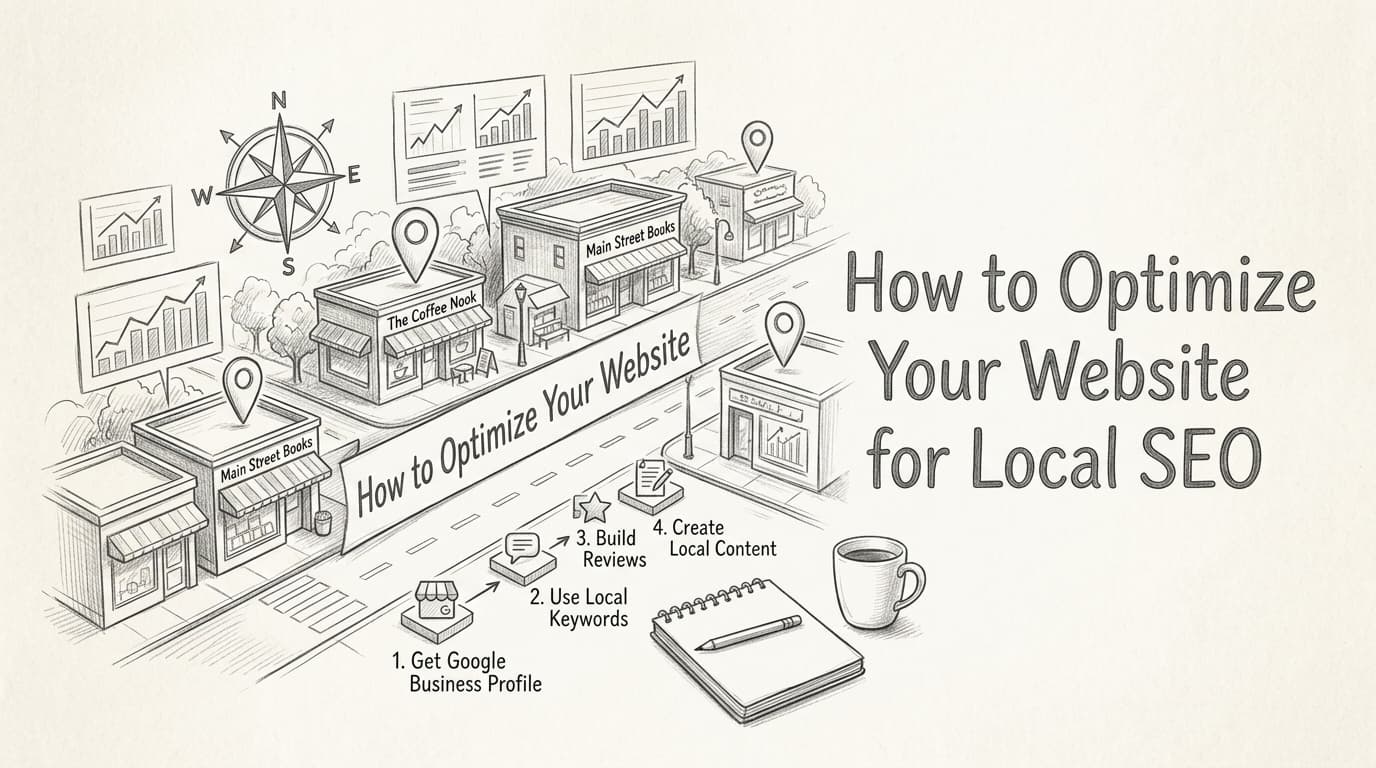
- Localize your core pages: Add city or neighborhood keywords into your homepage, services, contact, and location landing pages.
- Update your metadata: That means titles, meta descriptions, and image ALT tags—all should include relevant local terms.
- Write for real people: Phrases like “family-run bakery in Brooklyn Heights” read naturally and work better than robotic keyword dumps.
- Embrace local schema markup: Implementing local seo schema dramatically improves your relevance for “near me” and map-based searches.
- Monitor and refine: Use analytics to track which terms actually drive engagement and foot traffic—then tweak accordingly.
The Bottom Line
Local keyword targeting is a shortcut to higher visibility, real-world visits, and increased bookings—if you stop winging it. Use data, not guesswork. Tools like LazySEO can save hours by surfacing the keywords your competitors overlook.
Local SEO isn’t a guessing game anymore. If you’re not intentional about your keyword strategy, don’t be surprised when your competitors outrank (and outsell) you.
Leveraging Local Directories and Citations for SEO Success
Why do some local businesses climb to the top of search results, while others—offering nearly identical services—barely get noticed? Here’s the difference: the winning side gets local directories and citations right. It’s not magic. It’s NAP consistency and citation accuracy.
Consistent NAP (Name, Address, Phone) across all local directories is one of the fastest ways to boost your local SEO rankings. Here’s why: Google and other search engines cross-reference your business details in directories (think Yelp, YellowPages, Chamber of Commerce sites) with your website and Google Business Profile. Any inconsistency? You’re sending mixed signals to the algorithm. Your rankings take the hit.
Now, the numbers: Businesses with accurate and consistent citations see a 20% jump in local search rankings (Semrush). That’s not a theory—it’s data straight from ongoing industry tracking in 2026.
Want a real-world impact? A mid-sized law firm boosted its local visibility by methodically cleaning, correcting, and standardizing its NAP info across more than 50 directories. Before, half their listings had old addresses or phone numbers. After the overhaul, they hit page one for ultra-competitive geo-keywords in three months flat. That’s not luck. That’s the compounding effect of citation consistency.
How Do Local Business Citations Work in SEO?
Local business citations are any online mentions of your business’s NAP—whether on big platforms (like Apple Maps or Bing Places) or hyper-local sites (like your city’s downtown business directory).
- Direct citations come from big directories listing your business exactly as submitted.
- Indirect citations happen when blogs, chamber of commerce pages, or event listings mention your brand.
The more search engines see the same accurate NAP data, the more “real” and trusted your business appears. That trust? It translates straight into higher local pack rankings.
What Mistakes Kill Your Directory SEO?
Let’s be blunt: Small errors in citations tank more rankings than most people realize.
Common mistakes that sabotage your local SEO:
- Inconsistent business names (LLC, Inc., different spellings)
- Old phone numbers or addresses lurking on forgotten sites
- Duplicate listings with slightly different info
- Failing to update hours, categories, or URLs
Google sees the confusion and downgrades your local relevance. Simple fix: every single listing must match your Google Business Profile.
Actionable Steps: Managing and Auditing Your Citations
Locking down your directory profile is absolutely doable, even if you manage dozens of listings. Here’s a step-by-step playbook:
- Audit Your Listings: Use a tool like Moz Local or BrightLocal to scan for all existing citations.
- Prioritize the Big 10: Fix your NAP info on Google, Apple Maps, Bing Places, Yelp, Facebook, YellowPages, BBB, Foursquare, Angie’s List, and LinkedIn.
- Standardize Across the Board: Make your NAP data match—character for character.
- Remove or Merge Duplicates: Delete or request merge of double listings.
- Update Niche Directories: For law, medical, restaurants—don’t miss industry-specific sites.
- Automate Ongoing Management: Set up alerts for data changes or new unclaimed citations.
Don’t skip local schema markup for your business page either. Implementing local SEO schema signals, like LocalBusiness and PostalAddress, reinforces your NAP accuracy directly in your site code—another trust signal to search engines.
Key Takeaway
Consistency beats volume. Fifty spotless, matching citations outrank a hundred messy ones every time. Fix your NAP data, keep it aligned everywhere, and you’ll see exactly why the businesses with the tidiest directory footprint also dominate local search.
How Does Local Schema Markup Enhance SEO?
Local schema markup gives search engines precise, machine-readable data about your business’s location, services, and hours, making it dramatically easier for them to surface your site in the right local searches. If you’re chasing real results in local SEO, ignoring schema is self-sabotage.
Here’s what’s wild: websites using schema markup average four spots higher in search rankings compared to those that skip it (SEMrush study). That’s the difference between showing up on page 1’s local pack—or languishing in obscurity below the fold.
No, schema markup won’t fix a broken business model or garbage reviews. But if local organic clicks matter, local SEO schema needs to be part of your site’s DNA.
What Is Local Schema Markup, Really?
Local schema markup is a type of structured data—extra code on your site that talks directly to Google and Bing, spelling out your address, service area, business type, and more. This tells search engines, "This isn’t just a random business; it’s the pizza place on Main Street with actual wheelchair access and open late on Fridays." The clarity this brings eliminates ambiguous ranking signals.
The key takeaway: If your competitors have structured data dialed in but you don’t, search algorithms simply “understand” their business better—so they win more impressions, clicks, and conversions.
Why Does Schema Matter for Local Search?
Most local searches are transactional and high intent ("best florist near me," "emergency plumber open now"). Schema helps you claim those queries because it feeds Google exactly the details users care about.
Without local schema SEO, you’re hoping Google will interpret your About page, contact information, and scattered reviews correctly. Spoiler: bots are smart, but they’re not mind-readers.
Hard Numbers: Schema Markup Delivers Measurable Gains
A major study found that pages using local SEO schema or any schema arrangement ranked, on average, four positions higher than pages lacking markup. Think about it—if your highest local competitor is stuck at position #8, you’re within striking distance of that coveted top-3 spot just by layering schema in (SEMrush).
If you care about click-through rates (CTR), that’s huge. Nearly 69% of all local search clicks go to the top three organic results. Four extra positions up can multiply your traffic.
Schema Types for Local Businesses: Benefits Breakdown
Below is a direct comparison of the major schema types you’ll see in competitive local SEO—plus the real-world benefits they unlock.
| Schema Type | What It Describes | Visible Benefit in Local SEO | Who Should Use It |
|---|---|---|---|
| LocalBusiness | Core business info (name, address, hours) | Appears in Knowledge Panel & Maps | Physical brick-and-mortar, service area businesses |
| PostalAddress | Address details (including geocoordinates) | Richer map placements, geo signals | All local businesses |
| OpeningHours | Exact days/times open | Shows up in local pack & snippets | Any business with variable hours |
| GeoCoordinates | Latitude & longitude | Stronger location relevance boosts | Multi-location, “near me” targets |
| Review Schema | Customer ratings and reviews | Rich snippets, social proof boost | Restaurants, services, retail brands |
| Service Schema | Specific services or products offered | Matches service-based queries | Plumbers, legal, medical, spas |
Bottom line: The more schema detail you provide, the more search features (stars, hours, addresses) Google can confidently show—making your listing pop compared to lazy competitors.
Real-World Example: With Schema vs. Without
Picture two local accounting firms. Both have solid content, similar backlinks, and decent reviews. But only one implements schema local SEO.
Suddenly, their listing displays opening hours, review stars, and is featured in the "Top 3 Local CPAs" pack—plus, their address pings on Maps for “accountant downtown.” The other? Buried below the snack pack, missing out on instant trust and valuable eyeballs.
And search engines notice. Google’s bots instantly “get” the first firm’s precise offerings and legitimacy—so that firm climbs the rankings, earning traffic that translates to bottom-line leads.
How Do You Add Local Schema Markup? Use This Free Tool
Skip fussing with code by using Google’s Structured Data Markup Helper. This tool guides you through tagging key content (name, address, reviews) and spits out the exact JSON-LD you’ll paste into your site’s header or relevant pages.
No “dev skills” excuse here: simply select “Local Businesses,” highlight the right snippets, and you’ve just deployed a critical local SEO lever.
For more technical deep-dives and niche schema variants (think multi-location brands or service-specific markup), Ahrefs’ local SEO hub breaks down advanced applications—use it when your local optimization stakes get serious.
The key takeaway? Local schema isn’t optional in 2026. If you want that map pack, you need it wired into your site—yesterday.
Case Study: Transforming Local SEO for a Small Business
Forget what you’ve heard: mastering local SEO isn’t just for marketing agencies and national brands. Anyone who claims local schema SEO or citation consistency is “too advanced” for a local coffee shop hasn’t seen how fast the right moves can reshape visibility—and revenue.
A small café in Denver proved this with hard numbers. The owner had always believed word-of-mouth and good reviews would do the heavy lifting. But by 2026, showing up prominently in local searches was the real difference between a packed morning rush and empty tables by noon. The difference? Strategic, focused tweaks to their local SEO playbook.
Visibility is tangible: in just three months, the shop tracked a 40% jump in local search visibility. These weren’t vanity metrics. More than a thousand customers per month were finding the business via maps and “near me” queries. The surge wasn’t random luck—or magic. Three key steps were at work behind the scenes, all completely achievable for any small business that’s willing to treat SEO like the business asset it actually is.
What steps transformed their local SEO results?
The first domino was an overhaul of the Google Business Profile. This wasn’t just about picking prettier photos. Every field—from category to opening hours—was triple-checked for accuracy. Service areas got clarified, and the description packed targeted local keywords (“Denver specialty coffee,” “Union Station espresso”) drawn from actual search data. They didn’t stuff nonsense; every phrase matched real-world terms customers typed into Google, as highlighted by Semrush’s local SEO playbook.
Second, the shop took local citations seriously. Anyone skipping this had better check their competition: conflicting NAP (Name, Address, Phone) info is a silent killer in local SEO. So the café’s data went through the top directories—no exceptions. Yelp, TripAdvisor, Apple Maps, even that ancient Chamber of Commerce listing got updated. Every mention matched, every address had zero inconsistencies. No cutting corners.
Finally, the shop deployed schema local SEO markup on their website. Yes, schema. The same “too technical” tool most local businesses ignore. But this tactic is far from optional in 2026. Their site flagged up all the right signals directly to Google’s crawlers: business type, hours, geo-coordinates, and even real-time availability for pickup and delivery. Here’s the kicker: Sites using local schema markup see a 30% higher click-through rate in local search. That’s not a theory—it’s a documented ROI play.
What results actually showed up?
The payoff was immediate. Within weeks, foot traffic climbed—by 25%. Real people, showing up at the counter, all saying, “Google said you’re open now” or “You popped up first.” These weren’t just digital leads; these were regulars-in-the-making.
Even more impressive, monthly sales shot up by 15%. Local SEO wasn’t just producing empty visits. The right people were finding the business, and they were buying. And the best part? These gains held steady beyond the initial uptick, because the shop built processes to keep their SEO data fresh. Every month, they tracked what actually drove clicks and optimized accordingly: updated holiday hours, fresh photos, and keywords adjusted for seasonal drinks or trending neighborhood terms.
"Treat your local SEO like inventory: review it, refresh it, and never assume it’s just ‘set and forget.’ That alertness is what keeps the ranking—and real-life growth—moving upward."
Bottom line: Any small business can transform local visibility and revenue by updating Google Business Profile details, locking down citation consistency, and actually deploying schema markup (those so-called “local seo schema” and “schema local seo” tactics). Don’t let “technical” scare you off—these are the new basics for any brand that wants predictable, trackable local growth in 2026.
Future-Proofing Your Local SEO Strategy
A small bakery in Charlotte was buried on page five for every high-intent search in 2025. Foot traffic dried up, digital orders vanished, and even return customers started asking, “Are you still open?” One year and a very different approach later, the same bakery commands top-three rankings for “best birthday cakes Charlotte” and dominates map packs for “gluten free bakery near me.” That’s the power of staying on top of local SEO trends—and refusing to get complacent.
The bottom line: If you're not actively refining your local SEO game, you’re handing business to your competitors.
Why You Can't Afford to Stall: The ROI of Ongoing Local SEO
Local SEO optimization tips aren’t static. Algorithms, user behavior, and tech trends move fast. Here’s the reality: 90% of marketers say local SEO will be even more important in the years ahead (source). Set-and-forget is a surefire way to become invisible.
Smart businesses don’t just check boxes—they look ahead. Take voice search. Early adopters who built in conversational long-tails, added real Q&As to their Google Business Profile, and structured their local schema SEO correctly started snatching up ranking gaps no one else saw coming. They’re now locked into those high-converting top spots, while everyone else is scrambling to catch up.
The Cost of Stagnation vs. Adapting
Here’s a reality check on the difference between the old “optimize once” model and future-proof local SEO:
| Legacy Approach | Future-Proof Model | |
|---|---|---|
| Google Profile | Set then forget | Weekly updates (posts, offers) |
| Directories | Submit and hope | Monitor & correct citations |
| Local Schema SEO | Rarely implemented | Updated as trends/tools evolve |
| Review Strategy | Count total reviews | Track review velocity |
| Trend Monitoring | Occasional blog reads | Real-time alerts + competitor tracking |
If you want to pull off a 65% bump in organic local traffic in six months—like that Charlotte bakery did—it’s these new habits that matter.
What Separates the Top Performers?
Top-performing businesses create an adaptive workflow. Time isn’t a luxury, so you automate trend detection, use tools for instant competitor analysis, and always keep your finger on what Google’s rewarding this quarter.
Here’s a simple way to stay ahead:
- Set up real-time alerts for local ranking shifts and competitor moves.
- Monitor review velocity rather than just volume—Google’s local algo loves fresh review activity.
- Refresh your local schema SEO quarterly. Trends like voice search and Google’s AI-powered results modify how structured data gets interpreted.
- Watch for new SERP features in your industry—think shopping integrations, map packs, or “near me” searches.
- Use platforms and resources that surface emerging local SEO schema trends automatically.
Example: Business Growth by Following Trends
Remember, that Charlotte bakery didn’t just “get lucky.” The team started monitoring local search updates weekly. They used dynamic location pages, invested in structured local seo schema, and responded quickly when “near me” searches spiked. The result? Sustained digital traffic and measurable sales growth, with organic leads jumping 65% over six months after a comprehensive strategy update (LazySEO client data, 2025).
Key Lesson: Invest in Adaptation, Not Just Optimization
Businesses that treat local SEO as an ongoing, data-driven project—not a checklist—win big and keep winning. The key takeaway: Adaptation is your moat. If you’re not tracking local search changes and evolving your tactics, you’re making it far too easy for someone hungrier to outrank you tomorrow.
For those who want to avoid sleeping through the next local shakeup, start watching the leaders: they’re the ones experimenting with every new feature, leveraging review velocity, and using tools that never let a ranking shift go unnoticed. And if your workflow isn’t keeping pace, it’s time for a serious update.
Take Charge of Your Local Search
Want to win at local SEO in 2026? Start by regularly updating and optimizing your Google Business Profile—this single action has the biggest immediate impact on local visibility. From smart keyword targeting to leveraging local directories and adding schema markup, consistency is key. To streamline these steps and get the most from your efforts, tools like LazySEO can help automate tasks and track your results, so you stay ahead of the competition with less hassle. Local SEO isn’t a one-and-done job; it’s an ongoing process. By staying proactive and embracing the latest optimization tips, you’ll put your business on the map—literally and figuratively. The future of local search is yours to conquer, so start optimizing now and lead your industry forward.
For a detailed walkthrough on applying practical local SEO strategies, check out this guide on optimizing your website for local search. To enhance your content marketing efforts specifically for local audiences, consider these effective content marketing techniques for local SEO. And for a comprehensive approach to maintaining your site’s technical health, this technical SEO checklist is invaluable to ensure your local SEO foundation stays strong.