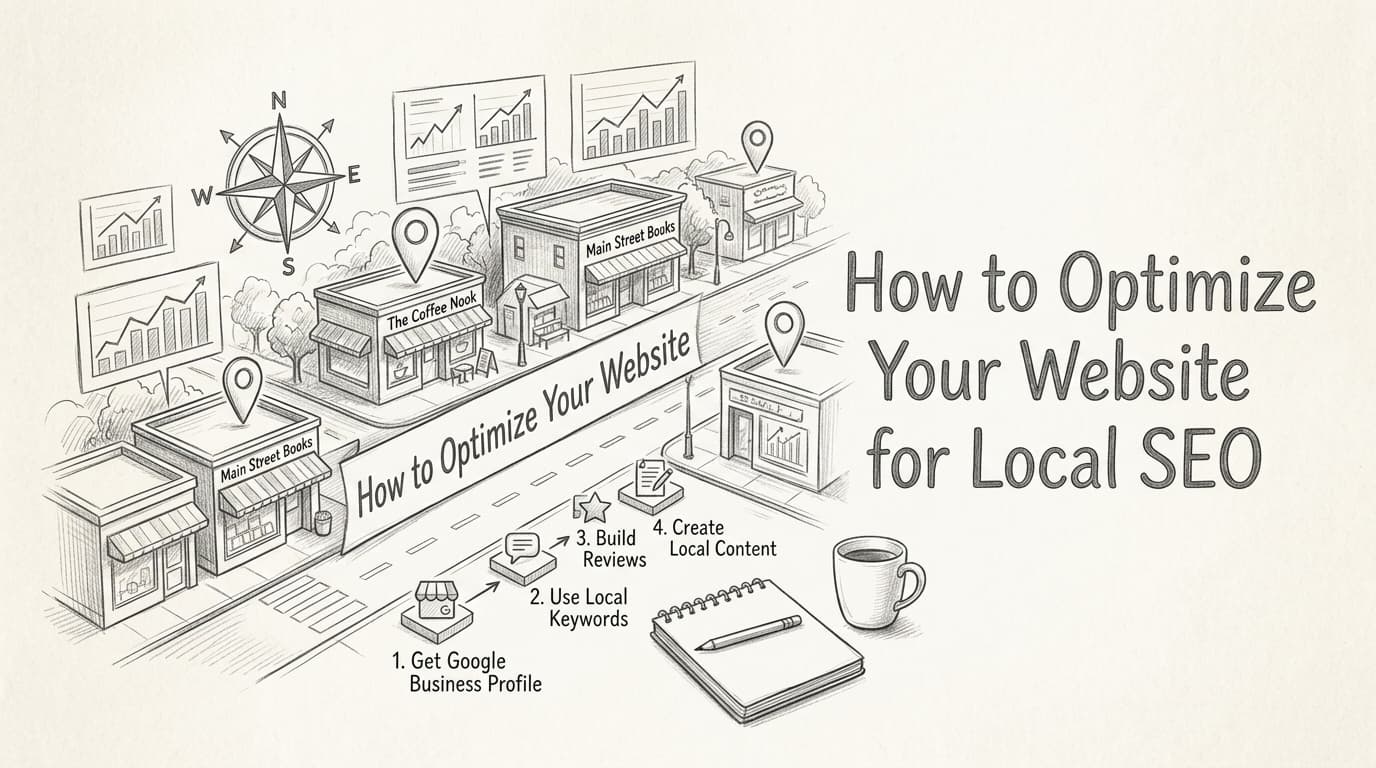
Local SEO Optimization Tips for 2026
Local SEO in 2026 focuses on mastering hyper-local intent, maximizing Google Business Profile features, and using evolving search algorithms to drive foot traffic and online conversions in your geographic market. Want your business to rank higher in local searches, attract more qualified leads, and beat competitors nearby? These updated strategies are essential.
Sound familiar? You spend hours trying to rank locally, tweaking location keywords, trying every "quick win" from industry roundups—yet your search traffic barely moves, and calls from actual customers feel rare. You're juggling a never-ending to-do list, switching between keyword tools and analytics dashboards, only to watch competitors with lesser products dominate the map pack. The truth: generic SEO practices aren't enough for local visibility anymore. Did you know that, as of 2025, nearly 85% of all local searches result in action within 24 hours—yet almost 70% of potential customers never scroll past the first three results? If you're not showing up where it matters, all that time spent researching keywords and updating profiles isn't paying off.
This guide cuts through the noise with actionable tactics for real-world results. Discover how Google's 2026 algorithm updates reward businesses that layer precision with local content, automate profile management, and deploy schema markup in ways your competition hasn't considered. Plus, find out why yesterday's citation strategies fall flat—and how tomorrow's AI-driven local signals are rewriting the rules for engagement.
It's time to leave behind the patchwork approach and step into a smarter, more effective local SEO playbook. Let's dive into why local SEO isn't just important in 2026—it's the difference between being found and being forgotten.
Why Local SEO Optimization is Crucial for 2026
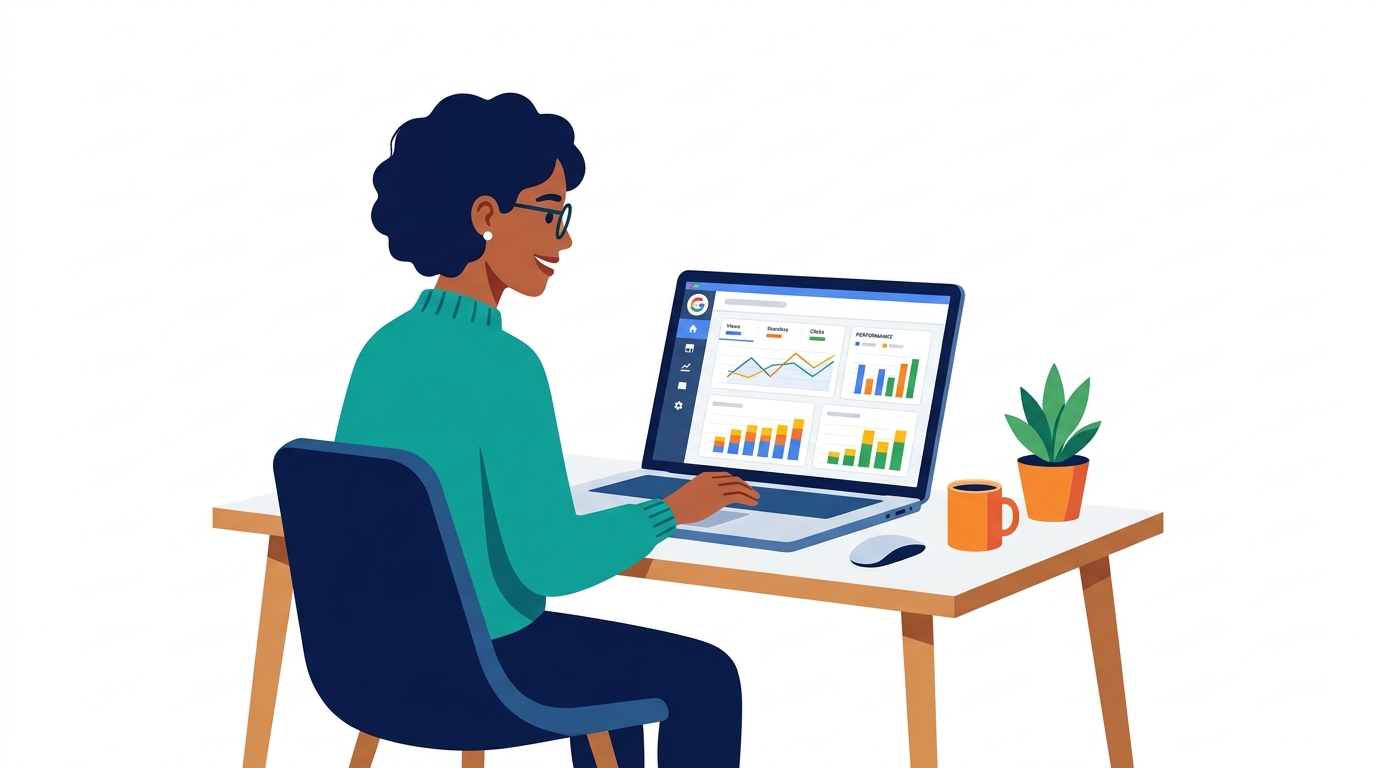
Local SEO isn't optional in 2026—it's essential if you want your business discovered by people ready to buy. Right now, nearly 46% of all Google searches have local intent. That number isn’t budging; if anything, it’s climbing as smartphones and voice search dominate daily habits [source].
If you're invisible locally, you're leaving money on the table. Search engines are geotargeting results at a granular level, personalizing what people see block by block. Miss out on "near me" searches, and watch your competitors scoop up the foot traffic, calls, and website visits that could be yours.
Bottom line? If customers can’t find you within a 5-mile radius on Google, you barely exist to them.
The Impact of Local SEO on Real Businesses
Take the classic example: a bakery struggling to fill tables on weekdays. After a full-court press on Google Business Profile—updated hours, regular posts, reviews, even geotagged photos taken inside the store—the bakery’s foot traffic spiked by 30% in under two months. That’s not marketing theory; it’s the difference between surviving off regulars and expanding with new customers.
Why Is Local SEO More Important Than Ever?
Local indexing is smarter. “Local schema SEO” and “local SEO schema” aren’t buzzwords—they’re the frameworks Google uses to surface your business for hyper-specific searches. If you’re not marking up your business details with structured data, you’re telling Google not to bother showing you to potential customers.
Shopping is staying hyperlocal. Yes, e-commerce is powerful, but the past year proved people crave local goods and services (from coffee shops to home repair). Even e-commerce brands are using local SEO to get found for pickup spots, fast shipping windows, and regional purchasing decisions.
Audit Your Local SEO: Where Are the Gaps?
Most teams mess this up by assuming their “regular” SEO covers it all. That’s a huge mistake. Local SEO is its own game, with its own checklist. Start with a quick audit:
- Is your Google Business Profile complete and accurate?
- Do you have consistent NAP (Name, Address, Phone) across all major directories?
- Are you using local schema markup on your location pages?
- Are photos on your GBP geotagged and recent?
- Do you respond to every review—good and bad?
- Have you earned local backlinks (think: chamber of commerce, local blogs, news)?
- Are your location keywords naturally baked into site content, not keyword-stuffed?
Gaps in any of these? Competitors will fill them for you.
Local SEO vs. Traditional SEO vs. No SEO
It’s not enough to “do SEO.” Here’s how the three approaches stack up for businesses focused on visibility and customer acquisition:
| Benefit | Local SEO | Traditional SEO | No SEO |
|---|---|---|---|
| Appears in local “near me” searches | Yes | Rarely | No |
| Drives in-person visits | High | Low | None |
| Improves Google Maps ranking | Yes | No | No |
| Builds local trust | High | Moderate | None |
| Competes with chains | Yes (level playing field) | Hard | Not at all |
| ROI within 3-6 months | Common | Possible | Unlikely |
Key takeaway: Traditional SEO casts a wide net, but local SEO is your secret weapon for showing up when it matters most—right before your customer pulls out their wallet.
For a full playbook, check out The Ultimate Guide to Local SEO Optimization which offers detailed strategies to complement the practical tactics above.
Local SEO isn’t getting any less important in 2026. Take the risk seriously—or risk becoming invisible to the customers that matter most.
How to Optimize Your Google Business Profile for Maximum Impact

Picture a family-run restaurant on a busy main street—amazing food, friendly service, but crickets at dinner time. They’ve poured money into ads, but nothing sticks. Locals walk by, smartphone in hand, never realizing what’s hidden just steps away. The twist? As soon as the owner nailed their Google Business Profile, foot traffic exploded. Tables filled. They didn’t change the menu—just their visibility.
Here’s the thing: your Google Business Profile (GBP) is the backbone of local discovery in 2026. If your details are sloppy, outdated, or half-filled, you’re invisible. Visitors want frictionless information—hours, menu, photos, reviews—without chasing dead links or guessing if you still exist. Miss this, and you hand business (and trust) to your competition on a silver platter.
The fastest way to boost local rankings? Ensure every field in your Google Business Profile is filled out and accurate—business name, address, hours, and categories. Businesses with complete profiles are 70% more likely to attract location visits than those that aren’t, according to semrush.com.
Verifying your listing should be step zero. Google’s verification tools are free, intuitive, and essential. Skip verification, and your updates won’t show reliably in Search or Maps—period. It’s not negotiable.
Don’t treat categories as an afterthought. Choose your primary category with surgical precision—it shapes how you appear for “near me” searches and specialty queries. If you’re a bakery, don’t settle for just “Restaurant.” Select “Bakery,” then add secondary categories like “Café” or “Dessert Shop” if they fit. This is where the battle for organic visibility is won or lost.
Next comes the content that tips undecided searchers onto your side: photos. A restaurant doubled its reservations in under three months just by adding high-quality, geotagged images to its Google Business Profile. A single shot of your packed patio on a sunny evening—taken by staff, geotag embedded—does more to trigger local FOMO than a five-star review. Geotagging isn’t fluff; it signals to Google that you’re active onsite, fueling those “near me” and map pack rankings.
And here’s the nuance too few talk about: regular updates. Google’s algorithm favors businesses that look alive. Swap photos, update hours for summer or holiday seasons, post quick offers or business updates. Every edit pings Google with a signal that you’re not static, you’re pulsing with real activity. Think of this as a low-effort investment with outsized local SEO returns.
Case in point: In 2025, 78% of mobile local searches resulted in an offline purchase within 24 hours. Those decisions hinge on up-to-date info—wrong hours or an ancient photo, and you’ve lost that intent forever.
Schema markup can give you an extra edge. Local SEO schema refers to structured data added to your website that helps Google display rich information—like opening times or reviews—right in the search results. It won’t replace GBP optimization, but together, they supercharge local visibility for searchers ready to act. If you aren’t handling basic local schema SEO as part of your site updates, start now. You might find valuable tips in the Technical SEO Checklist to integrate schema markup efficiently.
Here’s the bottom line: The most powerful local SEO optimization tips for 2026 start with your Google Business Profile. Keep every detail accurate, verified, and fresh. Make your listing, photos, and structured data irresistible—and watch locals go from scrolling to showing up at your door.
What Are the Best Practices for Local Keyword Research?
Local keyword research is all about pairing your services with the real-world locations people search from—using words they actually type into Google. Profiles with complete information snag 70% more location visits than businesses with patchy listings, so zeroing in on those local terms is a make-or-break move (source).
What are local keywords, and why do they matter?
Local keywords are phrases that combine a service with a specific geographic term, like “emergency plumber near me” or “digital marketing agency in Austin.” You need these if you want customers nearby to find you at the exact moment they’re ready to buy—or, let’s be real, when their basement is flooding.
Businesses using local keywords get found more often. That’s not theory; that’s what moves the needle. A plumbing company focused on generic terms? Invisible to customers one suburb over. But by targeting “emergency plumber [city]” and “urgent plumbing repair near me,” they pulled in a 25% spike in call volume. These aren't just vanity metrics—these are real customers dialing your number.
How do you uncover the best local search terms?
Start with Google Keyword Planner—it’s free, reliable, and gives you honest-to-goodness search volume for your area. Pop in your core service plus your city or neighborhood (think "SEO audit Denver" or "wedding photographer in Williamsburg"). Check which terms show the highest monthly search, but don’t sleep on long-tails like “best [service] open now near me.”
Other heavy hitters: SEMrush and Ahrefs both dig deep into competitor data and filter by location. They’ll flag terms your competitors are ranking for, so you’re not missing out on hidden gems. And don’t underestimate the power of autocomplete—type your keyword in Google and see what pops up. That’s what real people want.
Comparing Top Local Keyword Research Tools
Here’s how the top tools stack up for local SEO optimization tips:
| Tool | Local Search Volume | Competitive Insights | Location Filters | Free Plan? |
|---|---|---|---|---|
| Google Keyword Planner | Yes | Basic CPC/Volume | City, Zip Code | 100% Free |
| SEMrush | Yes | Deep Competitor | Precise Region | Limited Free Tier |
| Ahrefs | Yes | Robust SERP Data | Country/Region | 7-Day $7 Trial |
Key takeaway: If you’re bootstrapping, Google Keyword Planner covers the essentials. For deep competitor snooping or multi-location tracking, SEMrush or Ahrefs is worth every penny.
A practical checklist for local keyword domination
Don’t overcomplicate it. Here’s what actually works in 2026:
- Map your service & location terms: List what you offer and every town/city/neighborhood you serve. Start broad (“plumber Boston”) then drill down (“24/7 plumber Back Bay”).
- Research search volume and intent: Use Google Keyword Planner, filter by location, and export the winners. Pick terms with both volume and “ready to buy” intent (e.g. “urgent,” “open now”).
- Spy on competitors: Plug their sites into SEMrush or Ahrefs. Steal what’s working.
- Use 'near me' and geo-modifiers: “Near me,” zip codes, and landmarks crush it for brick-and-mortar, service, and SaaS with regional presence.
- Don’t skip schema: Implementing local SEO schema signals to Google which areas you serve. It’s stunning how many skip this—don’t be that person.
Real-world win: The “emergency plumber near me” effect
Local context changes everything. One plumbing service thought their general keywords were enough. Targeting “emergency plumber near me” not only pushed them to the map pack, but also delivered a 25% jump in call volume—many from new neighborhoods they’d never reached before.
Bottom line: Skip local keywords, and your competitors will siphon away searchers ready with credit cards in hand.
Tools like LazySEO make this process even faster by surfacing winning local keyword ideas and competitor insights on autopilot.
Ready for step two? Dial in your on-page and schema game after locking your keywords—and don’t let your Google Business Profile lag behind.
For a detailed walkthrough on building a local keyword strategy, you can check the full breakdown at Local SEO Optimization Tips for Small Businesses.
How to Use Local Directories and Citations
If you’re targeting big, generic keywords but ignoring local directories, you’re leaving a huge chunk of searches—and customers—on the table. Local directories and citations are the overlooked MVPs behind skyrocketed local rankings that national competitors can’t touch.
Why Do Local Directories and Citations Matter for SEO?
Businesses listed in multiple reputable directories see, on average, a 20% increase in local search visibility. Google relies on these signals to verify your business is real, up-to-date, and worth ranking for local queries. Directories—think Yelp, BBB, Avvo, and industry-specific sites—aren’t just another checkbox. They’re essentially votes of trust that search engines can’t ignore.
Here’s the bottom line: If your business is consistent and visible in local directories, you’ve cleared a major hurdle in local SEO ranking factors. That means more calls, in-person visits, and actual revenue.
Key takeaway: A single mismatch between your business name, address, or phone (NAP) across directories can tank your local rankings.
What is NAP Consistency, and Why Should You Care?
NAP consistency means your business Name, Address, and Phone number are exactly the same everywhere they appear online. Even a small difference—like spelling out “Street” in one place and abbreviating it in another—creates confusion for search engines. That confusion puts your business further down in the search results.
This isn’t theory—it’s what actually happens. Take the case of a regional law firm that struggled to break out of page two until it standardized its NAP on 40+ directories. The result? Calls from local clients shot up within weeks, and the business pushed into the local "map pack" for its highest-value keywords. That’s the power of directory hygiene.
The Step-by-step Local Directory & Citation Playbook
Ready to get your own local rankings moving up? Follow this checklist:
- Audit your current citations: Google your business name and note which directories display your info. Compare every single NAP listing for inconsistencies.
- Correct and update: Fix any errors—especially wrong phone numbers or outdated addresses. Don’t forget “hidden” places like niche industry directories or old local chamber sites.
- Prioritize high-authority and niche directories: Focus on Yelp, Apple Maps, Yellow Pages, and industry sites for your field (e.g., Healthgrades for clinics, Avvo for attorneys).
- Use schema markup: Adding local SEO schema to your website reinforces to Google what your business location and contact details are.
- Create a maintenance schedule: Set a recurring reminder (quarterly, at minimum) to re-audit your citations. Staff changes, new locations, or even minor typos creep in over time.
- Track changes: Maintain a spreadsheet or use a directory management tool to log updates and monitor for unauthorized edits.
Don’t Make These Citation Mistakes
- Ignoring reviews: Many directories double as review platforms. Unmanaged negative reviews stick around and scare off local customers.
- Forgetting about old locations: A defunct address or phone is a trust killer for both users and Google.
- Relying on one platform: Yes, Google Business Profile matters, but stacking signals across multiple directories cements your local authority.
What’s the ROI You Can Expect?
If you tackle directory management methodically, you can see local visibility bump up by 20% or more. With 46% of all Google searches seeking local information, this isn’t a marginal improvement—it can flip your growth trajectory overnight [semrush.com].
Don’t let messy directories block you from showing up where your real buyers search.
Regular directory audits and spotless NAP consistency set your business up for sustainable, high-converting traffic—something no quick-fix hack can deliver.
How Does Schema Markup Enhance Local SEO?
Schema markup helps search engines understand your business location, services, and key offerings, giving your site a direct signal for local relevance—enough to drive a 30% higher click-through rate compared to websites that skip it.
Here’s why this matters: search engines aren’t mind-readers. When you use structured data (schema markup) for local SEO, you’re giving Google and Bing a cheat sheet. Local Business schema pinpoints your details, so you show up with rich snippets—like ratings, hours, or maps—right in the search results. This means more visibility, better CTRs, and customers who find your business without wading through generic listings.
Why Local SEO Schema Moves the Needle
Don’t underestimate the impact of schema for “near me” searches. Google often pulls Local Business, Product, or Event schema to serve up quick answers or directions, bypassing weaker, schema-free competitors. Hotel chains, for example, have seen significant booking uplifts—one group jumped 20% in direct reservations after layering in robust local business schema across their location pages.
Think about the “schema local SEO” competitive field. If your nearby competitor is using Local Business schema and you aren’t, search engines might completely overlook your up-to-date address—or worse, they could serve your old location, driving in-person traffic to a dead end. The result? Missed bookings, confused customers, and plummeting trust.
Real-World Example: Schema Driving Real Results
A prominent hotel chain fought this battle head-on. By rolling out Local Business schema on each property page—embedding address, phone, reviews, and direct booking URLs—they saw a 30% higher click-through rate and a 20% increase in online bookings compared to their old, untagged listings. Their properties started getting rich results with map snapshots and immediate booking links, while similar chains lagged behind with generic blue links. You can read more on these schema-local-seo transformations in coverage by SEMrush.
The bottom line: local schema SEO isn’t just for big brands. Small businesses, retail stores, and service providers can capture featured snippets and map packs simply by giving search engines the structured data they crave.
Types of Schema Markup: Which One is Right for Local SEO?
You shouldn’t blindly add every schema type under the sun. The biggest wins come from using the right markup for your business goal.
| Schema Type | What It Does | Best For |
|---|---|---|
| Local Business | Highlights address, hours, phone, geo, reviews | Any local business, retail, hotels |
| Product | Surfaces product name, price, ratings, inventory | E-commerce, retailers |
| Event | Details date, location, performers, ticketing | Venues, event spaces, local theaters |
Local Business schema is non-negotiable for brick-and-mortar. If you sell online, Product schema is essential for surfacing in local product search grids. Running events? Event schema gets your calendar right into Google’s event results.
Schema isn’t just a “nice to have” in 2026—it’s the ticket to showing search engines everything they need to confidently serve your business in local packs, maps, and “near me” voice searches. If you’re serious about attracting high-intent local traffic, start thinking in terms of structured data—because your competitors are already there.
Key takeaway: Schema markup, especially Local Business schema, instantly puts the right details in front of search engines, leading to higher CTR, better visibility, and more in-person customers. Ignore structured data, and you’re betting your traffic on search engines making the right guess.
The Future of Local SEO: Trends to Watch in 2026 and Beyond
Voice search now drives nearly half of all searches, and it’s already upending local SEO playbooks—ignore it and you’ll miss out on huge swathes of traffic. This shift isn’t coming, it’s here.
How is voice search reshaping local SEO in 2026?
Voice search is poised to account for 50% of all searches by 2026, radically changing how people discover local businesses. When customers speak rather than type, they use more natural, conversational questions (“Where’s the closest open coffee shop?” vs. “coffee shop near me”). Search engines are prioritizing results that match these intent-driven queries, making context and semantics the real battleground—even more than raw keyword density.
Smart marketers are already adapting. A Chicago-based retail chain overhauled its local SEO content, optimizing for common voice queries and refining answer-style snippets on its landing pages. The payoff? A 15% bump in local organic traffic within four months, almost entirely from mobile and smart speaker users.
Why should you embrace AI-powered tools for local SEO?
AI and machine learning are already an essential part of local search ranking. Major engines constantly refine results using behavioral data, meaning your strategies can’t stay static. Businesses leveraging AI for local SEO—think advanced schema markup, automated review analysis, and content optimization—are pulling ahead with less manual effort and better targeting.
AI isn’t just the future—it’s the present of local SEO. The bottom line: If your workflows still involve tedious, manual optimization, you’re falling behind competitors who automate and personalize using smarter tech.
Starting to integrate these technologies isn’t just a nice-to-have; it’s quickly becoming non-negotiable if you want to rank, and stay ranked, for high-intent local searches.
Actionable step: How to start optimizing for voice today
Here’s how you position your brand for the next wave: Start incorporating voice search optimization into your local SEO processes now. That means rewriting key landing pages to answer natural-language questions, tightening up local business schema for every location, and prioritizing mobile site speed—because slow results get buried on smart speakers and phones.
Sites using local business schema (structured markup that tells search engines exactly who you are and where you operate) see, on average, a 30% increase in click-through rates from local results compared to competitors who skip this technical foundation. You can verify this data here.
A real-world comparison highlights just how big an edge advanced schema delivers versus old-school methods:
| Organization Type | Schema Usage (2026) | Local CTR Improvement | Common Ranking Challenges |
|---|---|---|---|
| Chain retailer w/ voice-optimized local schema | Yes | +34% | Consistency across locations, NAP drift |
| Regional gym without local schema | No | −2% | Incomplete search entries, poor mobile UX |
| Restaurant w/ partial Schema (no voice focus) | Some | +8% | Missed "near me" queries, review volatility |
Notice what happens: Going “all in” on schema and voice optimization doesn’t just move a few spots up the rankings; it ramps up local click-through by double digits—leaving passive competitors fading off the first page.
What local SEO trends should you watch next?
Besides voice search, hyperlocal SERPs and AI-powered search results are the next stop. Google and Bing are testing granular result clusters based on micro-neighborhoods and “activity signals” (think live attendance at a venue). If you’re not using advanced local SEO schema and adapting content monthly, the window for catching up gets narrower each quarter.
Don’t overlook the interplay between conversational AI and structured data. Smart small businesses are starting to tie their on-page FAQ blocks to schema local SEO markup, targeting not just Google but generative AI results powering next-gen search assistants.
Key takeaway: Winning in local SEO in 2026 and beyond means matching your content, structure, and optimization to voice-led, AI-personalized, hyperlocal search realities. The marketers who embrace schema and real language—not just keywords—will own the next decade of organic local discovery.
For practical how-tos and the latest research, check resources like SEO Strategy Planning: From Research to Execution to stay sharp.
Ready to Own Your Local Market?
Mastering local SEO optimization tips isn’t just a trend—it’s your ticket to standing out in a competitive landscape for 2026 and beyond. The most actionable step you can take today? Regularly update and monitor your Google Business Profile to ensure your information is accurate, engaging, and optimized for local searches. This single move keeps your business visible where it matters most—right in your customers’ neighborhoods. Tools like LazySEO can streamline everything from local keyword tracking to managing citations, freeing you up to focus on growth. Stay proactive, keep an eye on emerging trends, and you’ll be well-positioned to attract more local customers than ever before. The future of local SEO is bright—make sure your business is ready to shine.