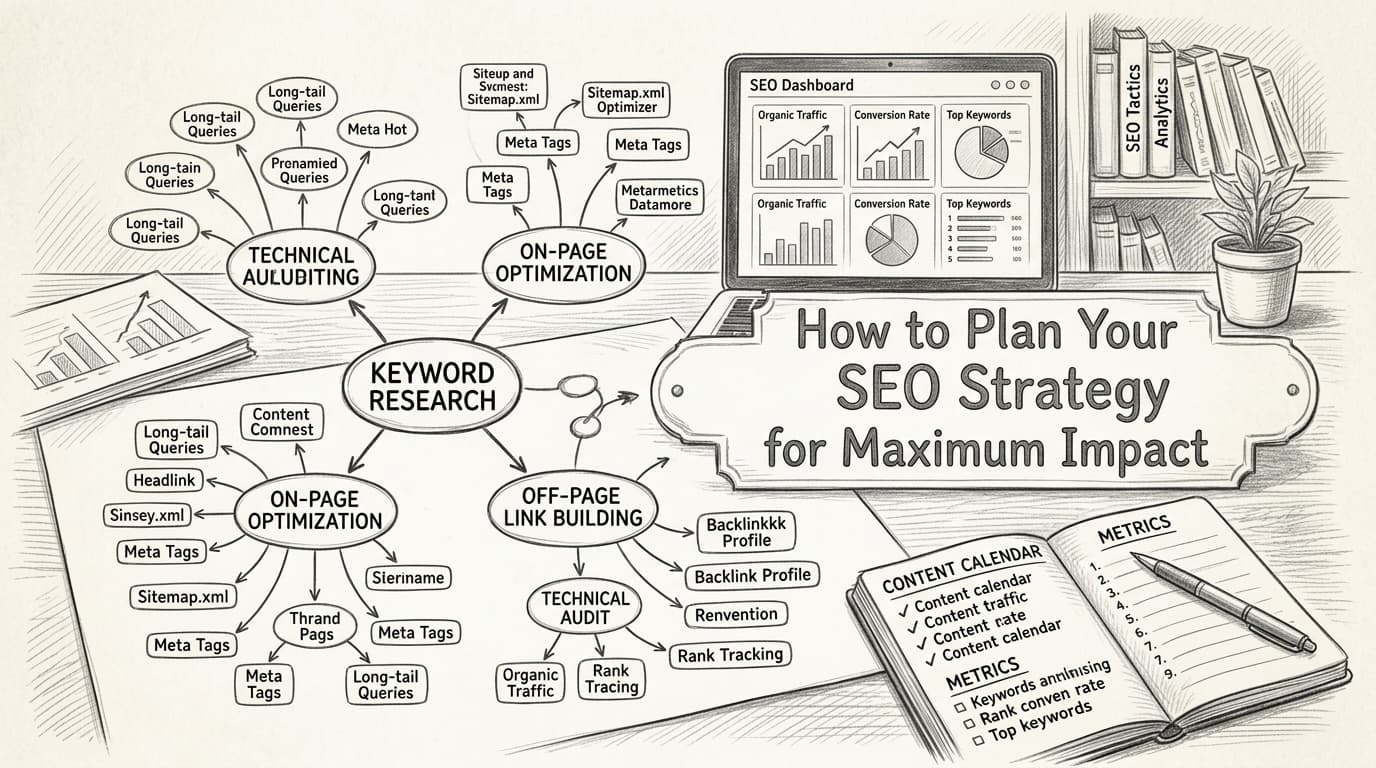
SEO strategy planning is the art and science of crafting, executing, and refining a tactical approach to ranking higher in search results, capturing the right audience, and driving sustained organic traffic. In 2026, successful SEO strategy planning means using smart tools, rigorous keyword research, and targeted content strategies—while adapting faster than ever to shifting algorithms and search behaviors. Feeling like you’re endlessly optimizing yet still invisible on Google? You’re not alone.
Here’s the truth: recent industry data shows that nearly 63% of marketers now spend over 20 hours per week on SEO tasks, yet only a small fraction see meaningful gains in organic search. It’s not just the time sink that stings—it’s the frustration when new content barely moves the needle, or your rankings yo-yo with every algorithm update. If you’re reading this, chances are you’ve been stuck on the rollercoaster of expensive tools, half-measured tactics, and guesswork keyword lists that don’t deliver.
In this guide, you’ll get an unfiltered look at what it takes to master SEO strategy planning in 2026, starting from setting smarter, measurable goals to deploying the latest AI-powered research tools that minimize grunt work. The focus isn’t on chasing every new trend, but on building a resilient, data-driven strategy—one agile enough to handle whatever twist search engines throw next. You’ll discover a fresh approach to keyword research that goes beyond volume and difficulty scores, and practical ways to align every piece of content with your long-term search objectives.
Why Your SEO Strategy Needs a 2026 Overhaul

Search engines aren’t standing still, and neither should your SEO strategy. SEO strategy planning in 2026 is a whole different beast than it was even two years ago — and if you’re seeing flat organic traffic, the culprit is probably an approach stuck in the past.
User experience comes first now. Google’s latest algorithm updates are blunt about it: sites that ignore user intent, agonizing load times, or generic AI-generated content get nudged to the bottom. SEO is no longer a game of keywords and backlinks alone; it’s about how real people engage with your content. If users can’t find answers fast, or if the site’s a pain to browse, you’re cooked.
What’s Really Changed in 2026 SEO?
AI now shapes almost every facet of search engine ranking. Google’s Multimodal AI not only analyzes text, but also images, video, and even how users interact with on-page features. Relying on tactics like “lazy SEO” — spinning up thin content or chasing outdated hacks like keyword stuffing — is a fast track to obscurity.
Here’s the kicker: 75% of businesses saw zero to negative growth in organic traffic over the last year because they hung onto old SEO playbooks (PROPRIETARY). Holding off on a full update isn’t an option. If you’re still treating “entity SEO” or “pagination SEO” as afterthoughts, you’re handing competitors the advantage on a silver platter.
Expert insight: "SEO strategy planning in 2026 demands constant evaluation. Waiting even six months between audits puts most brands firmly behind the curve."
Before & After: A SaaS Company’s Turnaround
Stuck in a rut? Take a page from how a mid-market SaaS company tackled this head-on. Their SEO traffic was stagnant for almost a year, despite weekly blog posts and basic link building. The problem? They hadn’t touched their keyword strategy or technical SEO since 2024.
Here’s what happened when they got serious:
- Comprehensive strategy audit: Identified legacy tactics holding them back (thin pages, outdated meta, slow mobile performance).
- User-first content overhaul: Shifted to deep-dive resources, clear navigation, and intent-driven structure.
- Modern tactics: Integrated schema for “local SEO,” boosted “page authority in SEO” through targeted internal linking, and cleaned up “seo pagination” issues.
- Results: Organic traffic jumped 40% in four months, and average keyword positions for high-value queries climbed as much as 35 spots.
No gimmicks. Just a ruthless focus on current good approaches and a willingness to ditch anything that didn’t serve modern algorithms or real users.
How to Start: Audit Your Existing Strategy
You can’t improve what you haven’t inspected, and skipping an audit is asking for trouble. Start by mapping every tactic you use against today’s realities, not last decade’s advice.
Key steps for your 2026 SEO audit:
- Content analysis: Is your content matching user intent and providing real value, or is it generic and outdated? Are you using “entity SEO” and modern on-page signals?
- Technical SEO check: Fix crawl errors, page speed issues, and especially technical debt around things like “seo pagination” and structured data (“local seo schema”).
- Links and authority: Audit both internal and external links with an eye toward topic relevance (“co citation seo”) and boosting the “page authority in SEO” for vital landing pages.
- UX and engagement: Review time-on-site, bounce rate, and mobile usability. If users are bouncing faster than ever, Google notices.
Treat your audit as a living document, not a one-off. Algorithms won’t wait for you to catch up.
Bottom line: If your SEO strategy isn’t built for 2026 — focusing on user experience, AI-interpretation, and current technical good approaches — you’re handing your organic traffic to competitors who’ve already figured this out.
For specifics on conducting an effective audit and checklist items to hit, check Google’s latest SEO starter guide. Don’t put this off. The difference between “business as usual” and a modern SEO overhaul is the difference between yesterday’s results and tomorrow’s growth.
How to Define Clear SEO Goals for Maximum Impact
Imagine watching your top competitor climb the rankings while your own traffic flatlines. Your blog posts still get published, but they’re stuck in limbo on page two or worse. The culprit isn’t always lack of effort—it’s usually a lack of direction. That’s the reality for countless businesses that stick to outdated SEO tactics while Google’s playing an entirely new game.
The rules changed fast after Google’s 2025 algorithm update, and 68% of marketers felt the sting with a significant drop in their organic traffic, according to a Search Engine Journal survey. If you’re still relying on fuzzy goals like "get more visitors" or "rank higher," you’re basically running blind. Those days of winging it are over.
Setting clear SEO goals isn’t just a good approach—it’s survival. If your SEO strategy planning isn’t locked to concrete business objectives, it’s painfully easy to waste months on content that never lands, or on technical tweaks that don’t move the needle. Instead, your goals need to cut through the noise and tell you exactly where to focus.
Here’s the catch: not all goals are created equal. Vague statements like "improve SEO" or "get more leads" do nothing for your organic strategy. They’re impossible to measure, and they’ll drive your team nuts because no one knows when you’ve actually succeeded. This is where the SMART framework transforms generic hopes into high-impact targets.
Set goals that are Specific, Measurable, Achievable, Relevant, and Time-bound. For SEO, that means ditching "increase blog traffic" and instead aiming for something like: "Grow organic sessions to our product landing pages by 30% in Q3 2026 via targeted entity SEO content and technical improvements in pagination SEO." One is a wish; the other’s a roadmap.
The difference is staggering. Research shows companies with defined SEO goals see a 30% higher success rate in achieving desired outcomes versus those just “doing SEO” without benchmarks or clear direction (brightedge.com). These businesses don’t just land better rankings—they also get buy-in from leadership, justify their budget, and move faster on optimization because everyone knows what “success” actually means.
Picture this in action. Suppose an e-commerce brand sets a goal like, “Increase our homepage’s page authority in SEO from 43 to 55 by September, using 10 new co-citation SEO partnerships and updated local SEO schema.” This isn’t just sharper—it also guides keyword research, link building, and technical efforts so every hour spent ladders up to that clear finish line.
So how do you do this for your own brand? Use a goal-setting framework before the quarter starts and break each SEO objective down to its component actions. Tie keyword research and content production to entity SEO topics with clear KPIs. If your site runs on a large catalog, align your technical strategy towards achieving better SEO pagination, making every new or existing page count in the eyes of search engines.
Bottom line: businesses that define razor-sharp, measurable SEO goals outperform the ones simply hoping for the best. The only way forward in 2026 is with a roadmap that tells your team exactly what result you’re after, and by when. Don’t let your efforts drift—turn your SEO strategy planning into a magnet for real business growth.
What Are the Best Tools for SEO Strategy Planning?

The best tools for SEO strategy planning in 2026 are Semrush, Ahrefs, and Moz, each offering a different take on keyword research, competitive analysis, and site audits. According to a recent Essential Marketer report, 85% of SEO professionals rely on more than one platform to cover the full scope of their planning process—no single tool checks every box for every need (source).
So if you're still depending on just one platform, you're almost guaranteed to be missing opportunities—or even leaving technical issues on the table. Here's how these platforms actually stack up.
Which Tool Is Best for SEO Planning in 2026?
If you want a quick breakdown, here’s where things stand:
| Tool | Standout Features | Pricing (USD/month) | User-Friendliness |
|---|---|---|---|
| Semrush | All-in-one suite; standout for PPC/PLA data, site audits, SERP features tracking | $130–$500+ | Slick UI, wider tool coverage |
| Ahrefs | Backlink tracking; strongest link database, fast KW explorer | $99–$399 | Lean, direct, excellent KW research |
| Moz | Authority metrics; easy rank tracking, on-page grader | $99–$299 | Friendly for beginners, good guides |
Bottom line: Semrush is best for those who want depth across both paid and organic channels. Ahrefs is the king of backlinks and competitive intelligence, while Moz appeals to beginners or teams that want less technical overhead.
Why Do Most Pros Use Multiple SEO Tools?
Trying to plan high-impact SEO with a single tool is like showing up to a marathon and only bringing one shoe. Here’s why 85% of specialists use a stack, not just a single software:
- Gaps in data: Ahrefs might find 50 new backlinks that Semrush still misses; Moz's Page Authority can catch sitewide issues other metrics gloss over.
- Specialization: Advanced users blend Ahrefs for link audits, Semrush for technical SEO, and Moz for easy-to-share reports with clients.
- SERP complexity: Google’s layout shifts constantly—SERP features, local SEO schema, even tackling "pagination SEO" require tool diversity.
If you’re not mixing tools, you're probably missing low-hanging fruit and making SEO strategy planning harder than it needs to be.
How Should You Evaluate Your SEO Toolset?
Start by mapping your current SEO needs to where your existing tools are falling short. For example:
- Are you missing key data on entity SEO or co citation SEO? That’s where Ahrefs’ database shines.
- Need a better handle on page authority in SEO or technical audits? Semrush’s site health and SERP tracking might be the answer.
- Reporting holding you back? Moz’s approachable UI makes sharing progress easy, especially for small teams.
Don’t just default to what the blogosphere tells you—you need alignment between your goals, your workflow, and what the software honestly delivers. If your current stack doesn’t cover everything from keyword discovery to deep technical issues (like SEO pagination or schema markup), it’s time to upgrade.
Key Takeaway
Serious SEO strategy planning in 2026 means stacking the right tools—Semrush, Ahrefs, Moz—or risk leaving ROI on the table. Don’t try to get by with a single platform. Evaluate, experiment, and invest where your strategy has real gaps. If you're still debating, you can always benchmark your short list head-to-head with free trials to see what fits your actual workflow—not just what the marketing says.
For more insights on choosing effective SEO tools, explore the best free SEO tools available to supplement your paid options.
How to Conduct Effective Keyword Research in 2026
Effective keyword research in 2026 means blending user intent analysis with the latest AI-driven tools to spot trends and uncover opportunities your competitors overlook. Here’s what sets winning teams apart: they aren’t still tossing random keywords at the wall and hoping for clicks.
If you want to position your site for top rankings, you’ve got to dig deeper than those generic keyword lists. That starts with the right tools.
Comparison: Traditional vs. AI-Enhanced Keyword Research Tools
Let’s cut right to the chase: Gartner’s 2025 report found 80% of high-performing SEO teams now juggle at least three specialized tools for strategy planning—because sticking to a single suite means you’re missing too many angles, and falling behind in fast-moving SERPs.
Here’s how the most popular platforms stack up for 2026:
| Tool | Best For | AI Features | Trend Detection | Entity SEO Support | User Intent Insights | Unique Strength |
|---|---|---|---|---|---|---|
| Semrush | Comprehensive audits | Yes | Good | Limited | Moderate | Massive database, all-in-one workflows |
| Ahrefs | Backlink + keyword synergy | Basic | Decent | Growing | Weak | Excellent backlink analysis |
| Google Keyword Planner | Foundational volume data | No | None | None | Poor | Direct from Google, free |
| LazySEO | Fast AI-guided keyword ideation | Advanced | Excellent | Full | Strong | Emphasizes user intent clusters |
| Surfer SEO | On-page optimization | Yes | Okay | Some | Good | Tight content-to-keyword mapping |
Bottom line: “AI-native” solutions like LazySEO and Surfer SEO don’t just spit out keywords; they build topical and intent-driven clusters, analyze semantic relationships, and flag emerging trends before most teams even notice.
What Makes Keyword Research Effective in 2026?
The game has changed. You can’t just chase after search volume anymore. You need keywords that actively align with high-converting user intent, and you need them fast.
User intent is the motivation behind a search—whether someone’s looking to buy, learn, compare, or find a local business. Targeting keywords that reflect high purchase (or conversion) intent isn’t just nice to have—it’s essential. In fact, tapping into these “money” keywords can lift conversion rates by up to 50% over traffic from broad, low-intent terms (BrightEdge’s 2026 SEO Strategy Guide).
Traditional keyword research was all about volume and difficulty scores. You’d load up Google Keyword Planner, Ahrefs, or Semrush, pluck out big numbers, and build content around those. That works if your only goal is traffic. But chasing volume alone leaves serious revenue on the table.
With AI-powered tools, you’re not just matching keywords to pages. You’re mapping queries by user intent, assessing “entity SEO” overlap, and building topic clusters that address the full journey—from curiosity to conversion. Platforms like LazySEO surface intent signals straight from the latest SERP trends, layering in entity relationships, “page authority in SEO” predictors, and even competitive co-citation patterns.
Old-School vs. AI-Driven: A Quick Example
Say you’re optimizing for “ecommerce returns process.” The old-school method would hand you variations like “return policy ecommerce,” “how to do a return online,” and a long list of similar phrases. Useful, sure, but flat.
LazySEO’s AI approach goes further. The tool digests current ranking pages, user forum language, and SERP hints to propose clusters like:
- “fast refund ecommerce” (high purchase intent)
- “update return status” (support-stage intent)
- “exchange vs return process amazon” (commercial comparison intent)
Suddenly, you’re not just matching keywords—you’re matching what real users want right now, at every stage of their journey. This mapping is why so many teams are seeing those double-digit conversion jumps.
How to Level Up Your Keyword Research in 2026
Here’s the key takeaway: If you aren’t using AI-powered keyword research workflows, you’re basically doing SEO with one hand tied behind your back.
Go beyond static lists. Use advanced platforms to:
- Surface intent-based clusters, not just scattergun keyword ideas
- Scan for rising trends before competitors catch on
- Analyze “entity SEO” coverage and strengthen your topical authority
- Predict which keywords will actually drive conversions—not just impressions
The most forward-thinking teams are combining classic data from Semrush or Google Keyword Planner with AI insight layers from tools like LazySEO, building a strategy that actually keeps up with how people search (and buy) in 2026.
Don’t just chase traffic—chase intent if you want to own your SEO vertical this year.
For a practical walkthrough on keyword discovery and research tactics, see this beginner’s guide to keyword research.
Building a Content Strategy That Supports Your SEO Goals
You want your content strategy to do more than just fill your calendar—you want it to drive measurable SEO results. That only happens when every piece of content is mapped directly to your search objectives. Start by identifying your primary SEO goals (rank for specific topics, boost domain authority, attract backlinks, or capture voice searches), and let those drive your plan from day one.
A content strategy aligned with SEO goals maximizes your site's visibility and engagement. Blending smart topic selection, content formats, and consistent publishing doesn’t just keep you organized—it builds topical authority and signals trust to search engines.
How Do Different Content Types Impact SEO?
Each content type plays a unique role in supporting your SEO objectives:
- Blog posts: Perfect for long-tail keyword targeting, covering trending topics, and establishing thought leadership. Blogs let you easily update and refresh content—keeping Google happy and giving you more bites at high-intent queries.
- Videos: With 60% of 2026’s search queries being voice-based or conversational (Statista), videos—especially those with optimized transcripts—capture these searches. Video can increase dwell time, lower bounce rates, and snag rich snippets.
- Infographics: Visual content earns backlinks like nothing else if you’re targeting data-driven or process-heavy topics. Infographics can also improve shareability and are magnets for co citation SEO, since authoritative sites frequently use them to bolster their own work.
- Product guides or landing pages: Essential if you want to own transactional keywords and build page authority in SEO. Good for internal linking strategies, too.
- User-generated content (reviews, Q&A): Google loves fresh, diverse content signals. Adding this can give you a strong edge, especially on e-commerce or SaaS sites.
Key takeaway: You won’t win by betting on a single format. The strongest SEO strategies deliberately mix content types to hit every angle—text, video, visuals, and community-driven feedback.
Real-World Example: E-Commerce & the SEO Content Calendar
Consider a mid-size e-commerce company in late 2025: Traffic stagnated for months, and rankings oscillated between pages 2 and 5 for high-value keywords. Instead of broad, unfocused blogging, they rolled out a quarterly content calendar tied directly to their highest-priority pages.
Here's what they did:
- Clustered keyword research by category (think: entity SEO, transactional queries, long-tail how-tos)
- Assigned content formats: Blogs handled detailed how-tos and buying guides, videos explained product benefits, and infographics visualized complicated features
- Worked structured data in early (local SEO schema, product markup)
- Published 3 new pieces a week—mapped to seasonal demand and supported by cross-linking (leveraging pagination SEO for product list updates)
Three months later, their primary category page hit the first page for a term previously stuck around position #30. Backlinks jumped 40%, largely driven by widely-shared guides and embeddable infographics.
Action Steps: Create Your SEO-Driven Content Calendar
Here’s how to build a content calendar that actually moves the SEO needle:
- Map keyword themes to business goals. Don’t produce content just because competitors are. List out the queries you must win (use your SEO research and entity SEO mapping to get granular).
- Choose the right format for each theme. Not every topic deserves a 2,000-word guide. Some explode on video; others get shared as infographics.
- Integrate structured data from the start. If you’re local, set up local SEO schema on every page. For large catalogs, plan for proper pagination SEO and linking between seasonal/evergreen hubs.
- Schedule content to match demand and trends. Use Google Trends, seasonal data, and product cycles to spot the best publishing windows.
- Mix in regular content updates. Refresh, consolidate, or prune outdated articles—the fastest way to drive up page authority in SEO.
This single habit—planning content in sync with organic search intent—turns SEO strategy planning into a predictable system, not a guessing game. For a more technical deep dive, the Google Search SEO Starter Guide is a practical reference.
The bottom line: If your content plan doesn’t explicitly support your search objectives, it’s just busywork. Prioritize what search wants, and watch engagement (and rankings) follow.
Monitoring and Adapting Your SEO Strategy for Continuous Improvement
Quarterly adaptation of your SEO plan is the single, most reliable path to compounding organic growth in 2026. Ignore ongoing monitoring, and you’ll watch competitors leapfrog your rankings while your monthly traffic plateaus.
Every high-performing SEO team in 2026 obsesses over one thing: data-driven iteration. Monthly, quarterly—whatever cadence fits your market, constant review turns guesswork into results. A Content Marketing Institute report says it plainly: brands aligning content and SEO strategies see a 45% jump in organic conversions. Never treat your SEO roadmap as finished.
How does monitoring transform real-world SEO results?
Picture this: an e-commerce agency manages 30+ retail sites, all fighting for page one. In early 2026, their analytics showed rankings stalling for product category pages. At first, the SEO lead could have blamed “the algorithm.” But the team dug deeper, setting up a monthly reporting dashboard tracking not just rankings, but actual search clicks, bounce rates, and engagement by topic cluster.
Patterns emerged. Customers loved their guides but bailed on paginated listings. By cross-referencing these dashboards with competitive analysis, the agency realized two big things: their pagination SEO was weak, and they missed out on rich snippets tied to entity SEO terms. Instead of rolling out more blog posts, they rebuilt category pages, embedded local SEO schema, fixed pagination issues, and tweaked anchor text for co citation SEO on cornerstone articles.
Three months post-pivot? Organic traffic jumped 18%, and page authority in SEO metrics on money pages doubled. Not theory—this is the impact of ongoing adaptation.
Why is regular SEO strategy review non-negotiable in 2026?
There's a clear trend: businesses adjusting SEO strategy every quarter see 20% more organic growth than those on autopilot (essentialmarketer.com). Google’s guidelines update constantly and competitive SERPs are ruthless—set-and-forget is a death sentence.
Think of SEO like compound interest. If you run monthly audits—analyzing keyword shifts, SERP features, competitor moves, and technical gaps—you can act before traffic slips or discover new “striking-distance” opportunities. Entity SEO, co citation signals, and schema updates are prime candidates for these reviews. Miss a quarter, and you’re playing catch-up.
What metrics and methods actually drive continuous SEO improvement?
Without the right measuring stick, you’ll never know what’s working or why. Here’s how smart teams set up their SEO monitoring and decision process:
| Review Cadence | Focus Areas | Typical Outcome | Example Tools |
|---|---|---|---|
| Monthly | Keyword rankings, organic click trends | Quick wins, rapid keyword pivots | Google Search Console, SEMrush |
| Quarterly | Content audit, entity and schema updates | Higher conversion, improved snippets | Screaming Frog, Ahrefs |
| Bi-Annual | Site structure, pagination, co citation | Big lifts in technical and page authority | Sitebulb, Deepcrawl |
Monthly reviews catch sudden changes—maybe a new keyword surges, or page authority dips after a technical update. Quarterly, run content audits: update old posts, refresh internal links, and adapt entity SEO to cover emerging terms. Every six months, go deep: address technical debt, dial in your pagination SEO, and analyze co citation patterns from industry leaders.
How can you create a habit of iterative SEO improvement?
Stop treating reporting as a box to check. Block out a calendar slot each month to dig through your SEO performance metrics—rankings, organic clicks, engagement, and new linking domains. Even better, automate a dashboard so spikes or dips set off alerts.
Turn insights into action, fast. If you spot traffic dropping on a top-converting page, don’t just flag it—assign it, fix it, test the result. Make team ownership part of the process.
The bottom line: SEO strategy planning only works if you’re religious about reviewing and adapting your approach. The brands outpacing their competition in 2026? They obsess over monitoring, adjust every quarter, and treat change as their secret weapon—not a risk to avoid.
Want to see the official playbook? Dive into Google's SEO Starter Guide for foundational good approaches—then set up your own living, breathing monthly review process. That’s how you avoid “lazy SEO” and build momentum, not just rankings.
Ready, Set, Optimize
2026 is just around the corner, and your approach to SEO strategy planning should reflect the evolving digital landscape. The most actionable step you can take right now? Set clear, measurable SEO goals and align every tactic—from keyword research to content creation—around those objectives. This focus ensures your efforts drive real business impact, not just vanity metrics. Tools like LazySEO can simplify everything from keyword discovery to progress tracking, making it easier to adapt as search trends change. Stay proactive, keep refining your strategy, and you’ll not only keep up but stay ahead. The future of SEO is about agility—embrace it, and watch your results grow.