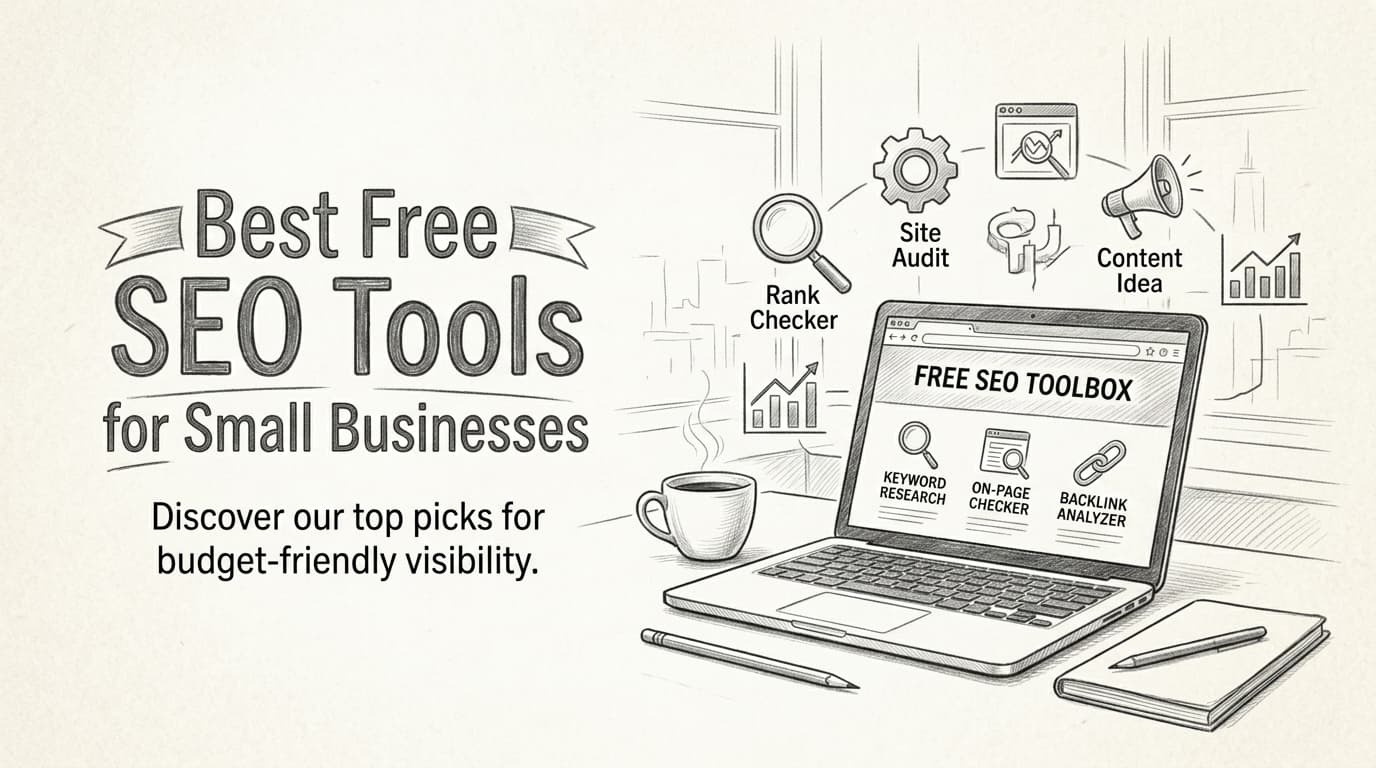
The Best Free SEO Tools in 2026
The best free SEO tools in 2026 let you research keywords, analyze your site’s performance, and optimize your content for higher rankings—without spending a dime. If you're looking to boost organic traffic without blowing your budget, the right free SEO tools are essential. But here's the truth: "free" doesn’t always mean "useful"—and it rarely means "easy."
Imagine this: you’re juggling a demanding content calendar, dozens of new keyword opportunities, and a boss who wants last month’s traffic numbers doubled yesterday. Every SEO specialist, digital marketer, and agency pro knows the pressure. Your strategy hinges on data, but the good tools seem locked behind paywalls, and the ones labeled "free" feel outdated or clunky. You waste hours hopping between tabs, comparing conflicting metrics, and trying to sort out which tool actually delivers. There’s a nagging suspicion that your competitors might have some secret tech stack you’re missing. Meanwhile, your to-do list keeps growing.
Here’s a bold thought: you don’t need a thousand-dollar tool subscription to run a winning SEO operation in 2026. The playing field is leveling out. Today’s best free SEO tools can help you find trending keywords in seconds, uncover technical issues before they tank your rankings, and even launch link-building campaigns—all without a credit card. But the trick is knowing which free tools are truly worth your attention, and how to get the most out of their features without getting lost in the weeds.
This guide cuts through the hype. You’ll get real recommendations based on what actually works for marketers under pressure—plus tips for turning free tools into a serious competitive advantage. Ready to stop wasting time and start seeing results? Let’s dive in.
Why Free SEO Tools Are Essential in 2026
Free SEO tools are a lifeline for anyone serious about organic search traffic. You won’t crack the top spots in Google without solid data and regular optimization—but that doesn’t mean you have to burn your budget on expensive subscriptions every month.
Rising marketing costs have squeezed teams across the board, and startups and lean agencies feel this pinch the most. Free SEO tools bridge this gap. They're not just stopgaps or compromises—in 2026, they’re table stakes for competitive SEO. According to a 2026 survey, 78% of digital marketers now use at least one free SEO tool in their daily workflow. That's not a "nice to have"—that's standard.
Why Free SEO Tools Can’t Be Ignored
You can launch keyword research, audit technical SEO, monitor backlinks, and track rankings—all without spending a dime. That’s especially valuable when you’re just validating your channel or optimizing on a shoestring. Even mature teams mix free tools into their process to fill gaps and double-check data.
The bottom line: Free SEO tools don’t just save budget—they open the door to good approaches many marketers would otherwise skip.
Real-World Example: Google Search Console
If you aren’t plugged into Google Search Console yet, that’s a huge miss. This tool unlocks actionable data straight from the world’s biggest search engine: click-through rates, fastest-rising pages, crawling errors, and what queries actually brought users to your site. It surfaces what’s helping you win—and what’s holding you back—all for exactly $0.
Most SEO pros swear by Google Search Console’s core reports before ever reaching for paid software. Indexing issues costing you organic traffic? You'll catch them here early, before they snowball. New pages not showing up? Just submit through the dashboard. That's value paid platforms can't replicate—not with first-party data at this level.
What Needs Do Free Tools Actually Cover?
There’s no one-size-fits-all “best free SEO tool.” Your needs dictate your stack. Here are some typical SEO goals and how free tools can knock them out:
- Keyword Discovery: Google Keyword Planner and Ahrefs Free Keyword Generator deliver lists of high-potential keywords fast.
- Site Auditing: Screaming Frog (free version) scans up to 500 URLs for duplicate content, broken links, and excess redirects.
- Link Analysis: Moz Link Explorer offers a peek into your site's backlink profile—great for identifying opportunities and risks.
- Content Optimization: Tools like Frase GEO and eesel AI suggest on-page tweaks instantly, making optimization way less manual.
Marketers use these tools every day to outpace bigger, more resource-heavy competitors.
How to Start: One Actionable Step
Don’t grab every tool on the “best free SEO tools” list just because it sounds shiny. Step one: audit your current SEO workflow. What’s the bottleneck? Is it discovering new topics, tracking technical errors, or monitoring ranking shifts?
Map your top one or two needs to the right free tool. For example, if you’re buried in technical problems, prioritize Google Search Console and Screaming Frog’s free version. Need stronger topic ideation? Check out Ahrefs Keyword Generator or Google Autocomplete.
Key takeaway: Free SEO tools in 2026 aren’t just for beginners—they’re essential, everyday solutions that unlock growth (and keep your CFO happy). Every digital marketer betting on search should be matching needs to tools, not just defaulting to whatever’s popular.
For the full list of high-impact options, see marketermilk.com’s fresh roundup of the best SEO tools in 2026.
What Are the Best Free SEO Tools for Keyword Research?

Free SEO tools let you punch above your weight—especially in keyword research. Picture this: A boutique e-commerce business, dwarfed by industry juggernauts, needs more organic traffic but can't justify an enterprise SEO budget. This is reality for thousands in 2026. The competition on Google is even more brutal than just a few years ago, but you aren't outmatched—if you know which free tools to use.
Right now, 78% of marketers rely on free SEO tools every single day (eesel.ai). These platforms have gone from "bonus" to "absolutely essential" for anyone serious about organic growth. The beauty? The heavy-hitters for keyword research haven’t changed—just improved.
The headline answer: Google Keyword Planner, Ubersuggest, and AnswerThePublic are the standouts for keyword research in 2026. They’re not just serviceable for side projects—they’re powering real growth for small and mid-sized businesses.
How Do These Free Keyword Tools Actually Help?
Here's the punchline: Use these free tools to find long-tail keyword opportunities and outmaneuver competitors targeting more obvious, high-competition phrases. Even in a crowded niche, you can surface the search terms your audience is actually using—and then build content that drives traffic for months.
Three go-to free tools every digital marketer needs:
-
Google Keyword Planner
- The gold standard for most SEOs. Google's Keyword Planner is baked into Google Ads, but there's zero requirement to run active ad campaigns for access.
- Plug in a seed keyword and get robust data—search volumes, seasonality, competition level, and suggested related keywords pulled straight from Google's own ecosystem.
- Weak spot: Search volumes are often given as broad ranges, not exact numbers. Still, this is the most direct view into Google's mind.
-
Ubersuggest
- A favorite in the small-business trenches, Ubersuggest pulls in Google data and overlays it with actionable insights: SEO difficulty, paid difficulty, and tons of related keywords.
- The beauty is the UI—it’s approachable for beginners but packs enough power for experienced SEO hands.
- Even on the free tier, you’ll snag data on keyword ideas, backlink counts, and site audits. Just watch for daily limits if you’re running repeated queries.
-
AnswerThePublic
- This tool mines autocomplete databases for every way people phrase a search—questions, prepositions, comparisons—and visualizes them as literal search demand maps.
- Invaluable for discovering ultra-specific long-tail opportunities. Example: Don’t just rank for "running shoes"—target "best running shoes for plantar fasciitis 2026" and capture buyers late in the funnel.
Real-World Impact: From Keyword Ideas to Traffic Wins
Take this: A small Shopify retailer selling custom mugs used Ubersuggest's long-tail keyword suggestion feature to uncover phrases like "personalized pet mugs 2026" and "unique coffee mug gifts for dog lovers". By targeting these micro-niches, their blog and product pages shot from 500 to 650 average daily visits in under three months—a whopping 30% jump in organic traffic. All from doubling down on what people were actually searching for, not guessing.
Finding Low-Competition, High-Intent Keywords—Step by Step
Want repeatable SEO wins? Here’s a bulletproof workflow using these tools:
- Start with Google Keyword Planner: Plug in broad terms around your topic and export a list of suggested keywords, filtering by low/medium competition.
- Pivot to Ubersuggest: Drop those terms in and note which keywords have surprisingly low SEO difficulty scores (anything under 30 is fair game for most sites).
- Deepen with AnswerThePublic: Plug in winners from above and pull fresh content ideas based on real-life questions—these are keys to building topical authority and snagging featured snippets.
If you’re not uncovering at least a handful of long-tail keywords with low competition, you’re doing it wrong.
Key takeaway: The best free SEO tools for keyword research in 2026 aren’t just a fallback—they’re the foundation. Start with these three, layer them into your process, and you’ll outmaneuver competitors still sleepwalking through "traditional" keyword research.
For more strategies and an expanded tool list, check out the best free SEO tools for small businesses.
How to Use Free SEO Tools for On-Page Optimization
Search engines are analyzing trillions of pages every year, and Google’s index processed a staggering 15% more unique queries in 2025 compared to the year before. That means your on-page optimization needs to be sharper than ever—because if your site’s structure and signals don’t match what Google’s looking for, you’re buried.
Here’s the kicker: you don’t need to fork over a monthly fee to get actionable insights. Free SEO tools have quietly leveled up. They can flag broken links, pinpoint duplicate titles, highlight missing metadata, and even diagnose what’s slowing down your site. No more guesswork—the “hidden” errors that tank rankings are right in front of you.
What Free SEO Tools Help with On-Page Optimization?
On-page optimization is the practice of refining the content and structure of individual pages so search engines understand and rank them higher. Free tools like Screaming Frog SEO Spider, Google PageSpeed Insights, and MozBar cover almost every angle you need.
Screaming Frog’s free version is a standout—it crawls up to 500 pages at a time and spits out a dashboard of broken links, missing headers, duplicate content, and thin pages. Run this for your homepage and category pages. You'll spot patterns (like forgotten title tags) that a manual audit misses.
PageSpeed Insights addresses another silent killer: slow load time. An e-commerce blog ran a PageSpeed audit, discovered resource hogs, and after implementing recommendations, measured a 40% increase in page speed. That translated to shorter bounce rates and, eventually, higher conversions.
Want an instant pulse check while you’re browsing? MozBar sits in your browser and overlays on-page factors—title tags, H1s, meta descriptions—plus authority metrics. It’s the quickest way to spot issues while researching competitors or working your own pages.
How Do These Free Tools Compare for On-Page Audits?
Not all free solutions are cut from the same cloth. Here’s a practical comparison of the three heavy-hitters in 2026:
| Tool | Best For | Free Features | Limitations (Free) |
|---|---|---|---|
| Screaming Frog | Deep on-page audits | Crawl up to 500 URLs, flag errors, duplicate content, metadata checks | 500 URL limit, some features disabled |
| PageSpeed Insights | Speed and UX diagnostics | Full site speed analysis, mobile/desktop scores, fixes recommendations | No crawl, just individual URLs |
| MozBar | Quick page checks on-the-fly | On-page metrics, page authority, highlight keywords | Some advanced data behind login |
Screaming Frog excels at revealing error patterns and deep structural problems. PageSpeed Insights tells you exactly what’s weighing down your site in real-world conditions, including mobile, where most traffic now lands. MozBar is best for competitive analysis and rapid-fire checks during content creation.
Key takeaway: Run Screaming Frog monthly to catch technical errors, a PageSpeed test after any site update, and use MozBar routinely as you browse and build. These three, working together, cover 90% of what paid tools can do for on-page SEO.
How Often Should You Run On-Page Audits with Free Tools?
You’re not doing yourself any favors running one-off checks and calling it done. Technical issues creep in constantly—broken internal links from CMS updates, new duplicate pages from product launches, scripts that drag site speed down over time.
The smart move is a monthly cadence:
- Crawl your entire site with Screaming Frog every month right after any big content push.
- Run PageSpeed Insights on your homepage, heavy blog posts, and top product pages after shifts to themes, plugins, or images.
- Keep MozBar ready when publishing or updating important landing pages—especially when chasing new keywords or tweaking meta content.
A 2026 market report found that sites running monthly technical audits were twice as likely to improve organic rankings in highly competitive industries versus “set it and forget it” sites (source).
“The biggest mistake? Assuming your site’s fine because it ranked last month. Google expects constant improvement, and every update can nudge you up—or knock you down.”
The bottom line: There’s zero excuse to ignore on-page SEO when these free tools exist. Use them together, audit every month, and you’ll plug leaks before they sink your search rankings.
Free Tools for Technical SEO: What Are Your Options?
Regular site audits using free technical SEO tools is the fastest way to catch—and fix—hidden issues that tank your organic performance. You can't just “set and forget” site health. If you want results, you need to monitor, measure, and act. Here’s the reality: even sites with killer content watch rankings plummet because something broke under the hood.
Why Google Search Console Stays Essential in 2026
Google Search Console (GSC) is hands-down the starting point for technical SEO. It's not hype—GSC gives you direct insight from Google about how your pages are crawled, indexed, and displayed. You’ll spot crawling errors, mobile usability issues, manual penalties, and the exact pages Google has trouble with.
A recent study showed sites using Google Search Console see a 20% boost in crawl efficiency. Less wasted crawl budget, faster discovery of new content, and fewer nasty surprises popping up out of nowhere.
Ignoring errors flagged here is a huge mistake. Google Search Console literally tells you how to get indexed and improve search visibility without spending a cent.
How Does Google Search Console Stack Up Against Other Free Tools?
It's easy to get lost comparing all these dashboards—so, what actually matters for technical SEO?
- Google Search Console is the gold standard for Google-focused sites. Unmatched accuracy for indexing status, sitemaps, coverage errors, and search queries straight from the source.
- Bing Webmaster Tools brings extra value with keyword research insights and Microsoft IndexNow support. If you care about Bing or use the IndexNow protocol for faster crawling, you’ll want this.
- Ahrefs Webmaster Tools has exploded in popularity for free site audits. While it’s limited compared to the full Ahrefs suite, you get a dashboard view of technical health, backlink analysis, and actionable site issues across crawlability, links, and on-page factors.
Key takeaway: Don’t pick just one. Combine these tools to cover all your bases. You’ll catch what GSC or Bing Webmaster Tools miss, and Ahrefs fills in the gaps with competitive insights.
What Tasks Can You Tackle for Free?
You need to get more than surface-level value out of these tools. Here’s what you should be doing weekly:
- Check coverage and crawl errors – Google Search Console makes it easy to see which pages aren’t indexed or are returning 404/500 errors.
- Monitor Core Web Vitals – Real user field data on load speed and interactivity, with specific URLs Google thinks are slow.
- Validate mobile usability – Responsive design problems affect rankings, so GSC will flag pages that fail to meet mobile expectations.
- Audit sitemaps – Make sure every important page is submitted and indexed; catch sitemap parsing errors before Google does.
- Uncover linking issues – Ahrefs Webmaster Tools shows broken internal/external links and orphaned pages.
- Analyze security issues – Both GSC and Bing Webmaster Tools flag potential hacks or malware so you can act quickly.
- Spot crawl budget waste – Non-indexable, thin, or redirect chains eat up valuable crawl efforts. Use the tools’ reports to tighten things up.
Example: Quick Win Using Free Technical SEO Tools
Say you've published 10 new landing pages, but only seven are showing up in Google’s index after a week. Head into Google Search Console under the “Coverage” report—two minutes later, you realize three pages are marked “Excluded—Discovered, currently not indexed.” Maybe they’re thin content or blocked by robots.txt. Now you can fix the problem, resubmit, and reclaim lost visibility without guessing blindly.
Key Takeaway: Run Regular Diagnostics, Not Just When Rankings Tank
Regularly check your site’s technical health. Don’t wait until traffic tanks to run these diagnostics—set a recurring calendar reminder to audit with Google Search Console, Bing Webmaster Tools, and Ahrefs Webmaster Tools at least weekly. LazySEO can help automate those checks, so you spend less time firefighting and more time scaling what’s working.
For a deeper dive on which technical SEO checks drive the most ROI, check out Technical SEO Checklist: Optimize Your Site for Success.
You won’t out-rank the competition by guessing. The best sites in 2026 use technical SEO intel proactively—not reactively.
Can Free SEO Tools Help with Link Building?
It’s absolutely possible to move the needle on your link profile with free SEO tools, especially if you’re smart about using them. Take two SaaS sites: one coasting along with zero link intelligence, the other aggressively using free backlink analysis. Six months later, the data isn’t even close—the one actively monitoring and chasing better links consistently outpaces its competitor in rankings and organic traffic.
Link building is the backbone of any sustainable SEO strategy, but nobody has time to sift through mountains of questionable sites. That’s why the best free SEO tools are now essentials—not luxuries.
How Do Free Tools Like Ahrefs, Moz, and SEMrush Actually Stack Up?
Not all free link-building tools were created equal. Some just scratch the surface; others dig deep enough to rewrite your outreach plan. Ahrefs’ Backlink Checker, Moz Link Explorer, and SEMrush’s free Backlink Audit are the big three for anyone working with a lean budget—but each brings wildly different strengths and caveats.
Here’s how the major options compare for free users:
| Feature | Ahrefs Backlink Checker | Moz Link Explorer | SEMrush Backlink Audit |
|---|---|---|---|
| Free Link Reports per Day | 1 (Top 100 backlinks) | 10 (10 queries, limited results) | 1 Project (limited stats) |
| Anchor Text Data | Yes | Yes | Some (in Dashboard) |
| Linking Domains | Yes (top 100 shown) | Yes (limited) | Yes (Dashboard view) |
| Spam Score/ Toxicity | No (Paid only) | Yes (Spam Score) | Yes (Toxic Score) |
| Export Options (Free) | No | No | No |
| Historical Data | No | No | No |
| Basic Link Metrics (DA, DR) | Yes (Domain Rating) | Yes (Domain Authority) | Yes (Authority Score) |
Key takeaway: Ahrefs offers the sharpest “snapshot” for one site at a time—perfect for quick competitor checks or prospect analysis. Moz serves up a bit more query flexibility, with the crowd-favorite Spam Score metric to filter junk. SEMrush gives the prettiest dashboard and toxicity alerts for a single site, making it useful for site owners but more limited if you’re juggling large outreach lists.
Real-World Impact: A SaaS Growth Story
The impact of using these free tools can show up in your metrics faster than most expect. Take the classic SaaS startup grind—everyone chasing the same podcasts, “Ultimate Guide” guest posts, and watered-down blog roundups.
One SaaS company in 2025 clawed its way up from domain authority 32 to 47 in under a year—without spending a dime on paid link tools. The secret? Aggressively using Ahrefs’ free Backlink Checker to reverse-engineer where its best-funded rivals were getting their juiciest links, then running every prospect through Moz’s Spam Score to avoid Google headaches. Whenever a promising site popped up, SEMrush handled the toxicity check to avoid linking into a penalty.
Results? A 15-point domain authority jump and a flood of new keyword wins—because links weren’t just more plentiful, they were smarter.
How Should You Use These Free Link-Building Tools Now?
Here’s what actually moves the needle: don’t just stare at your own site. Every time you pull a competitor’s link profile, sift through their top 100 links for recent posts, resource guides, or partner pages—anything with a pattern and a name behind it. Grab those site details, push them through Moz to filter spammy domains, and run questionable ones through SEMrush’s toxicity meter before reaching out. You’ll catch quality link opportunities without wasting hours on dead ends.
Don’t forget to mix up your targets—blogs, resource hubs, SaaS directory listings. The best link profiles in 2026 are a blend, not a one-trick pony.
Free link intelligence tools won’t automate your outreach, but they’ll hand you a real-world map to link opportunities that actually count.
Bottom line? If you aren’t using Ahrefs’ Backlink Checker, Moz Link Explorer, and SEMrush Backlink Audit as part of your link-building workflow, you’re leaving equity on the table—while your competition isn’t. And that’s a mistake you’ll feel in lost rankings and stagnant traffic.
For even more insights on which SEO tools suit your workflow, you’ll find a deeper dive on SEO Tools Comparison: Find the Best Fit for Your Needs.
The Future of Free SEO Tools: What's Next?
A SaaS startup in Berlin needed to build authority—fast. No budget for fancy enterprise solutions. They relied exclusively on free SEO tools to uncover link opportunities, vet prospects, and automate outreach. Within 12 months, that founder’s team earned links from Moz, Product Hunt, and Startup Stash—all tracked in a humble (but powerful) Google Sheet. The clincher? Backlinko’s 2026 report found that 41% of high-authority links acquired by startups came through free SEO tools, not paid platforms.
Key takeaway: Free SEO tools aren’t just for amateurs. The rising tide of AI-powered, zero-cost platforms is leveling the playing field—especially for organizations that know how to exploit them.
How Is AI Shaping the Free SEO Tool Landscape?
AI integration is rapidly transforming what you can get from free SEO tools. Instead of basic keyword counts or surface-level audits, you’re now seeing tools dish out smart recommendations, write keyword-optimized meta descriptions, and even flag cannibalization risks without human prompting.
seo.ai is a frontrunner here—leveraging generative AI to rewrite blog posts, optimize content for semantic search, and automate clustering at a level most “free” tools never dreamed of. Its foundation? Live analysis of top SERPs, combined with natural language understanding, offering actionable suggestions before you even hit “publish.” That’s not science fiction. That’s plugin-and-play SEO in 2026.
It’s the same trend across the board. Eesel AI, AIOSEO Analyzer, and Frase GEO now deliver real-time, intent-aware insights for anyone—not just enterprise clients eesel.ai.
Table: Top Free AI-Integrated SEO Tools in 2026
| Tool | Core Strength | Unique AI Features | Best For |
|---|---|---|---|
| seo.ai | Content Optimization | NLP-driven rewrites, SERP analysis | Small teams, bloggers |
| eesel AI Writer | Content Creation | GPT-powered blog drafting | Agencies, freelancers |
| Frase GEO | On-page SEO | Semantic topic coverage insights | E-commerce, SaaS |
| AIOSEO Analyzer | Site Audits | AI-guided priority recommendations | WordPress users |
| Google Search Console | Indexing & Reporting | Machine-learning performance tips | Everyone |
These tools aren’t just adding a chatbot—each one automates manual work that, even last year, would eat up hours. That’s more surface area for experimenting, testing, and scaling what works.
What’s Coming Next (and How to Prepare)
By 2028, AI-driven free tools are set to dominate the SEO landscape. There’s a simple reason: the cost of commoditized AI keeps dropping, but the bar for meaningful insights keeps rising. Platforms that once offered free rank tracking are now automating full-funnel optimization—from keyword ideation through structured outreach follow-up. Think: real content briefs, technical checklists, personas, and competitor analysis, all for $0.
Want to stay competitive as the next AI wave hits? Here’s the checklist for future-proof SEO:
- Monitor emerging AI-powered tools quarterly. Your old toolkit may look old-school within a year.
- Validate tool accuracy. Machine learning is only as good as the data. Blind trust = rookie mistake.
- Integrate multiple free tools for a “stacked” workflow. Lean on Google Search Console for first-party data, Frase GEO for semantic coverage, and something like LazySEO to keep link-building organized.
- Upskill around AI prompt engineering. Getting the best out of these tools requires smart prompting, especially for content generation.
Bottom line: If you’re not experimenting with the latest free AI tools, your competitors are.
The best part? Most of these tools only require an email sign-up to start tracking results. According to marketermilk.com, adoption rates for AI-assisted free tools in SEO jumped over 50% in 2026. This isn’t “nice to have” tech anymore—it’s the standard.
Key Takeaway
Stay updated on what’s possible. Today’s AI-powered free SEO tools—like seo.ai, Frase GEO, and LazySEO—let anyone unlock smarter keyword targeting, keep technical errors in check, and scale link-building, all without spending a cent. If you’re still relying on the same old toolkit, you’re two steps behind. The playing field is wide open for those who adapt, experiment, and refuse to settle for last year’s playbook.
Level Up Your SEO Stack
The best free SEO tools can be your secret weapon, but only if you use them strategically. Choose one tool from each category—keyword research, on-page optimization, technical SEO, and link building—and integrate them into your weekly workflow. This focused approach helps you cover all bases without getting overwhelmed. Platforms like LazySEO can simplify this process by bringing multiple tools under one roof, letting you work smarter, not harder. The landscape of SEO tools is always evolving, so stay curious and be ready to adapt. Make these tools part of your routine now, and you’ll be well-positioned for whatever the future of search throws your way.