SERP analytics offers a data-driven view of how your website and competitors appear on search engine results pages, helping you uncover what drives organic traffic and how to capture more of it. In 2026, the best SERP analytics tools don’t just break down rankings and keyword performance—they reveal search intent, uncover hidden SERP features, and show real-time opportunities you’d miss otherwise.
Here’s the truth: relying on gut instinct or legacy keyword trackers doesn’t cut it anymore. Over 70% of marketers say their best content gets buried, never reaching page one—despite hours spent on keyword research and optimization. You’ve felt it: traffic flatlining after a Google update or a rival leapfrogging your page just because they nailed a SERP feature you missed.
It’s not that you’re not working hard—SERP analytics is now more complex and competitive. Google tests layouts and intent types at lightning speed, making yesterday’s tactics obsolete. Guessing what’s on the ever-changing results page turns optimization into frustration. In fast-moving sectors like e-commerce and SaaS, the gap between guessing and knowing can mean doubling your search revenue or struggling to break even.
This article doesn’t promise vague hacks or recycled advice. You’ll see why SERP analytics is the foundation for next-level SEO in 2026, how advanced tools work, and which features set winners apart. Through practical scenarios and trends, you’ll learn to turn complex SERP data into actionable strategies—giving you an edge no matter how fierce the competition.
Ready to stop guessing and see how real SERP mastery works? Let’s break down why every serious SEO makes analytics their secret weapon.
Why SERP Analytics is Crucial for SEO Success in 2026
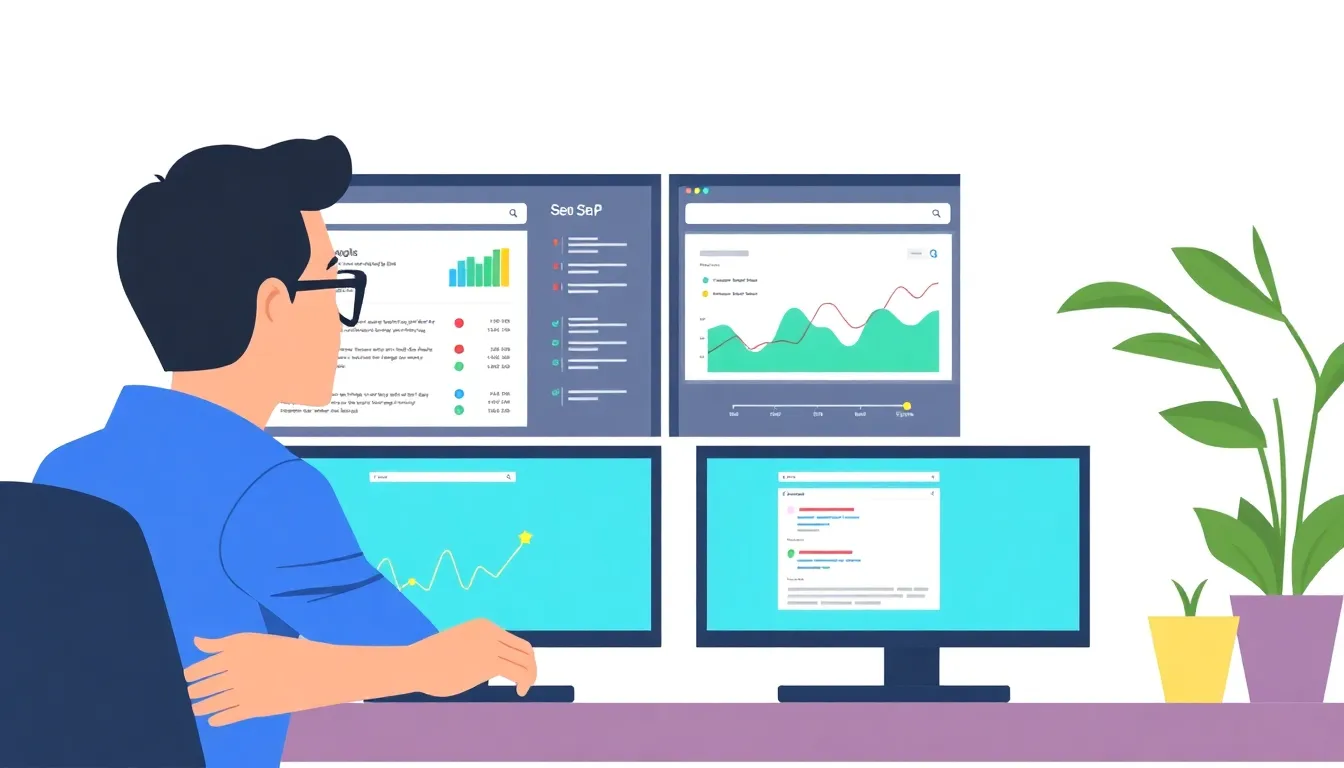
SERP analytics is the linchpin of high-impact SEO, giving you a data-driven edge over competitors and surfacing keyword opportunities you’d never spot with guesswork. The marketers winning in 2026 dive into SERP data, not just rely on classic keyword volume.
The bottom line: Skipping SERP analytics means missing the traffic surge your competitors enjoy.
How SERP Analytics Transforms Your SEO Strategy
SERP analytics breaks down search engine results pages (SERPs) to reveal what’s really ranking—and why. According to a recent Demand Gen Report, 70% of marketers saw increased organic traffic after making SERP analysis core to their 2026 strategy.
Most teams stumble by treating all keywords equally, while the SERP tells a different story. You need to know:
- Which content types Google favors now (guides? product pages? listicles?)
- What secondary keywords and questions top pages target
- Who dominates featured snippets, People Also Ask, and local packs
Blind optimization wastes time.
Real-World Example: Doubling Traffic by Listening to SERP Data
A SaaS startup chasing “email automation software” struggled for 18 months to crack page one. Then they pivoted: SERP analysis showed every top result was a detailed comparison post with pricing breakdowns.
They scrapped generic guides and built a monster piece—comparing 12 tools with transparent costs and screenshots. Within four months, organic traffic doubled. That’s the power of reading the SERP tea leaves.
What Key Insights Does SERP Analysis Unlock?
Effective SERP analysis delivers actionable, real-time intelligence like:
- Content format: Tutorials, product pages, videos, or checklists?
- Search intent: Purchase-ready content, how-tos, or templates?
- Competitor weaknesses: Which top pages lack backlinks or depth?
- Feature dominance: Who wins People Also Ask, video carousels, or local maps?
Here’s a snapshot for “AI content optimization tools” in 2026:
| Feature | Top Results (2026) |
|---|---|
| Content Type | Comparison guides, video walkthroughs |
| SERP Features | People Also Ask, video carousel, reviews |
| Domain Authority Range | 43-72 |
| Avg. Content Length | 2,100 words |
| Backlink Count (Median) | 78 |
See the pattern? That’s your roadmap to leapfrog competitors.
First Step: Run a Free SERP Analysis Now
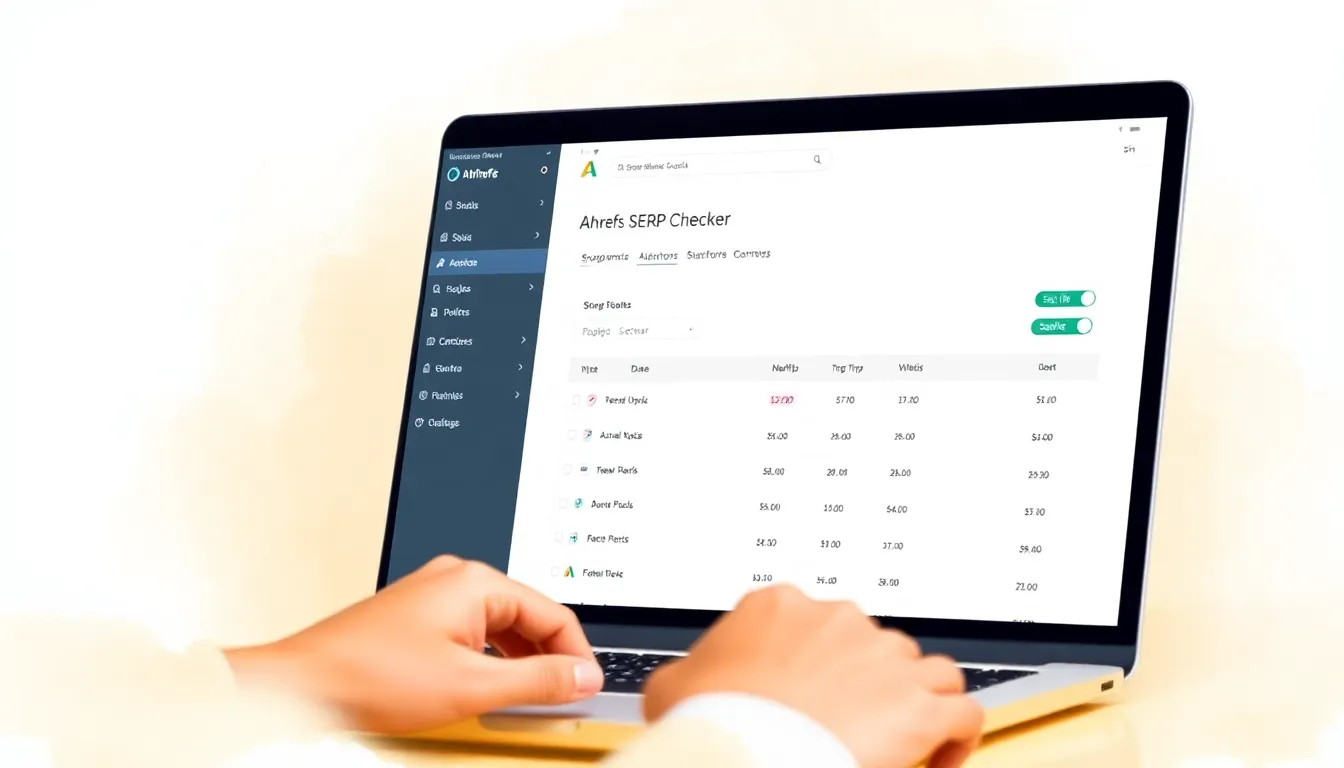
Not using this yet? Start simple. Use a free tool like Ahrefs’ SERP Checker or Moz’s SERP Analysis. Enter a target keyword and scan the top results:
- Note recurring content angles
- Spot special SERP features (videos? People Also Ask?)
- Inspect titles, meta descriptions, and content depth—then find what you’re missing
You’ll likely uncover at least two actions that could boost your page’s chance to break through.
Key takeaway: Winning SEO in 2026 means understanding what Google rewards today. SERP analytics is your first and most consistent SEO habit.
How Do SERP Analytics Tools Work?
SERP analytics tools collect real-time data on keyword rankings, competitors, and search features like featured snippets, maps, and ads. They scrape and analyze SERPs to give you a clear snapshot of what ranks and why.
Imagine launching a SaaS tool and seeing your site pop for a dream keyword—then drop off page one within a week. One day you’re above your main competitor, the next you’re buried under local listings and video carousels. Total chaos. Nobody has time to Google every keyword or figure out who pushed you down. SERP analytics saves your sanity.
How do these tools work?
SERP analytics tools deploy bots to mimic real user searches across locations and devices. They grab snapshots of top results, catalog shifting SERP features (people also ask, local packs, shopping results), and track who’s winning each key term.
You don’t just see "You’re #3." You see "You’re #3, wedged between a video carousel and a giant map pack hijacking clicks." Context is everything—especially in 2026 when Google crams rich features above organic listings.
What data do you get?
These platforms deliver:
- Precise keyword positions: Track daily, weekly, or real-time movements.
- Snapshot of all SERP features: See if snippets, local packs, or videos steal visibility.
- Competitor rankings: Who’s above and below you, and their momentum.
- SERP volatility: How much top 10 shuffles—critical for spotting updates.
- Local and mobile variance: Rankings by device or location.
Few tools offer this depth without hoops.
Real-World Example: Analyzing Local Search with Ahrefs
With Ahrefs’ SERP Checker, you can analyze Chicago’s SERP without proxies. Enter your keyword, select "Chicago, IL," and see a real-time local SERP.
You might find your rival’s blog winning the featured snippet and review sites dominating before any organic results. This insight helps you tweak content, chase snippets, and target review platforms to reclaim visibility.
Why do marketers obsess over these features?
68% of marketers in 2025 said HubSpot 2025 Marketing Report real-time SERP insights changed their campaigns on the fly. Monthly keyword trackers are obsolete. You must know daily (or live) when competitors update pages or Google adds new People Also Ask boxes, so you’re never caught off guard.
Without SERP analytics, you’re fighting with one eye closed.
The key takeaway
The best SERP analytics tools go beyond keyword tracking. They reconstruct the real search landscape, show what grabs attention and clicks, and help you respond faster. In 2026, without fresh SERP data, you lose ground.
What Are the Best SERP Analytics Tools in 2026?
Top SERP analytics tools deliver comprehensive data with intuitive interfaces, giving fast, reliable insights to outmaneuver competitors. Platforms like Ahrefs, Semrush, and Mangools process over 1 billion SERP results daily—an insane scale. But not all use that data equally well for SEO pros.
Ahrefs’ SERP Checker doesn’t just scrape Google—it breaks down results by exact location without proxies. You get authentic local snapshots, crucial for businesses targeting regions or multi-location SEO campaigns.
Semrush offers deep competitor insights with daily SERP volatility tracking. You instantly see who’s winning snippets, People Also Ask, and video carousels. It’s robust: daily data refresh, deep keyword intelligence, and competitive gap analysis in one dashboard. But it’s pricey and can overwhelm smaller teams.
Mangools targets lean marketing teams: fast, focused, visual dashboards. Its SERPChecker shows who’s moving, which SERP features appear, and day-to-day changes. No complexity overload, perfect for e-commerce brands and agencies needing quick action.
Features don’t matter if you hate the interface or your team won’t use it. User ratings separate contenders from “yet another tool.”
Key takeaway: The best tools combine accurate, frequent data with usable experiences—no data dumps, just actionable insight.
DemandSphere deserves mention. It blends SERP features—review stars, ad positions, local pack presence—directly into project workspaces. For agencies managing many clients, it means no tab-jumping or data exports. Everything’s unified to spot trends and make strategic moves faster.
Quick 2026 comparison:
| Tool | Strengths | Weaknesses | Starting Price | User Rating (G2) |
|---|---|---|---|---|
| Ahrefs | Precise SERP/location data, best backlink | High price, noisy UI for some | $99/mo | 4.7/5 |
| Semrush | Deep competitor data, SERP feature tracking | Overwhelming UX, expensive add-ons | $129/mo | 4.5/5 |
| Mangools | Fast, simple, visual dashboards | Fewer advanced integrations | $69/mo | 4.6/5 |
| DemandSphere | Unified SERP features, bulk management | Enterprise focus, less flexible plans | Custom | 4.4/5 |
Chasing every data point won’t move the needle. Top tools help you find what matters fast, whether diagnosing lost traffic, hunting keywords, or outsmarting competitors.
To keep pace with search’s breakneck speed—where missing a featured snippet can cost thousands overnight—you need tools that collect data and help your team act on it.
For more on SERP analytics vendors, see Search Engine Journal’s comparison, with tests and screenshots.
Leveraging SERP Features for Competitive Advantage
Which SERP feature will bring your brand visibility—and clicks—in 2026? Ignore this at your own risk.
SERP features like snippets, local packs, and knowledge panels now control most high-intent organic traffic. Miss out and you’re invisible above the fold, no matter your “best practices.”
Featured snippets capture 35% of search clicks in 2026. Not targeting them lets competitors siphon the juiciest traffic before users reach traditional results.
What are SERP features, and why do they matter?
SERP features are non-traditional Google elements—featured snippets, local packs, image carousels, People Also Ask boxes—that push “blue-link” results down.
The impact? Higher visibility, trust, and click-through rates. A zero-click snippet makes you the default authority, boosting brand and leads.
How to get into these coveted spots?
Dominating SERP features in 2026 follows these steps:
- Identify target features by keyword. Use tools to see which queries trigger snippets, maps, or knowledge panels.
- Optimize content to answer queries directly. Short, punchy snippet answers. Use schema markup for FAQs. Clean NAP data for local packs.
- Monitor, test, refine constantly. Google’s algorithm shifts in days. Enterprise teams juggle 2–3 analytics platforms to keep up.
Smart move: Check rankings for “snippet opportunities”—keywords where you rank top 5. Prime real estate for quick gains.
How do top tools compare on feature targeting?
Not all platforms meet the challenge. Here’s 2026’s front-runners for SERP features:
| Tool | Featured Snippet Detection | Local Pack Insights | Daily SERP Tracking | Pricing Tier |
|---|---|---|---|---|
| Ahrefs | Yes | Yes | Yes | Premium |
| SEMrush | Yes | Yes | Yes | Premium |
| SpyFu | Yes (limited) | No | Yes | Mid-tier |
| SERPWatcher | No | Yes | Yes | Entry/Mid-tier |
| LazySEO | Yes (real-time updates) | Yes (location-based) | Yes (automated) | Flexible/SaaS |
Key takeaway: Ahrefs and SEMrush suit established teams wanting it all; LazySEO leads for real-time, location-based insight—ideal for lean or fast campaigns.
How SERP features drive real-world results — local packs in action
A coffee shop chain targeting “best espresso near me” in multiple cities focused on Google’s local packs—map locations and reviews atop results. They shifted 40% of organic traffic from regular rankings to geotargeted results.
How? Standardized name, address, phone (NAP), gathered more Google reviews, and used local content with city queries. Result: more foot traffic, orders, and less reliance on ads.
Steps to optimize for featured snippets today
Don’t get buried. Start outsmarting competitors immediately:
- Find your best-answer pages in top 5 rankings—prime snippet candidates.
- Rewrite intros and FAQs with concise, direct answers (40-50 words).
- Use numbered or bulleted lists for “How to” or “Step-by-step” queries—Google loves lists.
- Add schema markup (FAQ, HowTo) to signal intent.
- Track snippet wins weekly with real-time tools like LazySEO.
Bottom line: SERP features aren’t bonuses—they’re prime real estate. The right analytics tool helps you identify, win, and defend these spots before rivals notice.
For a deep dive on featured snippets’ impact, see Search Engine Journal’s 2026 study.
Don’t sleep on this—SERP features are often the first and last link users click.
SERP Analytics vs Traditional SEO: What's the Difference?
SERP analytics delivers dynamic, real-time insights; traditional SEO relies on static, keyword-first strategies. For SEO pros, this isn’t subtle—it’s a seismic shift in winning rankings in 2026.
Picture a bakery stuck on page two that leaps to position zero after capturing a featured snippet for “best gluten-free bread near me.” Traffic doubles in weeks because they stopped chasing broad keywords and started dissecting real-time SERP opportunities. That’s not luck. That’s SERP analytics.
How Do SERP Analytics and Traditional SEO Differ?
Traditional SEO focuses on keywords, meta tags, and backlinks. You pick keywords, optimize content, monitor results, and adjust every few months. It relies on historical data—ranking reports, periodic crawl insights, static backlink audits.
SERP analytics pulls live search results—actual SERPs—in real time, revealing how Google displays results now. It monitors SERP features (People Also Ask, snippets, local packs), tracks competitor appearances, and spots algorithm shifts immediately. SERP analytics removes guesswork: you see what ranks, which features appear, and how intent shapes pages.
Comparison:
| Aspect | Traditional SEO | SERP Analytics (2026) |
|---|---|---|
| Data Update Frequency | Weekly/monthly ranking checks | Real-time, live SERP monitoring |
| Primary Focus | Keyword rankings, on-page factors | SERP features, intent signals, formats |
| Competitive Visibility | Historic ranking comparison | Live visibility across all SERP elements |
| Responsiveness | Reactive (algorithm update = scramble) | Proactive (adapt as SERPs shift) |
| Adaptability | Slow to react to changes | Instantly adaptable and agile |
| Example Wins | Long-term keyword climbing | Rapid CTR gains via featured snippets |
Key takeaway: Traditional SEO improves keyword ranks over time; SERP analytics lets you pivot instantly—showing what users see now, not what mattered before.
Why Dynamic Insights Trump Static Optimization
Traditional SEO tells you “gluten-free bread” is high volume. You optimize, build links, hope. Months pass; maybe you gain a position or two. SERP analytics shows Google now surfaces People Also Ask and recipe carousels. A snippet answers “What’s the healthiest gluten-free bread?”
Brands using SERP analytics add detailed FAQs, snippet-friendly answers, and structured data for recipes. They leapfrog entrenched competitors, sometimes overnight.
No surprise: Semrush finds sites with featured snippets see 28% higher click-through rates—traffic regular SEO misses.
How Shifting to SERP Analytics Changes the Game
A mid-tier SaaS company couldn’t break top five for “project management platform.” After switching from quarterly audits to daily SERP monitoring, they saw video results and testimonial carousels.
They launched a client video campaign, optimized video descriptions for snippet questions, and snagged video carousel and People Also Ask spots.
Old approach? Another year pushing blogs and backlinks. New approach? Big impact in under a month.
Bottom line: Traditional SEO is slow and reactive; SERP analytics is fast and rooted in what matters now. Teams using SERP analytics aren’t just keeping up—they’re setting new ranking rules.
For more on snippet impact, see Semrush’s CTR analysis.
Future Trends in SERP Analytics: What to Expect
Next-gen SERP analytics is about intelligence and anticipation. AI-powered platforms will disrupt SEO planning—shifting from reactive analysis to predictive strategy.
Comparison:
| Aspect | Traditional SERP Analytics | AI-Driven SERP Analytics (2026+) |
|---|---|---|
| Data Refresh Rate | Weekly/monthly | Real-time/daily |
| Insight Type | Historical/past performance | Predictive/future-focused |
| Feature Coverage | Basic rankings, static snippets | Dynamic features, intent shifts |
| Human Effort | High (manual research) | Low (automation, smart recommendations) |
| Trend Identification | Slow, lagging indicators | Preemptive, signals before peaks |
| Impact on Strategy | Reactive optimization | Proactive, seize emerging keywords |
Key takeaway: AI-driven SERP analytics forecasts where search will move next, letting you prepare before competitors spot opportunities.
How will AI and machine learning change SERP analytics?
AI will transform insight extraction from SERPs. Instead of reporting keyword moves, analytics engines will analyze millions of signals, user behaviors, and SERP changes at scale. They’ll surface patterns and predictions—showing what’s happening and what’s next.
Predictive analytics is already here. In 2026, brands using AI SERP analytics forecast topic spikes before mainstream adoption. Imagine a SaaS spotting a new feature query bubbling in niche forums, optimizing content while competition is low. By the time rivals notice, they own the top spots.
What percentage of SEO strategies will use AI-powered SERP analytics?
By 2027, 80% of SEO strategies will integrate AI-driven SERP analytics. Manual tracking won’t keep pace with Google’s rapid SERP changes, especially with AI-generated answers, image packs, and hyper-local personalization.
Today, only 35% of traditional SEO accounts for fluid SERP features, versus 82% for teams using modern analytics. The difference is clear: brands with predictive analytics adapt faster, spot opportunities first, and weather updates better.
Why are predictive and real-time insights essential now?
Speed and foresight are SEO’s new currencies. Daily volatility, sudden algorithm changes, and new verticals (AI Overviews, “Perspectives” results) mean yesterday’s strategies can be obsolete by Monday. Slow, backward analytics are a huge risk.
Example: Your ecommerce site targets “dynamic pricing software.” AI analytics alerts you to rising queries like “is dynamic pricing legal in Europe” two weeks before the spike—thanks to machine learning spotting news, forums, and competitor buzz. You publish a targeted page instantly and own the SERP.
What actionable steps should SEO pros take now?
To compete in 2026+, invest in AI-powered SERP analytics. Use tools that surface predictive trends, automate opportunity detection, and integrate with content workflows. It’s mandatory. The market is pivoting; legacy methods will lose ground.
Forrester’s 2026 digital marketing outlook says predictive analytics is table stakes for sustaining organic traffic in AI-shaped search.
Bottom line: Future-proof SEO by making AI-driven SERP analytics your strategy’s foundation—before competitors make old workflows obsolete.
Stay Ahead with Smarter SERP Analytics
To master SEO in 2026, make SERP analytics core—don’t just glance at rankings, dig into features, competitors, and trends shaping results. Start by picking a tool with real-time data and customizable reports to spot opportunities before others. Tools like LazySEO automate deep SERP analysis and put insights at your fingertips. Embrace the future by adapting your approach, leveraging emerging features, and staying curious. The search landscape will only get more dynamic—make sure you lead, not follow.